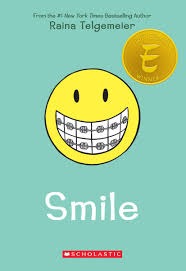
Written by Clara Bagaroli
Raina Telgemeier’s graphic novel memoir Smile captures the painful, awkward, but common reality of growing up. Based on the author’s own childhood experiences, the story begins with an ordinary accident that resulted in the severe damage of the young authors two front teeth. The story then follows not only her dental journey in recovering from this incident, but also her struggles in her adolescence life, as the novel explores themes such as bullying, appearances, and self-confidence.
When I first read this memoir in the fifth grade, it immediately stood out to me, as I connected with its humor, honesty, and realistic portrayal of growing up right away. At that age, many readers are beginning to experience the awkwardness and insecurity that come with the start of middle school, which made the story especially relatable to me. Even though the book focuses on Raina’s dental struggles, I realized it was really about much more than braces and surgeries.

At its core, Smile is about both physical, emotional, and social transformations. While the dental procedures provide a visible representation of change throughout the narrative, Telgemeier focuses just as much on the invisible struggles, such as shifting friendships, peer pressure, and the search for self-confidence. The story avoids dramatization, instead presenting these challenges with a matter-of-fact tone that feels both authentic and relatable.
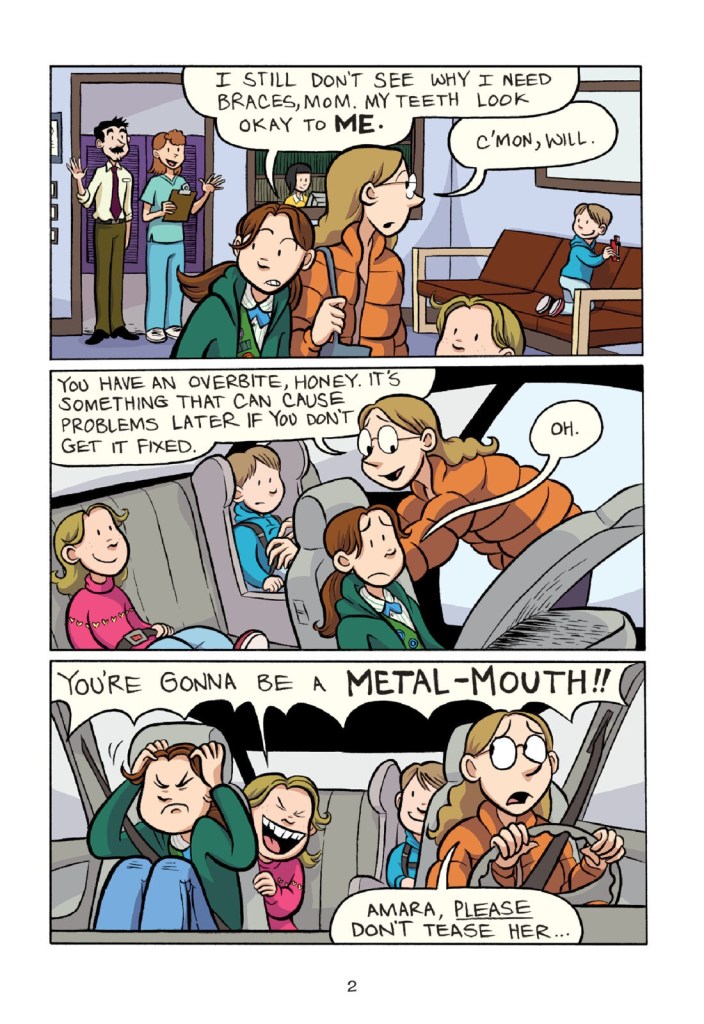
One of the book’s greatest qualities, in my opinion, is its accessibility. The clean, expressive illustrations complement the storytelling in a great way, allowing young readers to engage with the complex emotions that are being portrayed without feeling overwhelmed. When I read the book at that young age, the graphic novel format made the story feel engaging and easy to follow, while still addressing meaningful topics. The visual format also reinforces the humor created throughout the narrative, softening the heavier moments without dismissing their impact.
Most importantly, Smile does not offer a simplistic or idealized version of growing up. But rather the reality of entering middle school and teenage years; friendships falter, insecurities linger, and resolutions are not always immediate. This honesty is precisely what makes the memoir so compelling. Telgemeier shows that confidence is not something that appears overnight. It develops gradually, often through discomfort and self-reflection.
Overall, Smile had a strong impact on me as a fifth grader preparing to enter middle school. At the time, many of the fears and insecurities shown in the book felt very realistic, which made Telgemeier’s experiences relatable. The graphic novel helped me understand that challenges like fitting in, dealing with friendships, and feeling self-conscious are normal parts of growing up and of becoming a teenager. Because of the story’s honesty, humor, and meaningful message, I believe Smile is a book that many students can connect with, especially those who, like I was at the time, are almost entering this new phase in their lives. The book is also available in the school library. It is then accessible for other students who may be going through similar experiences as they prepare for middle school.
 EAC PRESS