Written by Yoogeon Choi
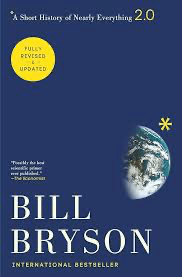
Nowadays, students in high schools read a variety of different materials that can teach them valuable life lessons or can be used to introduce complex concepts, but some of these materials will allow for students to become truly interested in the subject instead of just reading something for a grade or required assignment. For most 9th grade students, A “Short History of Nearly Everything” is an example of a book that has done this for them. By reading this book by Bill Bryson about science, students are able to see that science can be turned into something fun to learn more about and to see it as an enjoyable experience.
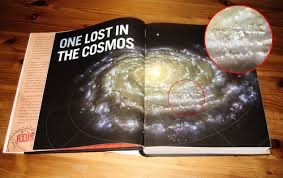
Image From: https://www.themarginalian.org/2010/11/10/a-short-history-of-nearly-everything-illustrated/
Most students may initially think that because “A Short History of Nearly Everything” is about science and history, it will be hard for them to read or comprehend; however, students quickly learn that the material will be presented in a manner that is easy for them to understand. Bill Bryson presents scientific concepts that most students would find challenging or hard to understand in a manner that is humorous, tells stories, and utilizes real-life examples. Examples that will allow them to relate and better understand the difficult material presented. The book became popular among students because it sparked their desire to learn more by asking important questions instead of just giving them information. Rather than just presenting science simply as a collection of numbers, facts and equations, the author continually asks readers to think about how small we are in relation to the vastness of space and the passage of time while also acknowledging the wonder of life here on Earth. Students often said that this book changed their perception of science because it connected to the real world events and experiences with traditional school subjects.
Another major reason that students have interest in the book was the author’s characterization of scientists as real human beings versus just being part of history. The author utilizes stories of how scientists interacted with each other through competition, mistakes, and breakthrough discoveries as well as through quirky behavior. This makes the story of science come to life and be enjoyable instead of boring or repetitive. When students heard these accounts, they responded positively because they learned that many scientific discoveries result from accidents, failures and curiosity instead of perfection. This method of storytelling kept student attention and made complex topics much easier to remember.
The humorous content found in “A Short History of Nearly Everything” is essential to keeping students involved and motivated throughout their studies. Bryson uses many jokes and informal and layman terms throughout the text, including many instances of high level scientific concepts. Because of this, other science textbooks may be primarily based on memorization of factual data, “A Short History of Nearly” Everything reads more like a discussion between authors and the readers. Because of this, even students who typically do not like science, demonstrated an interest in completing the book. “A Short History of Nearly Everything” also provides perspective on a student’s value of knowledge, research and curiosity by showing that scientific progress is based on the number of scientists who have dedicated their lives to researching the universe, whether or not the research develops into successful discoveries or fails repeatedly until a significant breakthrough occurs. By presenting the long and arduous process that occurs prior to a significant discovery occurring. “A Short History of Nearly Everything” emphasizes the importance of being curious, persistent and employing critical thinking skills through the research process. This will enable students to think about some of these concepts in their daily lives in addition to those that they are studying. In addition, this book is not just educational, it also serves as a reminder of how many things we still do not know about human beings. Even though we have advanced technology and science, we still have more questions than answers about space, our planet, and ourselves. The wonder of this idea is one of the reasons many students found it impactful. The book does not just provide facts; it encourages readers to keep asking questions and exploring new ideas.
In conclusion, “A Short History of Nearly Everything” is distinctly more than just a scientific work. The book uses humour, storytelling, history and discovery to provide a great reading experience for students. Through easy-to-read explanations, engaging stories, and thought provoking ideas, the book encourages readers to be curious about the universe and where we fit into it. For many students who read the book, it was a reminder that science does not have to be intimidating and boring; instead, it can be exciting, meaningful, and connected to our everyday lives.
 EAC PRESS