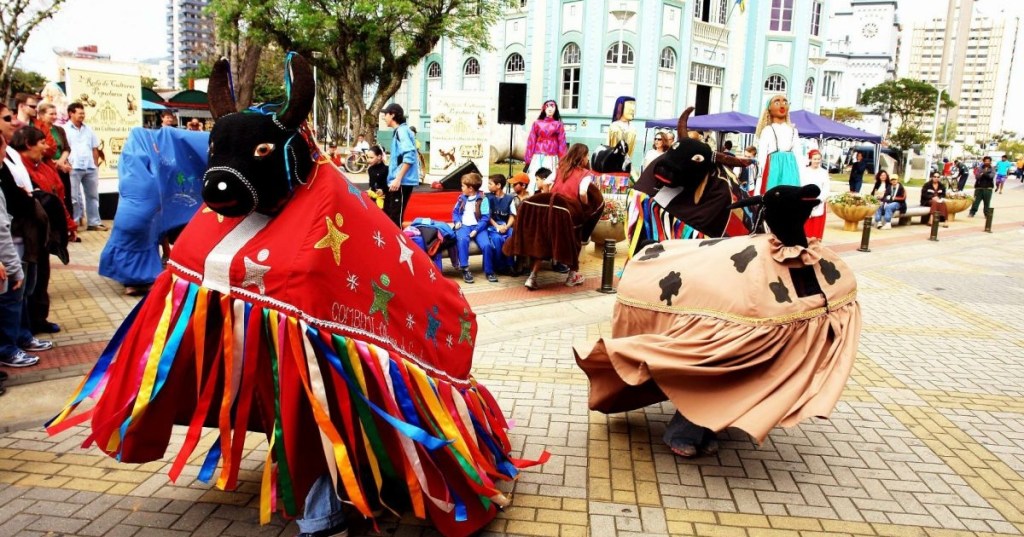
The “Festas Folclóricas,” which translates to “Folklore Parties,” are cultural celebrations that occur all throughout Brazil during the year. They involve Brazilian cuisine, music, dances, different traditional games, and of course can include story-telling of popular Brazilian folklore legends. In this article, you can get to know 5 different popular folklore parties that take place in areas all over Brazil.
- “Festas Juninas”
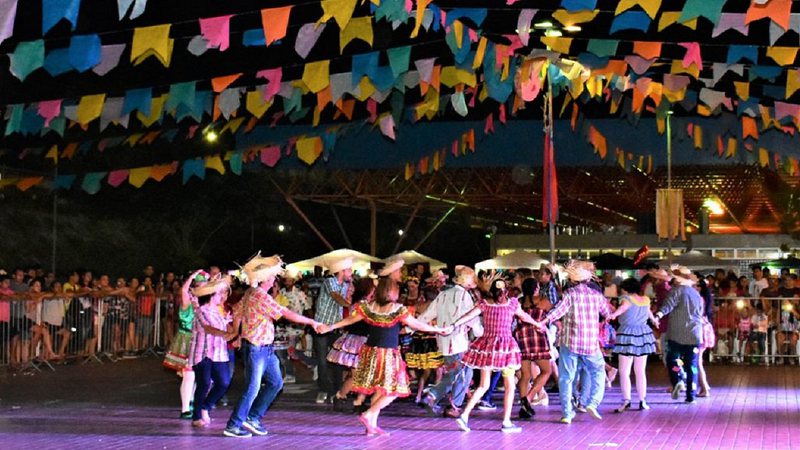
The “festas juninas,” or June parties, take place all throughout the month of June, the month of popular saints, including Santo Antônio, São João, and São Pedro.
During these parties, there are many traditions that take place, like the cuisine, the typical dancing called “quadrilha” or quadrille in English, and the games – such as fishing and “boca do palhaço”.
Regarding the food, meals with the main ingredient corn are most popular at these parties. This is because before becoming a religious-related party, the event was a pagan tradition and honored the Gods of nature and fertility. During this time, the pagan people would thank the success of the crops, and corn was one of the main agricultural products produced. Other popular foods include fubá cake, popcorn, and ‘pamonha.’
Although the ‘Festa Junina’ occurs all throughout Brazil, Campina Grande, in Paraíba, is the location for the biggest Festa Junina in the country.
2. “Bumba Meu Boi”
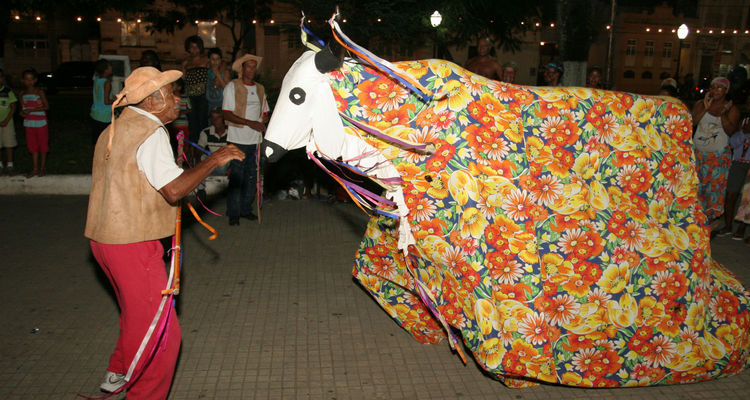
More known in the North and Northeast region of Brazil, the “Bumba Meu Boi” is an interactive play festival that takes place during the months of June and July. It originated in the 18th century and evolved into a nationwide celebration. It includes a lot of dancing, parades, and plays of the myth, which tells the story of the resurrection of one of the most famous bulls of mother Catirina and father Francisco, which gave origin to this traditional Brazilian celebration.
The bull used in these celebrations is made of wood and colorful fabrics. The movements of the bull are controlled by a man that stays under the costume, and he is called the “miolo do boi” or middle of the bull.
Even though it is a tradition in the Northern part of Brazil, the festival is replicated all throughout the other areas of the country, therefore, the myth may vary.
3. “Carnaval”
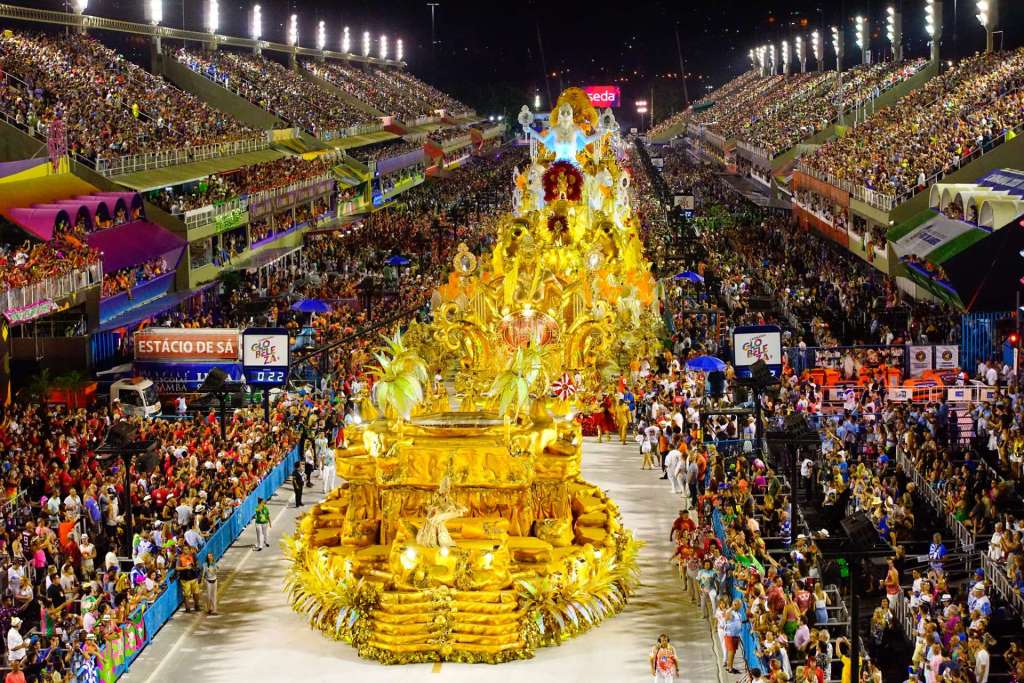
Carnaval is one of the most known Brazilian parties all over the world. Similar to the ‘Festa Junina,’ Carnaval also comes from pagan tradition, and from the beginning it allowed people to have fun while hiding their identities and switching their roles in society with the use of masks.
It is celebrated in the entire country of Brazil, during the months of February and March, although each region has its own particularities.
The Southeast is known for its parades of the school of ‘samba,’ which make it a mission to incorporate and spread the culture through the themes chosen each year.
On the other hand, in the Northeast, the celebration is popular for the Carnaval on the streets, which presents the vehicle parades of Salvador and the dolls of Olinda, which are large dolls of characters or public figures used during the festivities.
4. “Folia de Reis”

‘Folia de Reis’ is a folklore festival also known as ‘Reisado’ or the party of Santos Reis. It comes from Catholic traditions and is celebrated on December 24 and January 6, celebrating the occasion where, according to the original story, the biblical Magi or Wise Men met young Jesus.
The festival includes the presence of a master, a boatswain, the Wise Men, dancers, and clowns. All of them will dress as their character and parade through the streets singing songs and playing instruments such as the accordion, violas, tambourines, and wheel fiddles.
During the time of the celebration, homemade food is distributed throughout the streets where the festival is taking place, usually in the countryside of Brazil.
5. “Congada”

The ‘Congada’ is a religious and cultural celebration that usually takes place during May, December, or October, due to the fact that those are the months connected to the Nossa Senhora. It is celebrated in many different Brazilian regions. Coming of African origin, it mixes the old rituals that worshipped the kings of the Congo with the devotion of the saints in Brazil, which were considered the protectors of the enslaved people. They were Saint Efigenia and Saint Benedito, and Nossa Senhora do Rosário.
The celebration consists of a recreation of the crowning of one of the Congolese king as well as a parade. It is also known for the songs that are sung during the celebration which match the rhythm of the tambourines they play during the parades.
 EAC PRESS
i love this! aprendi muito amiga!
LikeLike