As well as having an extensive history in the rest of the world, tobacco has had its rises and falls among our societies in Brazil. With such information, it is easy to see the importance of intervention within the industry, because even though we have witnessed strong regulations in tobacco consumption in the country, the sales of tobacco and cigarettes have been experiencing large and notable growth, the market being dominated by large companies who monopolize advertising, sales, etc.
Tobacco cultivation has historically been an important part of Brazil’s economy, with high concentrations of crops in the Northeast regions–Bahia and Alagoas–and states further to the south, such as Rio Grande do Sul, Santa Catarina and Paraná. Looking at Brazil’s colonial history, it is also important to note the high profitability of tobacco, as it generates some of the highest profit, especially in comparison to other crops.


Since 1990, tobacco production in Brazil has grown 94%, with cultivation areas close to 1 million acres of land, and producing over 851,000 tons of tobacco in the year 2013. A lot of this tobacco is exported to other parts of the world; however, Brazil has a significant smoking problem among its population. The country is the second largest producer of tobacco in the world, a fact that is due to many reasons.
Firstly, there is massively high production of tobacco in Brazil, because it is also a process that includes a lot of manual labor, with few machines in the business of harvesting tobacco. Thanks to this, Brazil also prides itself on having the “best quality” of the product, which manual handling and harvesting tends to do. Additionally, most production is focused on family properties, and employs 52,000 people, especially during seasons of planting, harvesting, etc. Further, businesses that produce and harvest tobacco are bound by contracts to companies that fund the transportation of the crop and offer different kinds of funding to these businesses.
The pattern of dropping cigarette use rates that has been happening all over the world is also true for Brazil; however, the tobacco industry is extremely profitable, with a revenue of BRL 17 billion in the year of 2010. They also play a huge role in taxation for the Brazilian government: their tax burden is almost 80%.
Because of the high tax burden and other additional factors, it is extremely difficult for other companies to establish themselves in the tobacco industry. In Brazil, the market has high concentrations in only two major companies: Souza Cruz who holds 62% of the market share and Philip Morris with 15% of the market share. Other notable names include Menendez Amerino, Associated Tobacco Company Brasil and Continental Tobacco Alliance; however, their market share hardly compares to that of the previously mentioned companies.
Comparatively to other countries, Brazil produces massive amounts of Flue-Cured Virginia leaf tobacco, with a production of nearly 706 million kg. India and the United States, coming in second and third place in its production, harvest around 275 million kg and 220 million kg respectively; their combined annual total is much smaller than what is produced on Brazilian land. In Burley tobacco, Brazil has a production size similar to the United States; our production of dark sun-cured and air-cured tobacco for cigars and dark cigarette tobacco is also relatively high: third in the entire world and only surpassed by Cuba and the Philippines.
Despite our massive production rates, Brazilian consumption of tobacco is relatively low compared to other countries, with only 16.9% of our population consuming tobacco and its derivative products like cigarettes, while, in comparison, the same is true for 33% of the world population. Brazil exports around 85% of its entire tobacco production, which equals nearly 634 million kg. Exports of tobacco go to nearly 100 different countries, with the main customers being the European Union (42%), followed by Southeastern Asia (27%), and North America (13%).
Tobacco consumption is also massively influenced by marketing and advertising to a younger audience; many companies would specifically target the teen and young adult population: the average age of smoking initiation in Brazil is 17 years old.


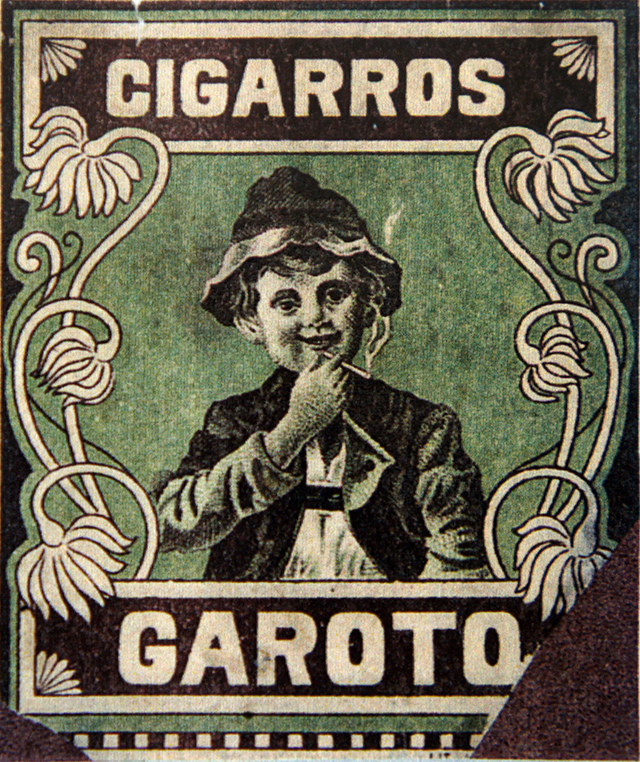
Cigarettes are often marketed to the younger public as ways of maturing and portals into the adult world, depicting smokers and ideas of success, sensuality and liberty.
Despite this, Brazil is a signer of the World Health Organization Framework Convention on Tobacco Control, which places regulations on tobacco advertising and taxing of tobacco companies by the government, as well as placing other regulations upon the population and the market. For instance, one of the most important regulatory measures taken by the government would be the prohibition of flavored additives in cigarettes, such as menthol or clove; however, they have not yet banned the production of such additives for exportation, even though importation is illegal. Additionally, the only places that are permitted to advertise tobacco are tobacco points of sale.
Beyond being a signer of this agreement, the Brazilian government has other additional regulations on not only tobacco companies, but also the population and the people who smoke. In the year 2014, new rules were put in place by the Ministry of Health, where they further regulated the areas in which people were permitted to smoke: the only indoor spaces where smoking was allowed was determined to be only inside tobacco shops and in religious spaces where smoking was part of the ritual.
Tobacco has had a long history in the country of Brazil, holding massive influence on the market and advertising, as well as the government. It is important to understand these aspects of the tobacco industry to be able to further determine the measures necessary to be put in place by the government, in order to avoid a smoking / tobacco problem in our country.
Resources:
https://www.scielo.br/j/csp/a/p3dYsRmq7FrgPKsYc8st6BR/?lang=en

