In the 1970s, the Brazilian dictatorship was in full effect, in the face of constant oppression, resistance movements became more prominent and numerous. Various prisoners originated from bank robberies, becoming political prisoners (those who opposed the regime), while others were prisoners from a past crime. Particularly in prisons like those in Rio de Janeiro, these disparate groups of inmates were housed in the same facilities. They started interacting and exchanging ideas despite coming from different backgrounds. So, common criminals learned about unity, discipline, and resistance from political prisoners, who were frequently better educated and organized. Through time, people started befriending one another and created connections within the institutions.
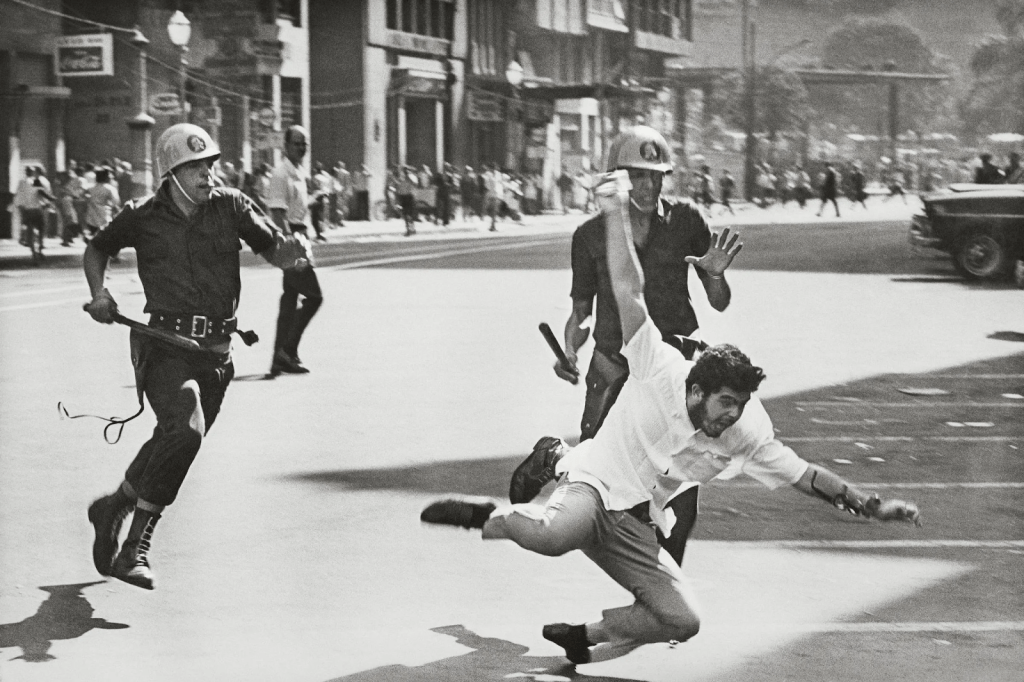
Image from https://www.cafehistoria.com.br/brazils-military-dictatorship-3-books/
The interaction between political prisoners and common criminals laid the foundation for what was originally named the Falange de Segurança Naciona, which was later changed to Falange Vermelha, and afterwards, the press and the police would call them Comando Vermelho, the name the group is known nowadays for. This group developed a sense of collective identity within the prison system. From these experiences of repression and alienation, it encouraged the prisoners to organize themselves and create internal rules based on their loyalty and solidarity.

Because of it, these internal rules were originally rooted in the political resistance that was started to be used to serve criminal purposes. From 1970 to 1980, the group started to get bigger, not just from the prison to the outside world. The members of the group coordinated escapes and used money that they robbed from the bank to finance new and various illegal activities, such as drug selling. By selling drugs, like cocaine, the group established power in various urban areas such as Rio De Janeiro, where they started to expand their group. Additionally, the early organizational methods used by the group in prisons established a solid structure regarding hierarchy, which influenced how they operated on the outside of prison. There was a code of conduct that all members had to follow, which ensured loyalty and minimized the chances of internal disputes. This made the organization much more solid than its criminal counterparts. Because of the quality of discipline within the group, the members were able to exert control over different territories that are often overlooked by the government. They went into the areas of commerce where the government had little or no influence and expanded their business to smuggling drugs. This level of organization also allowed them to create a monopoly and influence the commerce of drugs in that area for a long time. The active resistance that was used in prison developed into a compact syndicate that was able to maintain its influence both on a local and international level.
In the 2000s, the Comando Vermelho adapted to a fast-changing world by modernizing its operations and expanding its influence beyond traditional territorial control. With the rise of the internet and mobile communication, the group was able to coordinate activities more efficiently, gaining stronger connections between members both inside and outside prison. One tool for the prison was the cell phone, because it was an indispensable instrument, enabling incarcerated leaders to continue overseeing activities from a distance, such as organized attacks, drug trafficking, and territorial disputes. Because leadership was no longer constrained by physical confinement, this made the organization more adaptable and more difficult for authorities to control. This group also formed alliances with other criminal groups throughout Brazil, extending its networks outside of Rio de Janeiro and boosting its national influence. Violence consequently increased in many areas, as evidenced by reports linking the group’s recent growth to hundreds of fatalities. The group’s technological advancements benefited communication and improved adaptability to law enforcement. With the organization’s fluid use of different communication systems and decentralized networks, the group became increasingly resistant to police interventions. Its active expansion across several areas created greater organizational conflict with rival groups and increased competition for lucrative drug pathways and territories. The result was violence often in urban areas where civilians were entrapped in the crossfire of conflict. The government’s continued large-scale offensive operations to eliminate the group are a testament to its importance in the evolution of crime in Brazil. The group’s resilience and well-defined organizational structure make it difficult for the Brazilian government to achieve its goal.

As of the 2020s, tension has risen between the factions, like CV and PCC, and the police. Throughout these past years, many impactful faction crimes have occurred, but most notably, the Operation Containment (Operação Contenção) took place. On October 28, 2025, after 60 days of planning by the Rio de Janeiro government, the mega operation was launched in an effort to fight the territorial expansion of the Comando Vermelho, and as a secondary mission, execute 100 arrest warrants for members. At this time, 2,500 police officers from different sectors, both military and civil, raided two residential neighbourhoods, the Alemão and Penha “favelas”, controlled by Comando Vermelho.
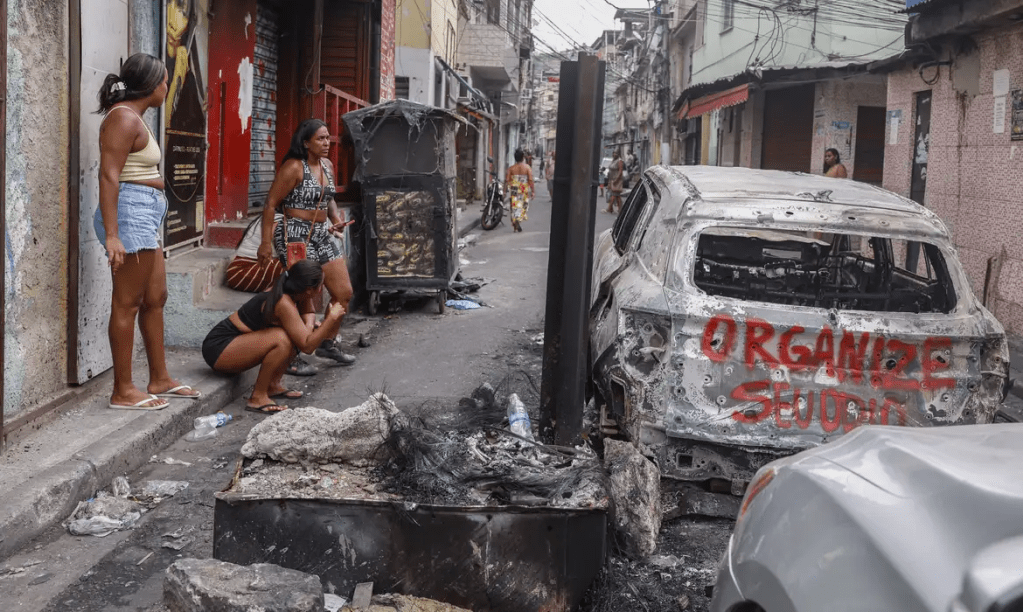
The mega-operation led to the death of at least 121 people, including 4 police officers, resulting in the most violent police action in Brazilian history. Part of the plan of the operation included cornering the members of Comando Vermelho in a dense forest, where elite commandos were hidden and ready to attack. As a result, 74 bodies were retrieved from the forest, including some civilians who were unfortunately caught in crossfire between the two parties. Not only that, but the operation also led to 20 out of the 100 prison warrants that were desired by the police.
Concludingly, even though police officers might not have reached all their goals, they successfully set back the faction, such that police officers stated that the operation represented the most significant setback to the CV since its establishment in Rio’s prison system in the late 1970s, as seen in a Global Initiative article. However, the operation was greatly criticized for its violation of human rights, such as the stealing of documents, the closing of schools and clinics, torture, executions, and many other parameters that were deemed as inhuman conduct by the police, as indicated by Radioagencia. As a result, even though from a security perspective they had a positive impact on the community, during the operation, it is speculated that the violation of human rights occurred, thus making its classification as a positive or negative operation substantially harder.
The evolution of Comando Vermelho ultimately depicts how state repression can eventually lead to the formation of sophisticated criminal organizations. What started as a small group of prisoners in the 1970s grew into one of the biggest criminal organizations in Brazil, even renowned worldwide. Throughout the years of constant growth in the faction, the CV created a strong hierarchy that has survived for a long time. Its growth from the 1980s drug trafficking to modern, technological tactics illustrates an adaptability that challenges state control. However, the extreme violence of Operation Containment in 2025 underscores the high human cost of this persistence.
Bibliography
https://drive.google.com/file/d/1NI-AInhow-CqOO-05IuusPHcXNRp0PRp/view
 EAC PRESS