
Writen by Gabriel Pedro and Yoogeon Choi
The Anhumas basin covers roughly 130 km2, starting in the southern parts of town. Water moves along roads like Via Norte-Sul, slipping through the central and upper areas of Campinas until it reaches Rio Atibaia, then passing through places like Cambuí, Barão Geraldo, and even Parque Imperador. White foam drifts along the Ribeirão Anhumas carrying the stench of sewage and the remnants of a river once central to life in Campinas. Ribeirão Anhumas was once a very clear, living waterway that is now lined with various trash and choked by pollution. Because of the rapid urban expansion and a weak sanitation infrastructure. Decades of unplanned growth and unmanaged form have stripped away vegetation, filled the river with waste and left nearby communities with health risks and smells. Nowadays, Ribeirão Anhumas has become a mirror of the city’s environmental neglect. Also, residents and reports now show how progress, pursued without planning, has poisoned its own source of life.
Loss of Natural Protection Due to Urbanization
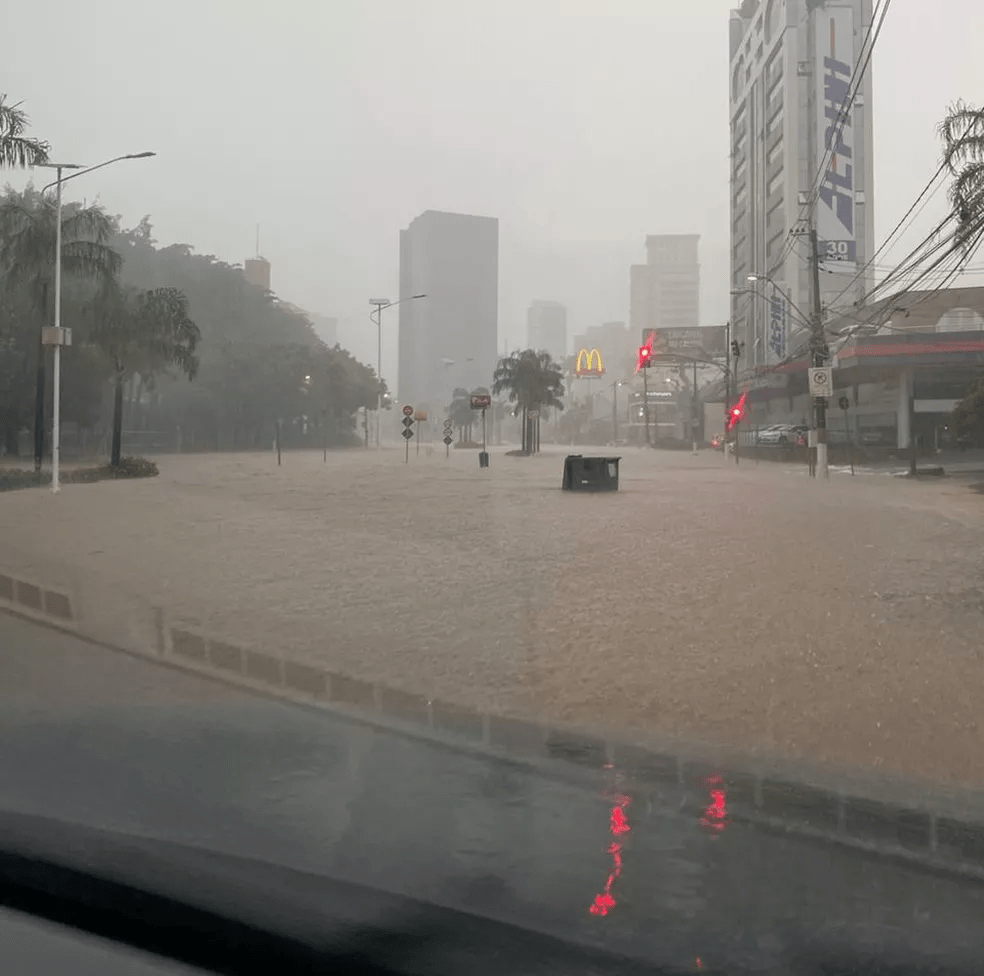
As the city progressed, Ribeirão Anhumas was subjected to harsher chemicals and trash, and many parts of it were “chanelized” and put underground. This led to the once-vibrant and pleasant river being covered with a foul smell, and all the animals it housed to die or leave. Houses and buildings seal up parts of the river with concrete, leading Anhumas researchers to claim that “Every new building pushed the river a little closer to death,”. Without the river, the vegetation also began to die out. “Over half of the riparian forest in the basin has disappeared,” claims Campinas State Agricultural Institute (IAC). A riparian forest basin is the stretch of vegetation that grows along a river’s edges, protecting the waterway by filtering pollution, reducing erosion, and supporting local wildlife. The loss of this means that it is being overloaded by trash, and means that the river ecosystem is dying. Another researcher, Silvia de Melo Futada, also backs up this data, claiming that “Between 1962 and 2002, the total area of natural forest remnants in the Anhumas basin shrank from about 615 ha to around 423 ha.” Because of all the concrete sealing up the soil, many people, including the person writing this very article, have experienced severe flooding through firsthand accounts when hard rain falls on Avenida Norte Sul. In fact, there was even a dry lake built to try and hold off the water that the concrete channels could not handle, but it is not that effective when the water starts to rise. This poses a threat to drivers and owners of buildings and houses along Avenue José de Sousa Campos, also known as Avenue Norte Sul. This image was taken during one of said rains, and we can see that the rainfall has lifted trashy water from the river onto the street, and because of the urbanization and the lack of soil, the water is not quickly reabsorbed into the earth and remains damaging buildings and passing cars.
The Pollution and the Population
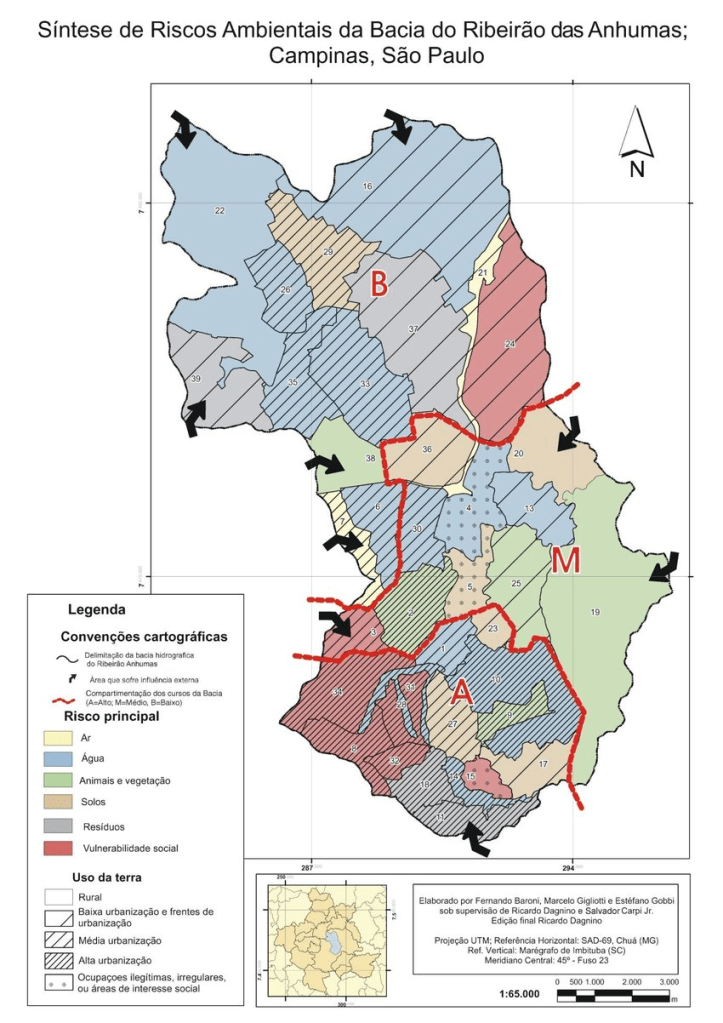
As you know from the previous paragraph, the river was completely covered by the concrete jungle of the city. This means that not only sewage flows into the river, but actual pollutants are also sent into the river. CETESB, the São Paulo Environmental Agency, reports that Ribeirão Anhumas has an alarmingly high quantity of bacteria, turbidity, and surfactants (detergent compounds). This is most probably related to the fact that the city has not connected peripheral areas to the main sewage network, letting companies and residential buildings dump all their wastewater into drains that lead directly into the small river. Residents near the river have also found it increasingly hard to live with the increasing rate of mosquitoes, which come from the still-polluted water and the horrible smell. One reports in an interview with CBN Campinas: “It’s hard to live nearby, we can’t open our windows at night because of the smell.”. The poorer communities are often the ones closest to the rivers, having to deal with the Neglect of the city and the foul odor every day due to their weakened financial state
Environmental Consequences and Government
The environmental impact of the government’s neglect of Ribeirão Anhumas has brought destructive effects. Many years of sand extraction, erosion, and sediment had reduced the river’s capacity. Lots of roads were broken and needed to worsen the frequent floods that now affect nearby houses, roads, and the environment. After finding out the reason, it was revealed that there were issues such as untreated sewage discharge, illegal dumping of solid waste, and ongoing deforestation along the riverbank. Despite these warnings from the government, city authorities had continued to prioritize urban development over ecological restoration and enforcement of environmental regulations. The report said that these problems must be addressed promptly to prevent irreversible damage. But, fixing only these kinds of problems can’t solve the root of Ribeirao Anhumas’s problem.
The quick urbanization of Campinas left the river and the people no time to adapt to each other, and as each building grew, Anhumas shrank and suffered more. Being the cheap alternative to linking streets to the main sewage dump also furthered its pollution, with wastewater straight from people’s kitchen sinks and bathrooms being thrown directly into the river. But it’s time that the city steps up to these problems. More streets need to be linked to the main sewage route, and the city needs to rethink and strike a deal with nature if the floods are to stop. The river was a part of the city before it was transformed into a cheap dumping ground for garbage. It was alive, and brought animals and nature closer to the city. But now even the people who live nearby cannot stand the smell anymore. As the city progresses, we must keep this in mind if we want to maintain a positive relationship with nature and respect for the people who live nearby.
References:
“TCE detecta irregularidades nos ribeirões Anhumas e Quilombo” — Correiopopular article:https://correio.rac.com.br/campinasermc/tce-detecta-irregularidades-nos-ribeir-es-anhumas-e-quilombo-1.1666045/ (Correio)
“Between 1962 and 2002, the total area of natural forest remnants in the Anhumas basin shrank from about 615 ha to around 423 ha.” — Projeto Anhumas / IAC PDF: https://projetoanhumas.iac.sp.gov.br/pdf/Futada_SM.pdf
“Levantamento de riscos ambientais na bacia do ribeirão Anhumas” — Projeto Anhumas / IAC PDF:https://projetoanhumas.iac.sp.gov.br/pdf/riscos_ambientais_bacia_ribeirao_anhumas.pdf (projetoanhumas.iac.sp.gov.br)
Projeto Anhumas home page:https://projetoanhumas.iac.sp.gov.br/ (projetoanhumas.iac.sp.gov.br)
“Projeto de Macrodrenagem da Bacia do Anhumas” — Campinas municipal website: https://campinas.sp.gov.br/sites/portaldoclima/projeto-de-macrodrenagem-da-bacia-do-anhumas (campinas.sp.gov.br)
Imagem do Alagamento:
 EAC PRESS