Writen by André Dantas and Felipe Elias
In modern times, a growing concern is the environmental issues occurring globally. We are witnessing signs of ozone degradation, deforestation, and, most notably, significant pollution in bodies of water.
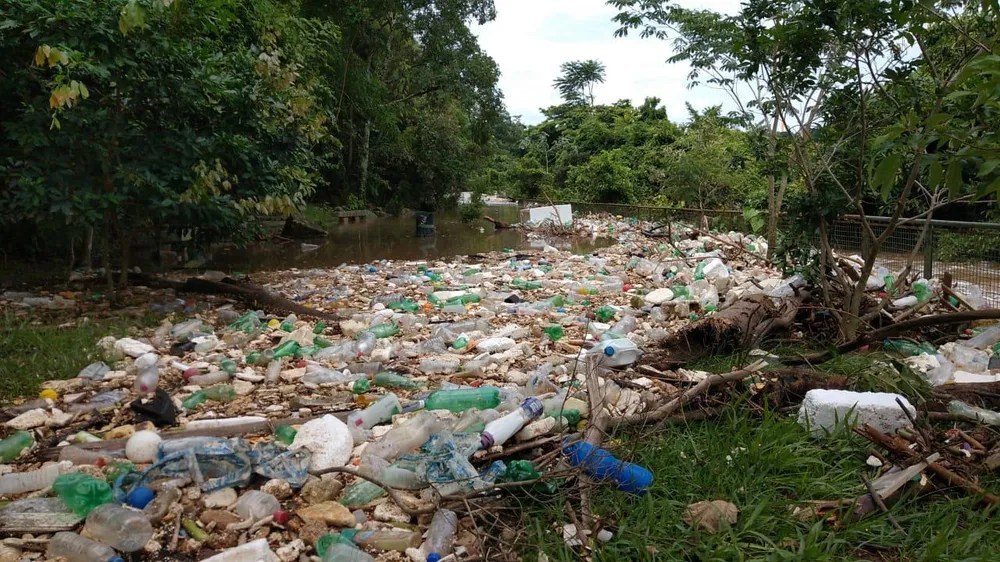
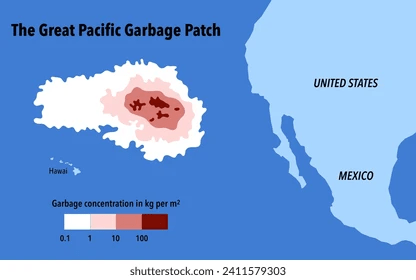
As many may know, the pollution in bodies of water has had a major impact on our society. Rivers have been made unusable, large masses of pollution have been roaming around the ocean, such as the Great Pacific Garbage Patch, a massive amount of pollution that is around three times the size of France!
Although we see these global problems, there are also local issues with pollutants in the rivers near our community. An example of this is the River Capivari, which originates in the city of Jundiai and extends 212 kilometers until it reaches the Rio Tietê.
Rivers have been and continue to be one of the most important aspects of civilization. Historically, rivers have served as a basis for the settlement of many (if not all) indigenous settlements due to the good water source provided. Inclusively, today, rivers still serve this function for indigenous tribes, while also acting as essential mechanisms for generating reusable and clean energy in hydroelectric plants to power nearby cities. This type of activity is primarily evident in Brazil, where energy generated from hydroelectric plants stands out from every other kind of source, made possible by the unique Brazilian geography of the extensive rivers.
Additionally, aside from providing human aid, rivers serve an extremely important role in nature. Rivers provide a habitat for millions of aquatic species, including the Dourado fish, a freshwater species found exclusively in waterways, such as those in Bonito, Mato Grosso. Additionally, the Lambari and Tilápia are two magnificent fish that can be found near Campinas’ Cambuí region and in the river Capivari as well.
In general, rivers present utmost importance in both cultural and natural environments. It shapes the way humans and nature alike interact in daily lives. Therefore, it is pivotal that the increase in pollutants in rivers be addressed critically to raise awareness of this issue.
Importance of Rivers
With the pollution of rivers, several downsides are expected as a result. As mentioned previously, rivers are the keystone of many civilizations, including those of both animals and humans. Rio Capivari, a key river in the southeastern part of Brazil, has been recorded to contain many contaminants (coliforms, chemicals, etc), while simultaneously being responsible for irrigating the southern region and metropolitan region of Campinas, such as Louveira and Monte Mor. The river also irrigates Indaiatuba, where a significant percentage of the city’s water supply originates. Therefore, when the central element of such communities becomes compromised/damaged, so does the quality of life and the overall safety and health of its members.
Specifically, the pollutants present in rivers can affect the health of human communities that utilize such polluted river and their source of water. In other words, when unhygienic water is consumed, either by drinking or through day-to-day activities such as cooking, bathing/swimming/showering, such contaminants can deteriorate an individual’s overall health.
This effect is most commonly observed in indigenous communities, which often lack the necessary water treatment facilities to purify and treat river water into a drinkable and usable form.
Contaminants that can be identified in such instances include the microorganism Escherichia coli (E. coli), as well as nitrogen, chloride, and phosphorus.
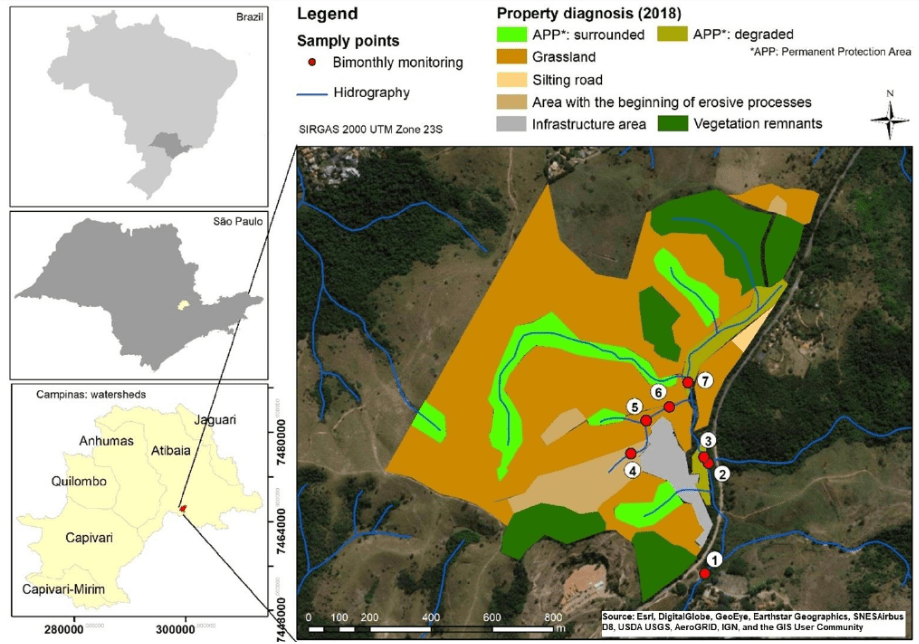
In a study conducted by Regina Marcia Longo, Joice Machado Garcia, Raissa Carolina Gomes, and Adélia Nobre Nunes in 2023, over 9 months, these experts collected different water samples from numerous waterways in Campinas, São Paulo, assessing dissolved oxygen, biochemical oxygen demand, pH, temperature, and turbidity, electrical conductivity, dissolved solids, total phosphorus, total nitrogen, and total coliforms. The location of the experiment is shown in the following photo.
The results of the data collection are as follows:
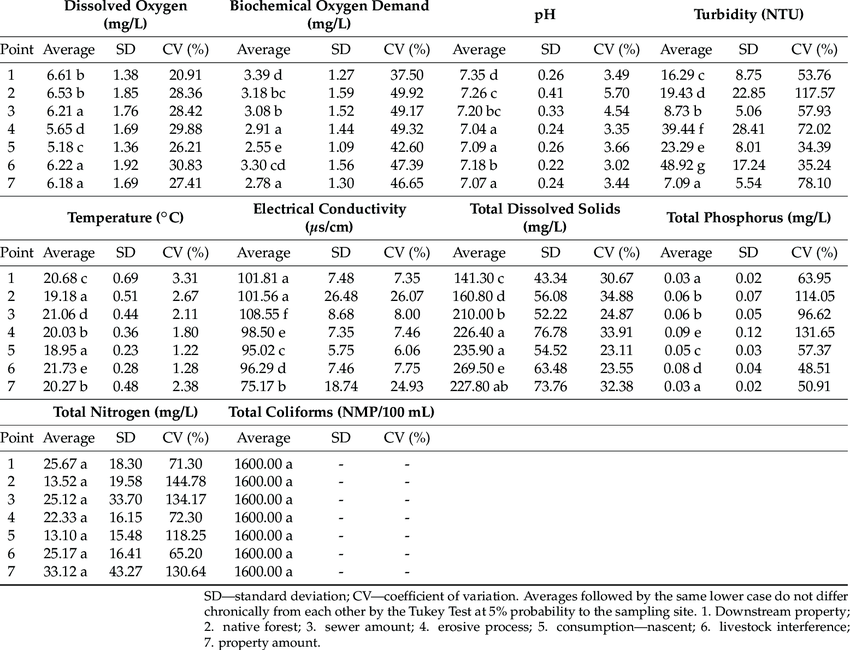
Longo et al. reported that, in the extreme western region of Santa Catarina, 64.1% of the water samples used for human consumption were contaminated with total coliforms, which can be inferred from the land use and occupation, thereby aggravating the water quality after precipitation (rain). Coliforms are groups of bacteria that are found in soils, surface water, and the intestines of animals/humans. Hence, if the majority of water samples found were contaminated with coliforms, this highlights the necessity of taking preventive measures to properly purify and treat water, as this could lead to further waterborne diseases in the population that consumes water from the sampling location.
It is also crucial to consider that this issue was only referred to as contamination of coliforms, meaning that similar conclusions can be drawn from other data on assessed criteria, such as phosphorus and turbidity. Overall, as some parameters for the safe quantity of elements overlapped, this emphasizes how the water quality deteriorated as a whole. This is critical because, as mentioned previously, a low indication in water quality results in a decrease in the quality of life for wild animals and humans.
Additionally, another study by Camila Leite Madeira, Raphael D’Anna Acayaba, Vinicius Sarracini Santos, Javier E.L. Villa, Christian Jacinto-Hernández, José André Teixeira Azevedo, Vladimir Oliveira Elias, and Cassiana Carolina Montagner was conducted. The group identified the importance of the rivers and decided to conduct an experiment, in which the main idea of the research was to identify the contaminants present in the rivers that pass through the state of São Paulo, or the PCJ (Piracicabi-Capivari-Jundiai) basin.
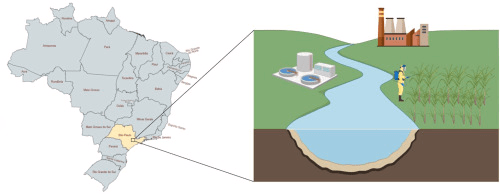
The group first mentioned how Brazilian legislation does not require to have constant monitoring of the waters; therefore, there has been an increasing concern of contaminants on such important waters.
Thus, an experiment in which the group collected various samples from different locations of the PCJ basin was conducted and analysed. At the end, they came to the conclusion that there truly were amounts of contaminants on the rivers, and deduced that in rivers such as the Jundiai, Capivari, and Piracicabi rivers, the great amounts of contaminants were mainly caused by the local agricultural practices and industries.
Concludingly, the experiment indicated the “risk quotients of 414, 340, and 178 were obtained for diuron, atrazine, and imidacloprid, respectively, in the Jundiaí River.” This shows how in the Jundiai River, there is a very, very high amount of pesticides present, highlighting a very high risk for aquatic life present on it. As a result, the aquatic life of the PCJ basin is currently undergoing a high stress level because of the large amount of pesticides that were discovered by the group.
Conclusion
In conclusion, rivers play a crucial role in the stable functioning of many societies, both animal and human, being responsible for habitats and settlement regions, as well as the water supply of wild animals and humans, such as the Rio Capivari, a key river in Campinas that plays this role.
As such, when the studies previously mentioned exposed the deteriorating quality of river water due to human malpractice, measures to address this condition in the mentioned river must be implemented immediately, as this directly impacts the environments that depend on rivers, both human and animal.
 EAC PRESS