Writen by Felipe Elias and Yoogeon Choi
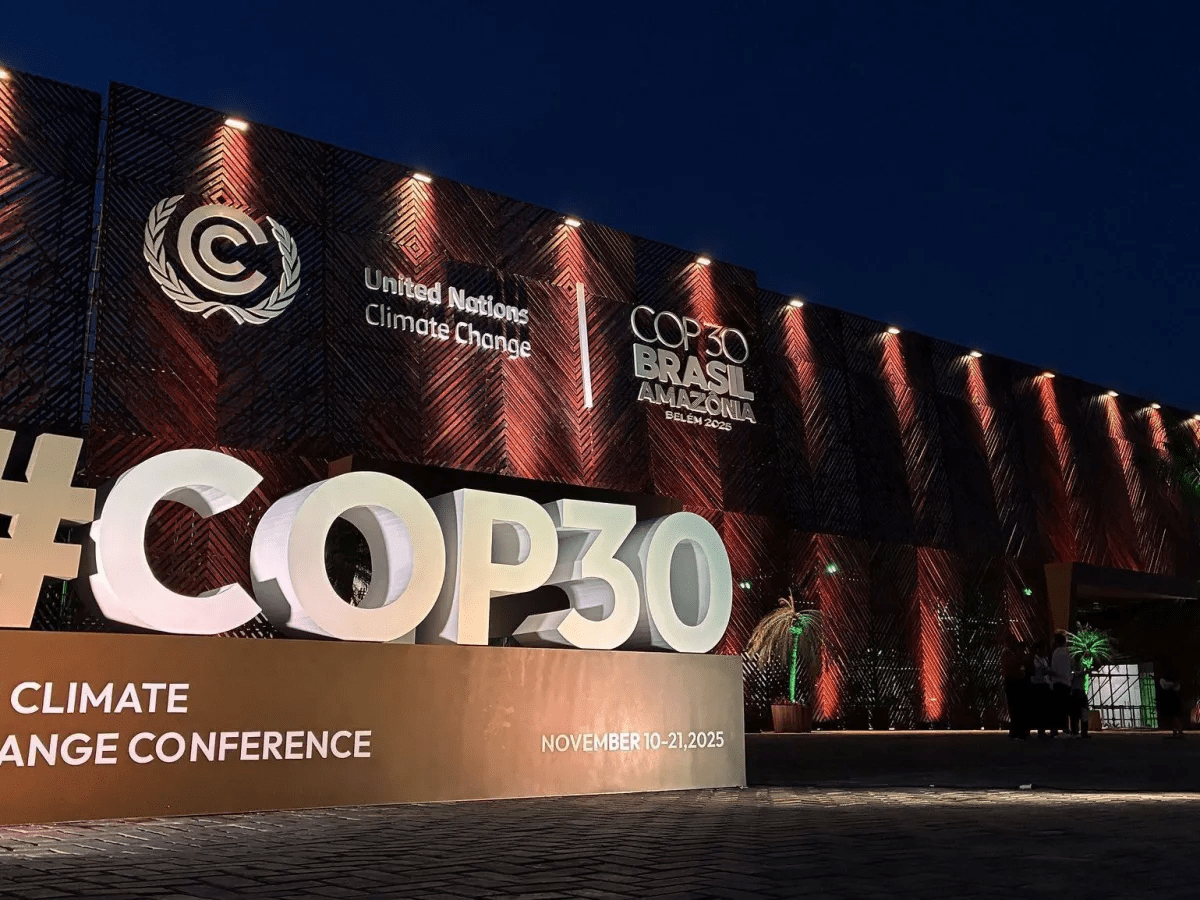
For the first time, Brazil has the honour of hosting the COP30 in its own country, taking place in Belém, starting on the 10th of November and running until the 21st of November. The Conference of the Parties (COP) is an annual meeting of the United Nations that discusses the topic of climate change, and in the case of COP30, it is the 30th edition of the COP. Even though climate change is the main discussion at the COPs, it doesn’t dismiss the fact that various other environmental topics are discussed, ranging from renewable energy to agriculture and many other interesting ideas.
Hosting the COP30 in Belém holds a very interesting symbol, especially with the weight of the Amazon, one of the most crucial ecosystems in the world, right in the middle of this. With Brazil being seen both as a protector of biodiversity and a major agricultural power, the conference becomes not only a global climate negotiation, but also a moment in which Brazil can illustrate its most important aspects, such as deforestation, and approach other aspects that make Brazil what it is today.
During this discussion, a topic that will possibly be addressed is Brazil’s agrobusiness, a very important sector for the Brazilian economy, but also one that brings many controversies because of its environmental damage, alongside other key issues, which will be explored in this article.
What COP 30 wants to show the world
Brazilian Tropical Agriculture is the scientific and technological systems developed to cultivate and crop farms in warm and humid climates with dry and thin soil types. These systems are developed and fine tuned to integrate climate appropriate and soil dry farmed developed techniques with soil engineering, crops development and soil biological niche capture. These systems are developed and originated in the dry nutrient and soil deficient ancient Cerrado, and northeast and northern regions of Brazil. This agricultural development in Brazil has been and is developing and molding the society from a regional and total Brazil agricultural investment. This soil and climate appropriate crops has diversified and expanded the food market. This in turn has molded and shaped the regional cuisines. This has incorporated the social and their agricultural systems and created a social choreography with the small and medium producers fully integrated into an expansive technological net. COP30 is presenting Brazil to the participants the modern farming and climate smart technological systems in order to advocate Tropical countries can foster and cultivate effective farm systems and have climate and environment technological systems. Their objectives are and will be to foster the importance of climate smart farm systems. One of the objectives of the conference is to promote and endorse countries with expanding the economy and uplifting the environment systems.
Brazil’s Agribusiness to the World
With the upcoming COP30, Roberto Rodrigues, former minister of agriculture, expressed his interest in showcasing to the world Brazil’s agribusiness, defining his goal as to “show the world the efficiency and replicability of Brazilian tropical agribusiness.” For those who don’t know, agribusiness is “the integrated system for producing food, beverages, fibers, bioenergy, and other goods derived from agricultural products,” as indicated by Insper.
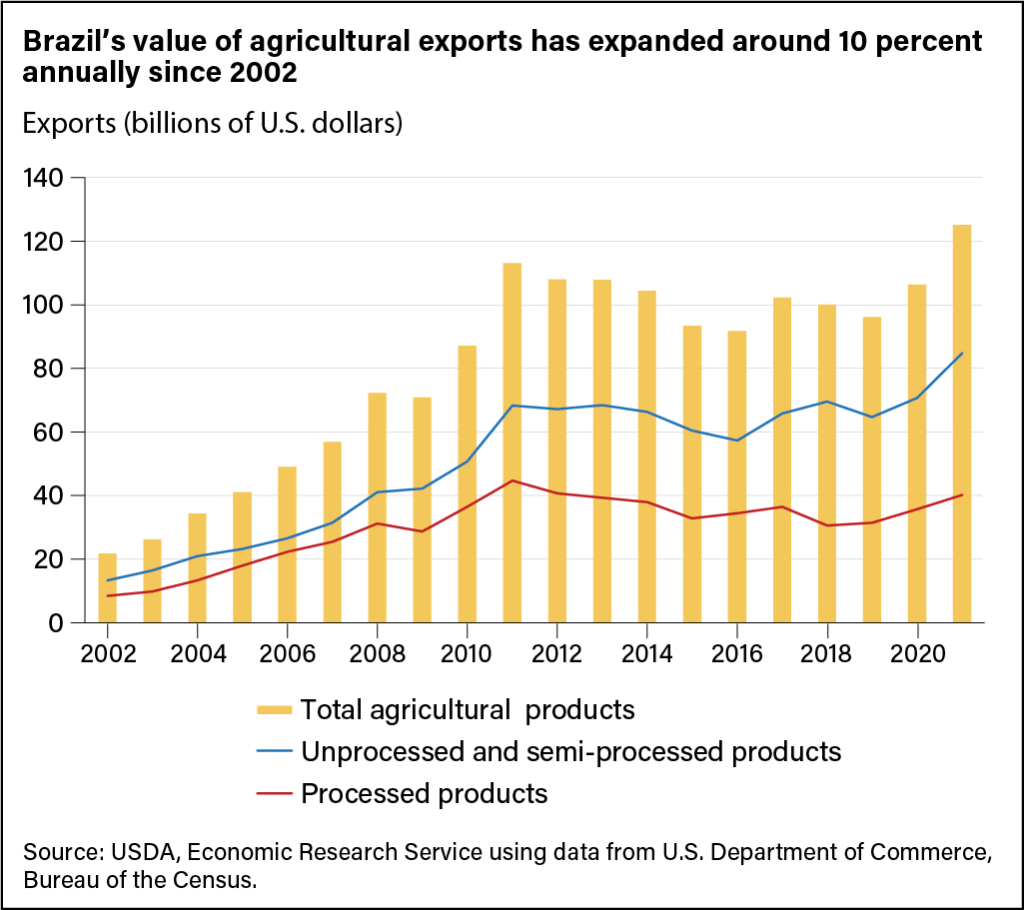
Agribusiness plays a crucial role in Brazil’s economic development, representing around 23.5% of Brazil’s GDP (PIB for Brazilians) in 2024. Not only that, but they also represent a huge portion of Brazil’s exportations, taking part in around 49% of all exports in 2023, again, depicting its incredible impact on Brazil’s economy.
At the COP30, a huge possibility for this topic was created, as for the first time, the COP introduced the AgriZone, a place that will mainly focus on the discussions of agriculture. This created a huge opportunity for Brazil to depict its agribusiness interests. As a result, Brazil’s main objective was to depict Brazil’s agribusiness as something modern and technological, and that can coexist with being environmentally friendly while also producing. Such that the vice-president of ABAG, Ingo Plöger, indicated that “investments in science and technology in Brazil have fostered climate-smart agriculture.” Further indicating the idea of a technological advance in Brazil’s agribusiness, which leads to a more environmentally friendly practice.
Overall, Brazil’s goal was to demonstrate to the world that its agribusiness can be environmentally responsible, which conflicts with the other ideas that it causes deforestation, greenhouse effects, and other social problems. Solving it all through investments in technology and science, making it all possible.
Overall Agribusiness
Agribusiness, a term that involves the business of agriculture, plays a huge role in Brazil’s production. Brazil’s agribusiness involves mainly the production of soybeans, sugar, and corn, as seen in the graph below

Brazil says it all, it is the number one producer and exporter of soybeans in the world, such that, according to MercoPress, Brazil exports around 56% of all the soybeans in the world, depicting its immense agricultural power to the world. Not only soybeans, but Brazil is a leading exporter of many other commodities, such as corn (31%), coffee (27%), and sugar (44%).
In order to be able to produce such incredible amounts of commodities while also being a sustainable country, Brazil utilizes precision agriculture technologies in order to avoid unnecessary waste and to also optimize inputs; in other words, producing more while producing less waste. Some of these technologies are: drones, sensors, and GPS-guided equipment, all of which are from the current times that help a lot with the environmental impacts problem.

Such technologies were also discussed in COP30, especially with the creation of the AgriZone, which was mentioned before. As stated beforehand, Ingo Plöger indicated these supposed investments in technology, stating that because of these investments in technology, they were able to foster climate-smart agriculture; thus, making Brazil a leader in sustainable agriculture.
Conclusion
Brazil’s commitment as COP30’s Host nation is about more than just diplomacy; it is about changing the perception of its environmental agricultural identity for the better. With the COP30 focused on Belem, Brazil will be able to showcase its balance of climate leadership and tropical agribusiness innovation, as noted by Roberto Rodrigues and honed over decades of artisanal and scientific practice. Brazilian agriculture is proof of what can be achieved when productivity and sustainability intertwine through scientific research, adaptive agriculture, and ecosystem stewardship. With COP30, Brazil gets the opportunity to display the environmental relevance and cultural wealth of the Amazon and the Brazilian tropics, as well as the agribusiness sector’s sustainability. This is a fertile space from which to present sophisticated tropical developments that Brazil hopes will be a beacon for a new climate of global investment as the world warms.
Bibliography
https://www.brazilianfarmers.com/news/brazilian-agribusiness-breaks-export-record-in-2023/
https://en.mercopress.com/2024/03/09/brazil-leads-the-world-in-exports-of-seven-food-commodities
https://agropecfuturo.com.br/sustainable-farming-brazil-complete-and-practical-guide/
 EAC PRESS