Writen by André Dantas
At our school, juniors and seniors participate in the International Baccalaureate (IB) program. This program challenges students to their limits, encompassing a comprehensive two-year curriculum that includes Internal Assessments, an Extended Essay, Individual Orals, CAS projects, and ToK projects, in addition to the six advanced courses, from which three are elevated to Higher Level (HL), where the workload is significantly increased. Nevertheless, this provides students with a rigorous curriculum that is highly recognized internationally, drastically increasing their chances and competitiveness for contesting in a competitive pool of applicants. For instance, IB students have over 18% higher chances of entering a competitive international university (Knowledgeum Academy, 2024).

That said, with a fresh batch of juniors entering the IB program, I decided to interview (mainly juniors)the new IB students about their thoughts and expectations of the IB, also including a few seniors and 10th graders to share additional reflections and possible tips for their underclassmen. As such, this article aims to provide a casual and interesting overview of EAC students’ views on IB.
In the numerous interviews conducted around the school, the primary focus was on the juniors’ thoughts regarding the IB, which deepened my understanding of students’ initial experiences/impressions. These questions were designed to understand the juniors’ general perspective on the IB and their motivations for pursuing this diploma.
For instance, I interviewed students asking about their current IB experience, as it had just started. Expectedly, many students reported similar experiences, with the majority describing a sense of casualness and tranquility. In general, many reported casual interactions and workloads; however, they predicted a significant increase in such elements. They also noticed a change in the atmosphere, as it became tenser and more serious. As a result, students shifted their approach to classes, immersing themselves deeper (noting down every class, for instance). This was also associated with a larger preoccupation for their HLs. Isabella Sassaki reported an interesting response.
“Until now, IB has been OK. People are more serious, and professors give us more responsibility and independence for our studies.” – Isabella Sassaki
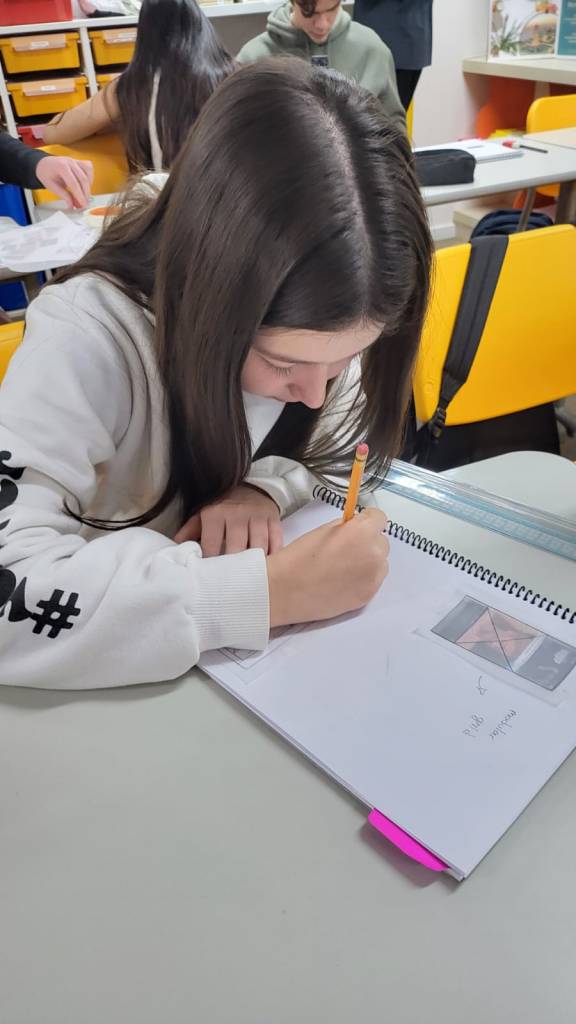
The question that followed addressed their personal beliefs on how IB would progress in terms of scale of difficulty and workload, as many students received varied information on such progress from teachers and upperclassmen. As expected, the same interviewed students reported having a common consensus in terms of progression, predicting exponentially harder progressions in workload. They revealed critical skills that needed to be employed for a positive performance, such as time management, organization, and developing frequent study habits. This would, according to them, significantly help in balancing IAs and class content. Tomás Lima responded similarly to all of these points, but he pointed out an interesting behavior he would adopt.
“I am positive IB will get harder than before, but I see myself getting used to this pace, as I already have positive academic habits.” – Tomás Lima
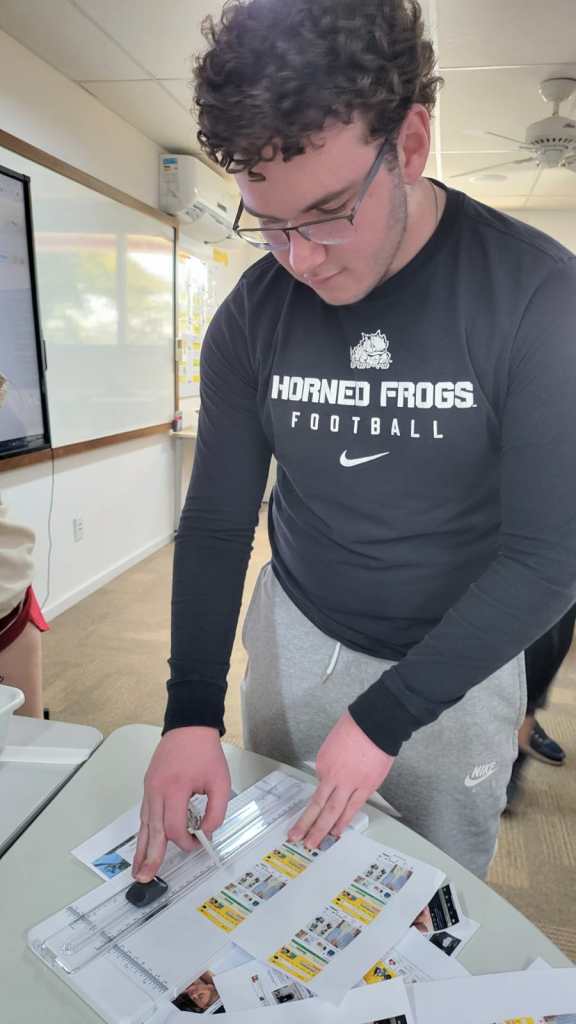
Additionally, I interviewed other students to gather their opinions on their IB schedule. At the beginning of the junior year, the school provides a schedule on PowerSchool that will not change until the student graduates (that is, if they decide to maintain their current classes).
When conducting the interviews, the majority of the students interviewed viewed their schedules positively, emphasizing that their schedules are interesting and that classes are well-placed to avoid boredom. However, they did emphasize that there are some days when class difficulty is unbalanced, which includes attending multiple HLs and relatively complex SLs in one day. They also suggested that changing schedules when transitioning to senior would be optimal, as it would make the schedule interesting once again. The one who most expressed his frustration was Lorenzo Paschoal.
“I hate that my 3 HLs are on the same day, as I organized them in the form to separate them into 2 days.” – Lorenzo Paschoal
As stated before, the IB is a rigorous course that pushes students to their limits. Based on this, my curiosity sparked as to why students continue to move forward despite their significant challenges. Each student interviewed provided a unique perspective and reasoning for their perseverance in the IB program.
“Not only the feeling of proving myself to me, but also the feeling that this is something that will eventually be impactful towards my future. I know that skills taught will transfer to other areas.” – Tomás Lima
“I need to build a strong curriculum to compete in competitive universities, build organizational skills for the future, build creativity, critical thinking, and time management, which will help when I’m independent. Also, courses are essential because I wish to pursue chemical engineering.” – Anita Baneza
“I want to get into a good college with a scholarship. I am a Christian, so I see myself as privileged to have the education I have, so I want to use every opportunity possible.”- Zidu Nogueira
Following the juniors, I interviewed 10th graders, as their current school year is the last one before starting IB, which I expected would generate a slight feeling of anxiety. As such, although 10th graders currently have little to no information about IB, all 10th graders interviewed reached a consensus that IB would be complicated and challenging, significantly different from the usual standards and routines they have been accustomed to.
Additionally, Rafaela Monteiro was exclusively interviewed regarding her opinion on the current IB’s experience to provide a slight anticipation of what senior years and the overall IB experience would be like. Specifically, she said the following:
“The IB changes significantly from 11th to 12th grade, as the workload increases rapidly and assignments become more serious. In 12th grade, the focus shifts heavily toward IAs and final versions of the EE, while in 11th grade, most of the time was dedicated to learning content. Being a senior also makes time management even more essential, as the pressure is higher due to this being our last opportunity to improve predicted grades before the final exams.”
For the final interview, Mr. Lucas Lobo, the current IB teacher for Economics SL/HL, was interviewed to provide meaningful advice to the anxious new IB students.
“Consistency is key” – Mr. Lobo
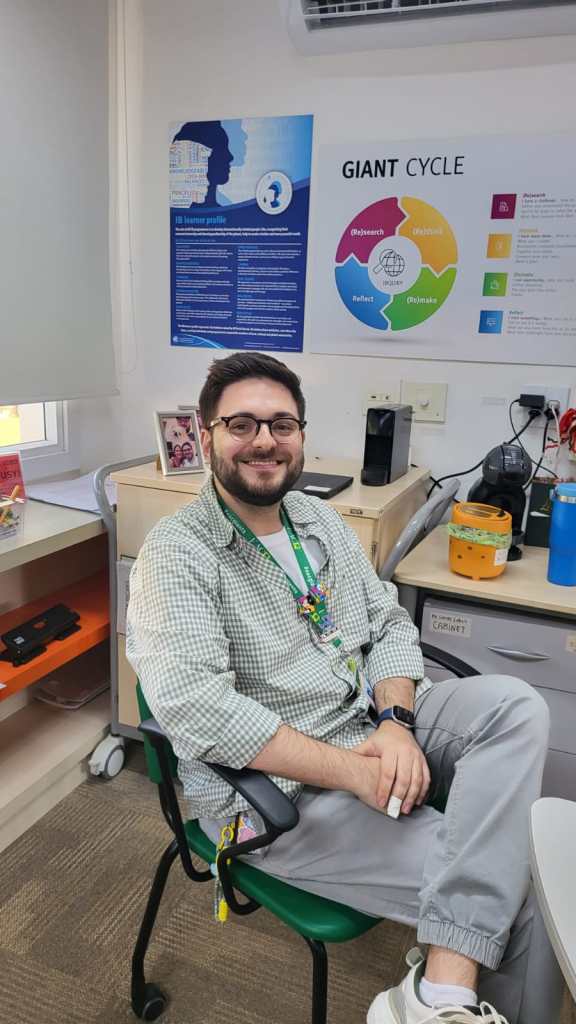
Mr. Lobo emphasized the importance of daily commitment and organization, as IB tends to pile up quickly and ultimately becomes a marathon; therefore, such skills are pivotal to delivering the best results in a student’s academic performance.
 EAC PRESS