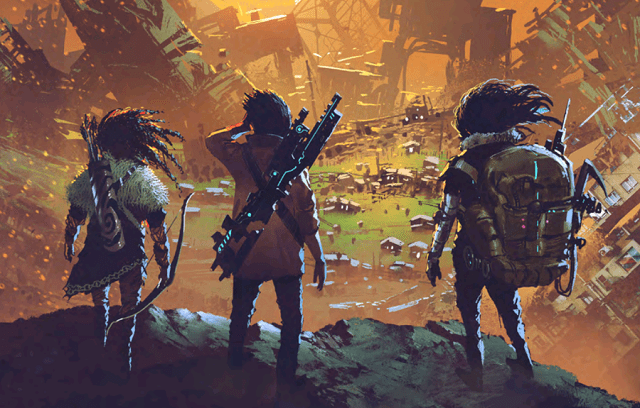
Created by American game designers Gary Gygax and David Arneson in 1974, Dungeons & Dragons (D&D) is a historical breakthrough in the RPG genre. It is a game that has become infamous in pop culture, often described as a game made for shut-ins and the typical nerd side character from Hollywood musicals. In fact, in the 1980s, D&D was even wrongfully accused of promoting Devil worship. Because of this, the game has never seen the audience it deserves. But despite the bad reputation D&D gets, it is actually very beneficial for children and players of all ages. The New York Times itself recommends that writers play D&D for a formative experience in writing literary works, as many writers claim that it helps them develop their storytelling and form their creative spirit. Recently, however, the game has had an unexpected surge of popularity, possibly from influences from the popular show Stranger Things, and the popular livestreams of Critical Role, a D&D party that livestreams their sessions on Twitch, and posts their highlights on social media. Still, the game has almost no reach to people who could take an interest in it. In this article, we will discuss the basics of D&D and explore the possibilities of fun and adventure that the game offers, and see how you would want to live out your fantasy adventures in D&D.
D&D has to be set in a specific place, with a particular time, a defined society (or lack thereof), and a distinct mood. Some campaigns can be funny, dark, grimy, or have the thrill of discovery, independent of the players. So, at the beginning of the campaigns, especially for your first ones, it is important to try to take inspiration from pieces of media that you enjoy. It doesn’t have to be one set piece, but it is not exactly easy to mix Tron and Battlestar Galactica with no Country for Old Men or an old western. So, try to pick out a main theme, and it is also very important to outline the technology of the time. Do you want to fight with bows and swords, or with tanks and cannons? It is essential to establish this, as it can completely change the dynamics of your characters and your combat. A classic example of D&D is the medieval aesthetic, flying dragons and scheming goblins, and a party of adventurers armed with swords, axes, and crossbows, inspired by the novel The Lord of the Rings. This sets up your character creation. This is where people start to get spooked with those big statsheets, but trust me, it is easier than it seems.
First, you need to choose your character’s race and class. Different races have different bonuses, like Orcs, who have bonuses to strength and constitution. And Tabaxis, the cat race, has bonuses to dexterity. With this in mind, it is recommended to pick a race that fits your character’s fight style. Your class also dictates your fight style. There are many classes in Dungeons and Dragons, but they can be summed up as fighters and wizards. Some classes are proficient in magic, others are in touch with gods or demons. Others are really good at fighting. This is the deciding factor in how you will play the game’s combat, and it even affects other aspects of the game, like roleplay. A wizard might act wise and distant, and a fighter might act bashfully and heroically. But the beauty of D&D is that you don’t need to do this. Want to play a gargantuan Orc who is a master of wizardry? A small Goblin who is a berserker, wielding a great hammer? You can, because all these rules are suggestions, and the game can be whatever you want. Once your character’s idea is fleshed out, it is good to write your character’s story and motivations. Then, you can put points into your stats to make you better at certain things. Stats like strength dictate how strong you are. Stats like constitution determine how many hits you can take. To fully complete your character in D&D, it is best to get a guide online, or else this segment would be 3 paragraphs long!
But now you are probably wondering, how do I actually play this game? Well, as a first timer, it’s good to try to look around your community or any forum for people looking to play D&D. Online or local, people always tend to want an addition to their team. You need to ask permission from the people to join, and you are all set to start your adventure. D&D is played through storytelling, and you can decide what your character does in the world. For example, if the dungeon master, or the storyteller, sets up a scene where your friends are trapped inside a cell for a crime you didn’t commit, and there is a guard in front of the cell with the keys, you might decide you want to: persuade the guard, or sneakily steal the keys from his belt. Better yet, you might want to knock his head against the bars and pick the keys from his unconscious self.
Suppose you decide you want to go for violence and ask the DM if you can do that. He agrees and says: “ok, roll a D20 strength check and a dexterity check. If you get a 15+ from these rolls, you succeed on your action”. What does this mean? Well, the DM is asking you to roll a die, and the higher the number, the more likely you are to succeed. However, this is not 100% random. Remember when we were talking about characters? So you go to your statsheet to see if you have any modifiers to strength or dex. Let’s say your character has an 18 strength score and an 8 dexterity score. This means when you roll, you can add 4 to the outcome of the strength dice and -1 to the Dexterity dice. So if you got an 8/20 for strength and a 12/20 for dexterity, your final score will be 12 strength + 11 dexterity, and you pass the check! You have successfully played a round of D&D.
Now, imagine you and your friends manage to escape the cell and stop at a bar for drinks. Then a stranger bumps into you and spills his drink. He asks, ” What’s your problem, and now you are in a roleplay scenario. You can choose how to act based on how you think your character would act. If they are shy, you could probably say sorry and de-escalate the conflict. However, since you knocked out the guard earlier, that’s probably out of the question. Your character might be angry and call the man a drunk imbecile, escalating the conflict, or act all high and noble, stating it’s clearly his fault. All this shapes how the environment shapes your actions.
Sometimes it’s not easy to come up with Ideas for D&D campaigns by yourself, or have an Idea of how to play D&D, especially from a very short and summed-up guide like this one, and those big books people tend to see when searching for D&D stories end up being even more intimidating. Because of this, I recommend a great show that is easy to watch and get into, called Critical Role. It’s a group of people that get together to play D&D, and as experienced players, they give great examples as to how you should act and play D&D. The plots are super entertaining. They have also become really popular on Twitch and YouTube Shorts, and believe me, it is a very fun watch. If you want something more personal, please feel free to come to our D&D club on Mondays! Unfortunately, we are already at max player capacity, but if you want to come over, sometimes we have snacks for the players, and it is a really fun time regardless! Right now, we are playing a retro futuristic campaign where the players are a group of hired muscle fighting crime on a large map, all designed by me! Recently, I’ve had the lads explore an old abandoned warehouse where there was suspected organized crime activity. However, after organizing the warehouse, they find an underground storage area still populated by a few thugs, and they had to fight their way out.
D&D is a wonderful game, and it is one of the most moldable, personalizable, and customizable role-playing games of all time. I recommend D&D to everyone, and I urge people to try it. It is so fun and something that will keep you occupied and entertained, and guarantees simple fun with your friends. Just give it a shot!
 EAC PRESS