By: Arthur De Melo Ellwanger
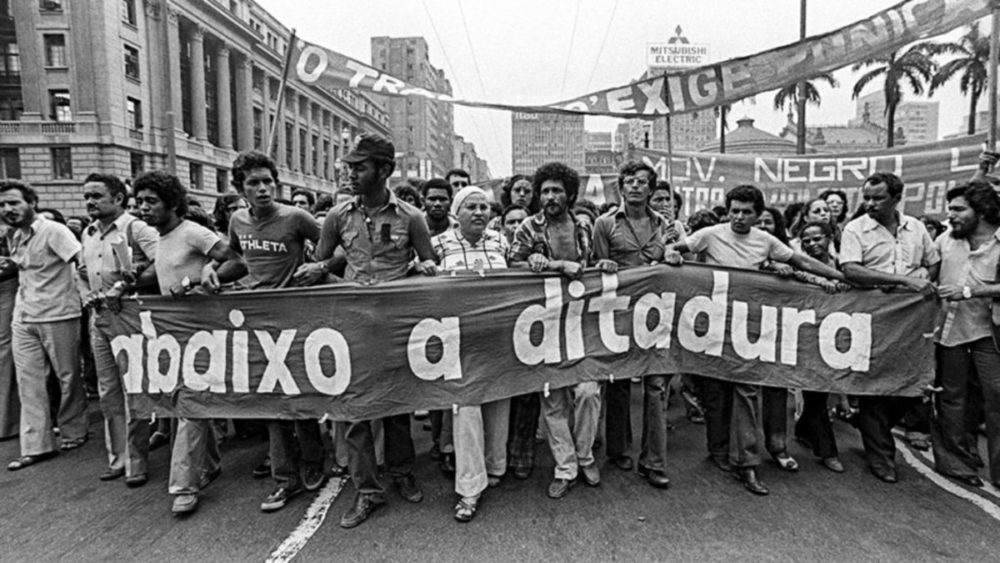
The military dictatorship in Brazil was a very important and complicated period in our history, lasting from 1964 to 1985. To better understand what the dictatorship was like, it is essential to understand how it began. This regime began with a military coup that removed João Goulart from power. The military said they were taking power to combat corruption and the threat of communism, but what they did was create a government that severely restricted the freedom of civilians and human rights. During these years, Brazil lived in a climate of fear; if anyone did anything against the dictatorship, they would be punished. Censorship became a common practice against people who wanted to publish books, songs, and films that addressed themes that criticized the military regime; they were prohibited from being published unless they changed things that the dictators ordered; if the authors of these works did not do this, they would be arrested.
The dictatorship also affected Brazil’s educational and academic freedom. The regime applied strict controls over educational content, and promoted its own authoritarian ideologies. Subjects like sociology and philosophy were removed from the curriculum, removed to be added “ Moral and civic education” designed to make obedience and align with the government’s view. Educators faced severe restrictions, many were watched, dismissed or persecuted. This lead to a atmosphere of fear in the school. One clear example is from Paulo Freire, He got 300 adults and teached them the alphabet in 40 hours. The dictatorship didn’t agree with his attitude because if more people had independence, then more people would have the power to oppose the dictatorship, wasn’t what they wanted. So they sent him to jail and then forced him into exile from Brazil for 16 years.
During the dictatorship, the government imposed certain rules that consolidated its power and eliminated opposition. Institutional Act No. 5 (AI-5), published in 1968, was one of the most critical moments of this period. This act allowed dictators to take away political rights, remove people from their political positions, and be able to use violence against anyone who opposed the dictatorship. Torture, imprisonment, and the disappearance of opponents became common, and everyone was forced to live in a climate of constant fear. Society could no longer have the power to speak, and people in resistance demonstrated in various ways, such as clandestine actions. This historical context is important to understand how bad the dictatorship was and why the fight for human rights was so difficult. Dean of Students and teacher Rodrigo Miranda and teacher Jaqueline sought to share this understanding with students through a simulation at school
To help students better understand this period, Rodrigo Miranda and Jaqueline decided to hold a simulation of the military dictatorship. The idea was to show, in practice, what it was like to live under an authoritarian regime. On the morning of the simulation, the seniors gathered in the room where the school’s announcements were made and announced that things were now going to change, but no one needed to worry. This initial approach was a way to illustrate how the population was gradually getting used to the loss of their freedoms
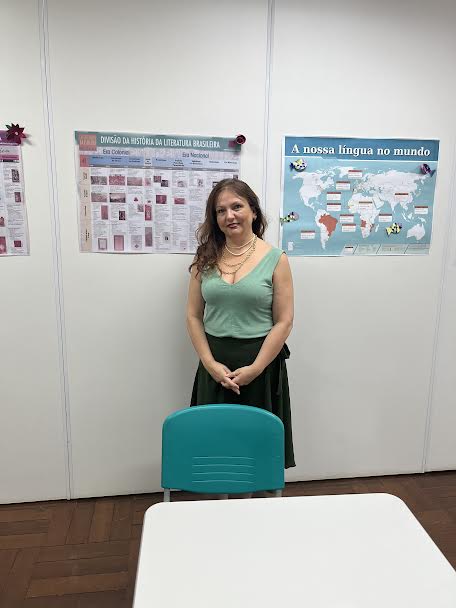
Teacher Jacqueline
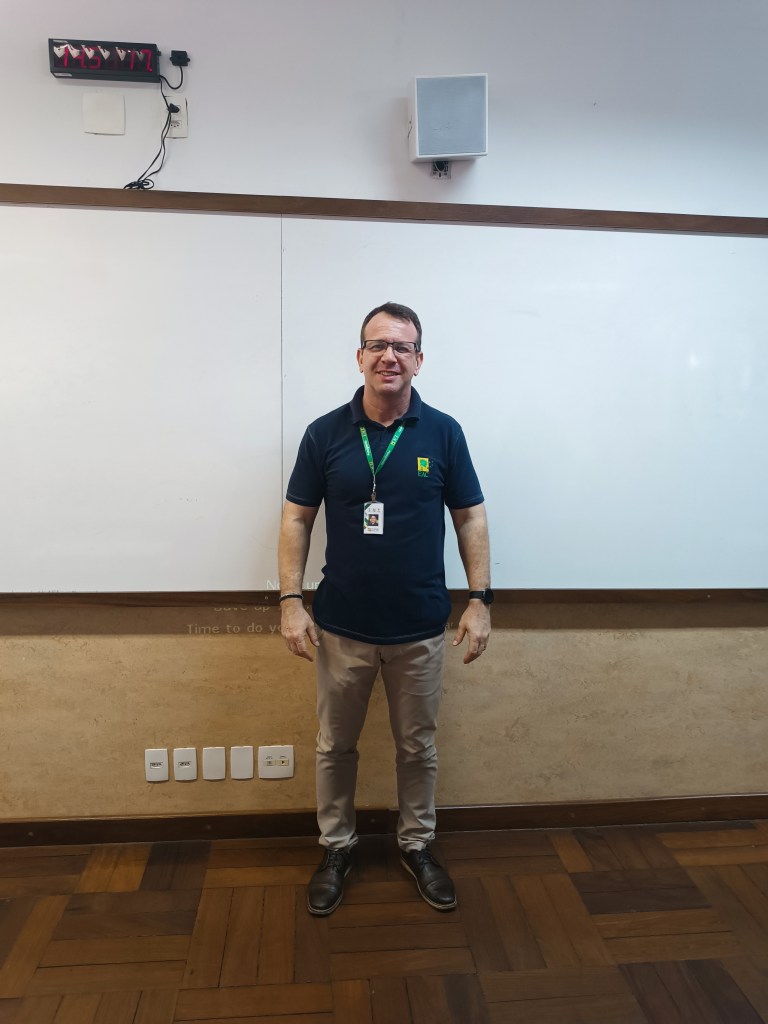
Dean of students and teachers: Rodrigo Miranda
The teachers, who were already aware of what was going to happen, left the classrooms saying they needed to go to the bathroom, but in fact they were “kidnapped”. A substitute teacher, representing the authoritarian regime, entered the room and changed the entire lesson. While the original teacher was calm and taught in a relaxed way, the substitute presented his own vision, ignoring parts of the content that did not connect with the idea of the dictatorship. This shows how education was manipulated during the military regime, with the censorship of important information
Throughout the day, students had their cell phones confiscated, symbolizing the limitations on communication and their own freedom. During the dictatorship, people were not allowed to express themselves freely, and censorship created a climate of fear. To represent their resistance, a group of students organized themselves to sing songs and spread posters in the school hallways. These posters served to motivate their classmates to express themselves and not be afraid of the coup regime. This action symbolizes the fight for freedom that society had against the dictatorship, and also shows the attitude of the resistance groups against the dictatorship, playing songs in the hallways and putting up posters around the school symbolizes the opposition trying to convince the society to express their opinions and emotions.
At the end of the day, Rodrigo and Jaqueline gathered all the students together to tell them what had happened that day. They said that the simulation was intended to give the students an experience of what the dictatorship was like and its consequences. However, Rodrigo Miranda noticed that the younger children were a little confused about what was happening, which shows the importance of teaching Brazilian history to new generations.
Rodrigo also expressed his concern about how the current political conflict could impact the reception of a new simulation. He mentioned that many parents could be bothered by the activity, confusing the educational intention with their own political thoughts. This situation shows how important it is to have an open dialogue. If Rodrigo had talked to the parents and made them understand the proposal, perhaps we could have something similar today. However, there was also the risk that the parents would tell their children what was going to happen, and then the immersion and the purpose of the simulation would be broken
The simulation at school was not just a fun activity, but a great opportunity to reflect on the importance of freedom. By learning from the mistakes of the past, new generations can become defenders of a more just future, ensuring that the horrors of the military dictatorship are not repeated.
 EAC PRESS
From the title alone, I was immediately shocked and anxious to know precisely what actually occured, as I had no idea what this article was going to be about. But I was later fascinated by the complexity and intention of the activity displayed. I never had the slightest knowledge that this experiment was played in school; nonetheless, I found the method of application of such experiment very interesting, as I believe this is an excellent form of transmitting knowledge and reflection.
LikeLike