By Tomás Lima
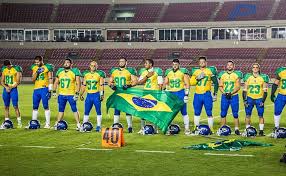
In September of last year, Brazil was host to a game of the NFL’s (National Football League) International Series, the NFL São Paulo Game, a matchup between the Green Bay Packers and Philadelphia Eagles, where the latter won by a score of 34 x 29, in Neo Química Arena. Immediately, the game brought a spotlight to the most popular sport in the US: American Football. While it won’t rival our own futebol, American football has had an increasingly growing popularity in Brazil. In the NFL São Paulo Game alone, there were more than 47,000 fans present in the stadium, along with the hundreds of thousands watching from home, an attendance that rivals some of the top soccer clubs in Brazil. The event also moved 61 million dollars throughout its duration in the city, overall a great success.

However, football only gained more popularity recently. Despite popular belief, the sport is not some new foreign sensation. In fact, football has been present in our country for decades. As early as the year 2000, a competition known as the Carioca Bowl was hosted in Rio de Janeiro. This wasn’t the typical football game, however. With a Brazilian twist, the competition was played in the beaches, a beach football tournament. While having a beautiful view, beach football was not enough and people wanted to play the sport like they saw it on TV.

With the hunger to play football like in the NFL, the first full-pads game, that is with all of the necessary equipment, was played on October 26th, 2008, where the Curitiba Browns Spiders beat the Barigui Crocodiles. The first show of fully equipped football in Brazil, aside from being historic, also serve as a teaser of what would come in the following year’s Campeonato Paranaense

Football has, at this point, been a widely played sport at the amateur level, for years now in Brazil, despite most of the public thinking it is not played at all. National championships, regional championships, and even state championships, just like in soccer, have been played for more than a decade all across the country. For example, the Liga BFA (Brasil Futebol Americano), hosts their Brasil Bowl yearly, the national championship game. To qualify for the Brasil Bowl, the winners of the Midwest/North conference face off against the Southern conference champions, while the winners of the Northeast conference face off against the Southeastern champions. In total, the tournament is composed of around 70 teams all across Brazil. Last year, for instance, the game was played at Arena Pernambuco, stadium that was built for the 2014 World Cup, in a showdown between the Recife Mariners and Galo FA, where the Mariners won 22 x 06.

While this might all seem very distant, state tournaments also occur all over, including in São Paulo. The major state tournament is the SPFL, or São Paulo Football League, which contains 3 divisions, in descending order, the Série Diamante; Série Ouro; and Série Prata. The winners of the Série Ouro and Prata earn promotion to the next division, while the teams that are last in the Série Ouro and Diamante get relegated to the previous division. Campinas itself has its own football team that plays in the tournament. In fact, it has 2, both with very recognizable names. The Guarani Indians and Ponte Preta Gorillas represent the city of Campinas in American Football. As one might expect, the heated rivalry between the soccer teams also carried over to the football teams.

The first game of the SPFL Série Diamante was held on the 16th of March, a 21 x 7 win by the Sorocaba Vipers over the Empyreo Leme Lizards, marking the beginning of the state tournament. More importantly for the city of Campinas, however, both the Guarani Indians and Ponte Preta Gorillas played their first games on Sunday, March 23rd, in Avaré against the Avaré Lions and Franca Carrascos respectively. Under chilling rain the Indians came out on top, with a dominant 29 x 0 victory. The Gorillas, however, were not so fortunate, and came out losing 20 x 06. On the 18th May, a city derby between the Gorillas and Indians will occur here in Campinas, and all are invited and more than welcome to watch the match with no costs.
“Football is for everyone”
– Tomás Lima, player for the Guarani Indians, journalist
The way for one to join most teams is not complicated. Simply keep an eye on the social media of a team close to you and wait until they announce a tryout. Most of the time, the teams welcome those who have no experience and knowledge of football whatsoever, and the tryouts are typically a physical evaluation of the player, to see if they have the capability and potential to learn and play football effectively. Football is for everyone and most teams include flag football teams that accommodate all ages and genders. Flag football is played with mostly the same rules, however without the heavy equipment and contact, where every player wears little strips, the flags, around their waist, and instead of tackling the person to the ground, the defender simply removes the flag. In this way anyone, independent of age, gender, experience with the sport, etc, can learn and enjoy football from scratch, make new connections, and improve their lifestyle and health through the sport.
Aside from the individual clubs that play in varied tournaments, Brazil also counts on its own national team for football. Similar to our “Seleção”, the Brasil Onças calls up various Brazilian players from around the world to compete with other national teams. Founded in 2007, the Onças played their first game against the Uruguayan national team. Since then, the team has participated in the 2015 American Football World Cup and hosted a small South American Tournament against Chile and Colombia in 2023, where Brazil was nothing short of dominant. The teams also count with women’s teams and flag football teams.

While it won’t be replacing our beloved soccer, football is slowly becoming more and more popular in Brazil, and less of an alien creation. Slowly, the football tournaments are steering away from the typical amateur tournaments, but becoming bona fide competitions, treated seriously, that have even amassed fans. It is always important to keep an open mind, and trying a new sport such as football brings new experiences and opportunities
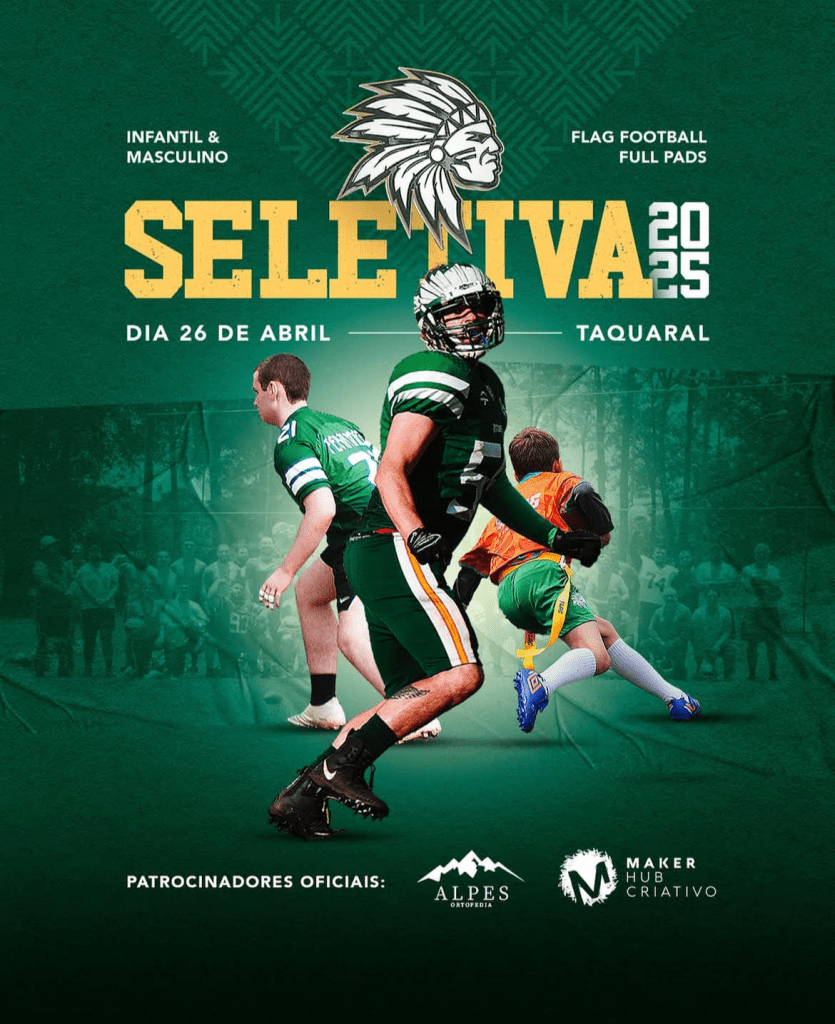
For any interested, the Guarani Indians will be holding a tryout for their male and children’s full pads and flag football teams on the 26th of April, at Parque Taquaral. The Ponte Preta Gorilas should also announce a tryout soon. For more information and updates, be sure to check out both teams’ Instagram pages, @indiansfa and @gorilasfa, respectively.
 EAC PRESS
I find it really interesting how american football has spread to Brazil, I was always interested in american football, so it is very nice to know that I now have the opportunity to participate in this kind of sports. I found this post extremely interesting and I enjoyed the thorough insight into the current influence american football has on our country. As I always aspired, I will try to participate in american football from now on.
LikeLike
Tomas, achei essa uma analise ótima do futebol americano brasileiro, porem você esqueceu de mencionar que o Gorillas é o time de campinas superior e que o Indians não conta e os derbis foram todos pra mídia.
#ponteparasempre
#guaranojo
LikeLike
Your article positively gives the viewers a lot of information and past history about Football here in Brazil which is something really nice. Not only that but you gave really good images that accurately represents the topic you are discussing. Lastly, the topic you chose is something that was really nice to bring attention to and is something that many can find interesting in doing or watching here in Brazil. Great job.
LikeLiked by 1 person
I think it’s really cool that Brazil is adopting more and more foreign sports into its culture, and the inclusion of American football for teams in Brazil helps promote even more exercise and team sports for young people, which are great for children’s development.
LikeLike