Written by Yechan Han
Due to the advancement of technologies and innovations, our current society is now a digital society that allows for more access to entertainment and leisure through the internet, social media, and digital apps. Hence, the most outstanding entertainment that is continually getting popular and diverse is sports, such as soccer. With the support of digital technologies, soccer is getting more popular and popular, creating a variety of businesses, programs, and leisures. Therefore, this article will thoroughly explore and analyze the current situation, history, and future of Korean soccer. First of all, South Korea’s culture is deeply rooted in Korean soccer, and it is getting popular due to improved performances. Thus, with prominent performances in international competitions such as the FIFA World Cup, South Korea’s national soccer squad, the Taeguk Warriors, is among the best in Asia and has experienced success on the international front. After hosting the 2002 FIFA World Cup alongside Japan, where the South Korean national team made an incredible run to the semi-finals and finished in fourth place, the sport gained popularity in South Korea, which enhanced South Koreans’ affection for soccer.
Korean Soccer Nowadays
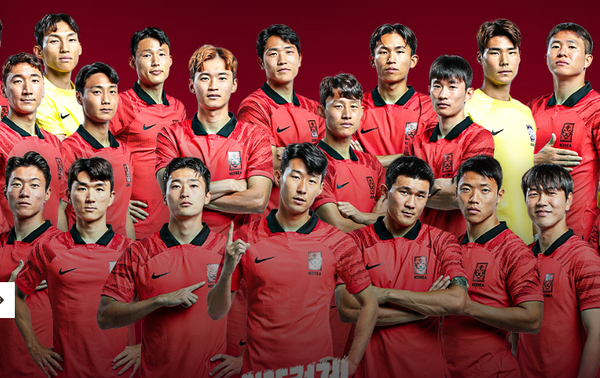
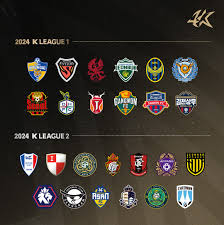
The current situation of Korean soccer is both being a success and a challenge. For success, the performance of the Korean National Soccer team plays a huge part. As the South Korean national team regularly makes it to World Cup competitions and maintains its competitiveness in Asian football, people’s interest and advancement in soccer is continually increasing. On the international front with a FIFA ranking of 22, the Korean National Soccer team is considered formidable and competitive, being one of the best teams in Asia. Moreover, K-League development also plays a significant role in the success of Korean soccer. The domestic league has been expanding, with an increased emphasis on enhancing club infrastructure and player quality. The competitiveness is enhanced by the combination of talented overseas players and seasoned native players. Although, the K League does not, however, have the same level of international recognition as some other European leagues, K League is the base of Korean soccer that continually produces great players. As an example, players abroad such as Son Heung-min who is one of the most famous Korean players that have enjoyed notable success in Europe, demonstrate the success of Korean soccer. He is considered the best Asian player in the world and plays for Tottenham Hotspur in the English Premier League as a captain which depicts the influence of Korean soccer in one of the biggest leagues in the world. Furthermore, other players such as Hwang Hee-chan (Wolverhampton Wanderers) and Lee Kang-in (Paris Saint-Germain) also show the growing global influence of Korean soccer.


On the other hand, despite the strong international presence and growing talent pool, there are several problems and challenges that Korean soccer faces currently. Firstly, as mentioned above, although there is a huge development in the domestic soccer league, the K League still struggles with some issues. Despite the improvement in the K-League, League falls short of other Asian leagues such as China’s CSL and Japan’s J-League in terms of popularity and financial success. Clubs often struggle financially, and the K-League has yet to attract as much international interest or investment as its rivals in Asia. Moreover, over-reliance on players overseas in the Korean National Soccer team is also a tremendous problem. While players who play abroad have greater technique and balance than K League players, over usage of those players raises concerns about them taking up spots that could be used to nurture promising Korean talent. The bad habit that Korean soccer has is only using the same players for most of the game without changing them, and most of those players are playing abroad. Hence, the injury of those players has a great impact on the performance of the Korean National Soccer team due to the over-reliance. Therefore, this has led to discussions about how to strike a balance between developing domestic players and players overseas who play a significant role in the Korean national Soccer team. Furthermore, Korean soccer is currently facing management and leadership issues. The Korean Football Association (KFA) has come under fire for its decision-making and governance. Long-term growth has been impeded by problems such as weak leadership, political influence in decision-making, and insufficient grassroots development initiatives. As a consequence, a lack of management and governance also led to the absence of global branding, which has become a huge problem in Korean soccer. The Korean national team and domestic league have struggled to build a strong global brand despite the success of individual players overseas. There is a lack of international recognition that can enhance the sport’s reputation and provide revenue.
Those successes and challenges of current Korean soccer mentioned above are also related and can be explained through the history of Korean soccer. Korean soccer has a rich and long history, with notable turning points at the national and international levels. Thus, now this article will explore the history of Korean soccer through the observation of an overview of the history of Korean soccer, with particular attention to the national team’s participation in international competitions such as the Olympics and the FIFA World Cup, as well as the key figures and events that have influenced the growth of the sport in Korea.
History of Korean Soccer
South Korea’s first involvement in the FIFA World Cup dates back to 1954. Though the team couldn’t make it to the World Cup and was eliminated early in the tournament, it marked the beginning of South Korea’s ongoing participation in prestigious international football competitions such as the FIFA World Cup and the Olympics. In the 1954 FIFA World Cup, South Korea’s first appearance in the World Cup was in Switzerland. They were eliminated in the group stage, losing both of their matches, but this was the start of their World Cup journey. In the 2002 FIFA World Cup, a landmark event in Korean soccer history, South Korea co-hosted the 2002 World Cup with Japan. The national team made a historic run to the semi-finals, finishing in 4th place, which remains South Korea’s best World Cup performance to date. This achievement captured the national interest in soccer and increased the profile of Korean soccer globally. Therefore, South Korea has consistently qualified for the World Cup since 1986, making it one of the few teams to have appeared in every tournament since then. Thus, their continued presence on the world stage has established them as a dominant force in Asian football. Moreover, South Korea has also participated in soccer at the Summer Olympics, although the country’s Olympic soccer team has generally not had the same degree of success as its World Cup counterpart. The 1948 Summer London Olympics was South Korea’s first appearance in Olympic soccer, where they played in the first round but lost to Hungary. Then, in the Seoul 1988 Olympics, one of South Korea’s most memorable moments came in this Olympic tournament when they hosted the games in Seoul. The result was incredible and South Korea reached the semi-finals in soccer, finishing in 4th place. This was also a huge boost to soccer in South Korea as it demonstrated South Korea’s growing strength in international football. As a consequence, South Korea’s Olympic soccer team continues to compete at a high level, regularly qualifying for the Men’s Olympic Football Tournament, and securing a bronze medal in the 2012 London Olympics demonstrates the growth of Korean soccer. Therefore, the most active and successful period in South Korean football history came around the 1980s to 2000s, particularly with the 2002 World Cup, 1988 Seoul Olympics, and 2012 London Olympics. By finishing in both 4th place in the 2002 World Cup and the 1988 Seoul Olympics, this period is considered as the golden age for Korean soccer. Moreover, as both the 2002 Korea-Japan World Cup and the 1988 Seoul Olympics were held in Korea, it demonstrates the tendency of Korean soccer playing well in their home ground, South Korea. This is due to the interactions between players and people and their interests especially in the game held in South Korea which demonstrates the influence of Korean Soccer on society. Therefore, there was an expansion of Korean Players in Europe during this period, a significant rise in the number of Korean players moving to Europe to play in top-tier leagues. As an example, players like Park Ji-sung, Lee Young-pyo, and Ahn Jung-hwan achieved considerable success, increasing the visibility of Korean football worldwide.


The Future of Korean Soccer
From now on, as the article already mentioned about both the current situation and history of Korean soccer above, it will talk about the future of Korean soccer that holds potential for growth, though challenges remain. The first key factor that will shape the future of Korean soccer is international exposure for players. Korean soccer is likely to become more widely known as more Korean players join elite European teams which could also benefit the domestic league by drawing talent and attention to Korea. Son Heung-min and other players remaining as ambassadors for Korean soccer is an example that exposes Korean soccer globally. The second key factor is infrastructure and financial growth. As the K League is the most important league in South Korea, K League plans to invest in marketing, youth development, and infrastructure for the future of Korean soccer. A greater focus on improving stadiums, training grounds and club funding could make the league more competitive and popular. Hence, the league’s financial stability could also be improved through more broadcasting, media rights deals, and sponsorships which will improve the future of Korean soccer. A third key factor is grassroots programs and youth development. Korean soccer has improved its youth development systems, which should continue to produce a new generation of gifted players. Hence, a consistent supply of talented players for both domestic clubs and the national team can be ensured with more funding for grassroots initiatives which will improve the future of Korean soccer. Ultimately, improvement in coaching and tactical development potential is also the key to the growth of Korean soccer. The Korean soccer community is focusing on updating coaching techniques and strategies, moving away from the traditional physical style of play to a more technical and tactical strategy that prioritizes creativity and ball control. If this change is implemented effectively, it can improve the overall level of play of the league and the national team.

In conclusion, Korean soccer is not at a turning point in its history, the history that is marked by steady development and key milestones, from its early participation in global tournaments to the 2002 World Cup success and the emergence of world-class players. While Korean soccer is currently having several issues with the domestic soccer league, K Leauge; management and governance; and global branding, Korean soccer is well positioned to continue to expand and become a more important team on the global stage thanks to its strong overseas presence, expanding talent development system, and possible future investment such as improved clubs, facilities, and player pathways. Therefore, with a clear vision for future growth, sustained investment, and ongoing development, South Korean football is poised for continued success in the years to come.
 EAC PRESS
In this article it contains new informations about Korean soccer’s past, present and future. Also I learned that right now Korean national team is in 22th of FIFA ranking and Korean national team has been to semi final and reached 4th in 2002 World Cup. This article contains various pictures from the Korean national team, by the picture it helps readers to concentrate during reading this article, also the bolded words helps to know which part is information. Finally, this article will be helped to people who have interest in Korean soccer’s past, present and future.
LikeLike