By Sumin Lee and Minchan Kim
Baseball has captured the hearts of South Koreans, becoming one of the country’s most beloved sports. Among the various leagues around the world, the KBO League (Korean Baseball Organization) stands as an acme of cultural and societal pride in sports. In South Korea, the love and adoration for baseball with a blend of competitive spirit, regional pride, and vibrant fan culture is ever present. This article will delve into the basic history behind the KBO league and its development, leaning towards its cultural significance by highlighting its impact on South Korean society.

Historical Background: Formation and Early Days of the KBO League
Founding of the KBO League
The KBO League was initially established in 1982, marking a significant turning point in Korean sports history. The league was created to promote professional baseball and offer an organized platform for the sport’s development. In its inaugural season, six teams participated, laying the foundation for what would become a thriving national pastime.
The original teams included notable franchises such as the Haitai Tigers (now the Kia Tigers) and the OB Bears (now the Doosan Bears). These teams, being a precursor to the famous and beloved baseball teams now, demonstrated how the Korean baseball teams would arise, centralizing around various regions to foster local support (or sometimes hate or embarrassment if they had a bad season), nevertheless sparking regional pride.
Growth of Professional Baseball in Korea
Now initially, public reception was mixed, but enthusiasm grew rapidly as fans were drawn to the excitement of professional baseball. Watching their childhood games played at a professional level, the Korean public began to adore the sport’s tendency to draw their attention and anticipation. Attendance figures steadily increased, and the league gained popularity, cementing itself as a staple of South Korean entertainment. Early stars like Sun Dong-yeol and Kim Jae-bak became household names and legends, inspiring a new generation of players and fans alike.
Major Eras and Development of the KBO League
Expansion and New Teams
Over the years, the KBO League expanded from its original six teams to the current ten, reflecting its growing appeal. Key additions included the Samsung Lions, Lotte Giants, and most recently, the KT Wiz in 2013. The addition of new teams has not only intensified competition but also increased fan engagement by broadening the league’s reach to different regions of the country demonstrating how baseball not only creates entertainment but a level of representation and regional pride.
Each team boasts unique traditions and histories, contributing to the rich tapestry of the league. For example, the Kia Tigers, based in Gwangju, are revered for their record-breaking 12 championships, while the Samsung Lions of Daegu are known for their consistency during the 2010s, winning four consecutive titles.

Memorable Seasons and Championships
Several seasons stand out in the league’s history, such as the dramatic 2009 season when the Kia Tigers clinched their 10th Korea Series title with a thrilling walk-off home run by Na Ji-wan. The 2024 season is another landmark year, with the KBO recording its highest-ever average attendance of 15,122 fans per game, underscoring the league’s enduring appeal.
Moreover, historic rivalries, such as those between the LG Twins and Doosan Bears, have only fueled fan enthusiasm. These Seoul-based teams share Jamsil Stadium, often filling it with electrifying atmospheres during derby matches.

Notable Players and Key Figures in the KBO League
Korean Baseball Legends
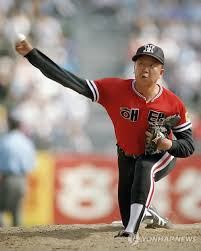
The KBO has produced legendary players whose contributions transcend the sport. Lee Seung-yup, nicknamed the “Lion King,” remains the league’s all-time home run leader with 467 career homers. His consistency and clutch performances cemented his legacy as one of Korea’s greatest athletes. Similarly, Sun Dong-yeol, a dominant pitcher for the Haitai Tigers, set standards for excellence with his impeccable ERA(earned run average) and strikeout records.

Impact of Foreign Players
The inclusion of foreign players has added a new dimension to the KBO League. American players like Dustin Nippert and Eric Thames have left indelible marks, becoming fan favorites and raising the league’s profile internationally. Foreign players often bring diverse playing styles and experience from MLB and NPB, enhancing the overall competitiveness of the league.


The KBO League’s Role in South Korean Society
Fan Culture and Engagement
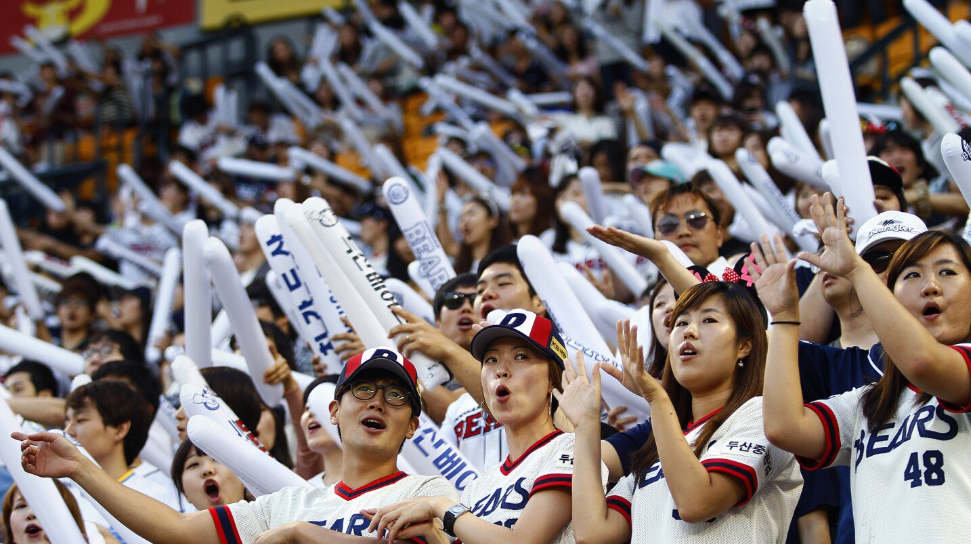
Korean baseball fans are renowned for their passion and creativity. Every game is a spectacle, with synchronized chants, vibrant team colors, and dedicated cheering squads led by professional cheerleaders. Stadiums like Gwangju-Kia Champions Field and Sajik Baseball Stadium offer unique game-day experiences that rival any sports arena in the world.
Team loyalty runs deep, often reflecting regional pride. For instance, the Lotte Giants, based in Busan, are backed by one of the most fervent fan bases despite their lack of recent success. Fans remain unwavering in their support, showcasing the deep-rooted connection between teams and their communities.

KBO League by the Numbers: Statistical Overview
League-Wide Statistics
The KBO League has seen remarkable growth in attendance and performance metrics. The 2024 season set a new benchmark, with all teams averaging over 10,000 fans per game for the first time. The LG Twins led the league in attendance, drawing an average of 19,144 fans per game, while the Kia Tigers and Samsung Lions also posted impressive numbers.
Record-Holding Players and Teams
Records in batting, pitching, and fielding highlight the league’s competitive nature. From Lee Seung-yuop’s home run milestones to Ryu Hyun-jin’s stellar pitching during his KBO tenure, these achievements continue to inspire both players and fans.
A Record-Breaking 2024 Season
For the first time in KBO history, the league achieved an average attendance of over 15,000 spectators per game, reaching 15,122—a remarkable 1,600-person increase from the previous record set in 2012. This milestone underscores the league’s enduring appeal and growing fan base. All ten teams also recorded an average attendance of over 10,000 fans, another first in league history.
With this in mind, here is a breakdown of five of the most popular teams, including their general information and achievements during the 2024 season:
Team-by-Team Breakdown
1. Kia Tigers
- Stadium: Gwangju-Kia Champions Field (Capacity: 20,500)
- 2024 Average Attendance: 17,250
- Championship Titles: 12 (most in KBO history)
The Kia Tigers, known as the most successful team in KBO history, secured their 12th championship title in 2024. Their loyal fan base continues to fill the stadium, making them one of the most prominent teams in the league. The Tigers’ postseason dominance and reputation for nurturing talent have solidified their legacy.
2. LG Twins
- Stadium: Jamsil Baseball Stadium (shared with Doosan Bears, Capacity: 23,750)
- 2024 Average Attendance: 19,144 (highest in the league)
- Championship Titles: 3
The LG Twins boast the largest average attendance in 2024, highlighting their immense popularity in Seoul. Following their championship win in 2023, they remain a powerhouse, consistently attracting passionate fans and delivering exciting performances.
3. Samsung Lions
- Stadium: Daegu Samsung Lions Park (Capacity: 24,000)
- 2024 Average Attendance: 18,452
- Championship Titles: 8
The Samsung Lions had an extraordinary 2024 season, breaking their own attendance record. Known for their dominance in the early 2010s, the Lions are celebrated for their consistency and deep playoff runs, making them a staple of the league.
4. Doosan Bears
- Stadium: Jamsil Baseball Stadium (shared with LG Twins, Capacity: 23,750)
- 2024 Average Attendance: 18,335
- Championship Titles: 6
The Doosan Bears are renowned for their ability to develop homegrown talent and their perennial playoff appearances. With a strong fan base in Seoul, the Bears continue to be one of the most competitive teams in the league.
5. Hanwha Eagles
- Stadium: Daejeon Hanbat Baseball Stadium (Capacity: 12,000)
- 2024 Average Attendance: 11,327
- Championship Titles: 1
The Hanwha Eagles may have only one championship title, but their fans remain dedicated. The team’s focus on rebuilding has brought a renewed sense of hope to their supporters.
Graphs and Statistics
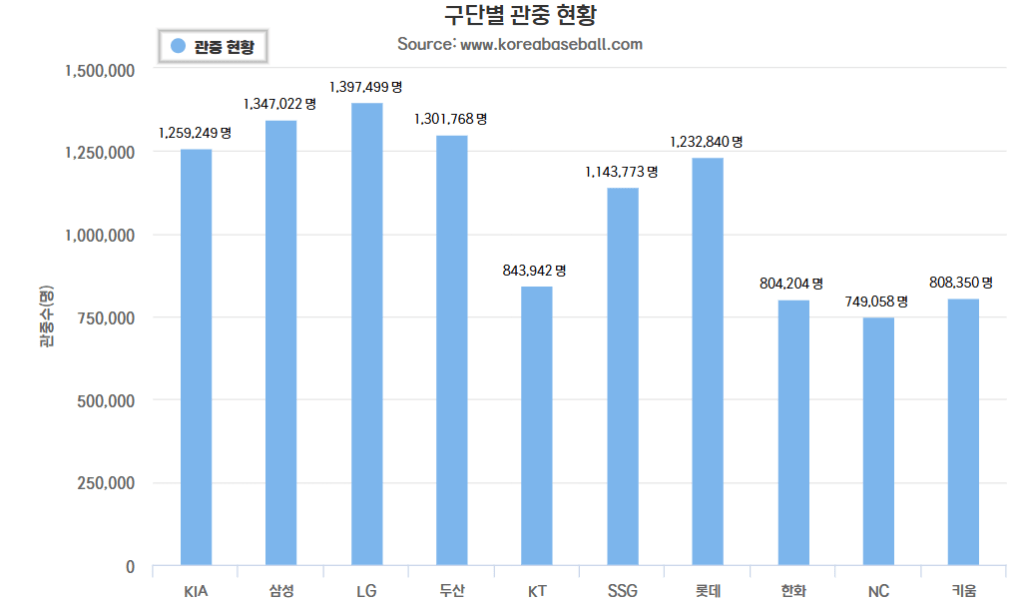
The Y-axis shows the number of spectators.
The X-axis shows the teams KIA, Samsung, LG, Doosan, KT, SSG, Lotte, Hanwha, NC, and Kiwoom.

Compared to the number of spectators, baseball is much higher than soccer in Korea, demonstrating the fame, love, and relevancy of baseball in Korean culture.
Final Comments
With all this in mind, why don’t you join the Korean community and support your favorite Korean Baseball Team. You can keep up with games, seasons, and rankings through the KBO league website. Pick your favorite team (tell us in the comments) and make sure to express your baseball pride!
Resources Used
https://www.koreabaseball.com/Record/Crowd/GraphYear.aspx
https://www.koreabaseball.com/Record/Crowd/GraphTeam.aspx
https://www.koreabaseball.com/MediaNews/Notice/View.aspx?bdSe=10228
https://www.transfermarkt.com/kleague1/besucherzahlen/wettbewerb/RSK1
 EAC PRESS