
Written by Arthur Ellwanger
The COVID-19 pandemic, caused by the coronavirus, has brought drastic and unexpected changes to the entire world. The first confirmed case of the disease was recorded in December 2019, in the city of Wuhan, China. The rapid spread of the virus led the World Health Organization to declare the outbreak a global pandemic on March 11, 2020. After months of severe restrictions, which included the closure of schools, businesses, and events, the first reopening measures began to be gradually implemented in various parts of the world in the second half of 2020. As countries manage to control the spread of the virus and advance with vaccination, in-person school activities and other social functions resumed, but all under protocols to prevent new outbreaks.
Like many other areas, education was greatly affected by the pandemic. With the closure of schools, millions of students were forced to study online, which brought great difficulties for students and teachers. Teachers report that the transition to online teaching was difficult, as many students face difficulties with access to technology and the internet, which hinders their learning. In addition, the lack of face-to-face interaction affected student engagement, making online teaching more complicated and challenging. Virtual classrooms could not completely replace the dynamics of the physical school environment, where the exchange of experiences and social interaction are fundamental for development.

We collected experiences from some teachers to better understand these challenges faced during the pandemic. Teacher Andrea Regatão, who teaches Portuguese, said that student performance declined significantly during this period of the pandemic. “I think their performance did indeed decline. Since I was not around to help with the activities, I could not answer all the students’ questions. In the case of the little ones, as I said, there were students who almost did not enter the classes, because they did not know how to enter on their own and their parents were working.” She said that it was very difficult to do the activities and keep the students focused.
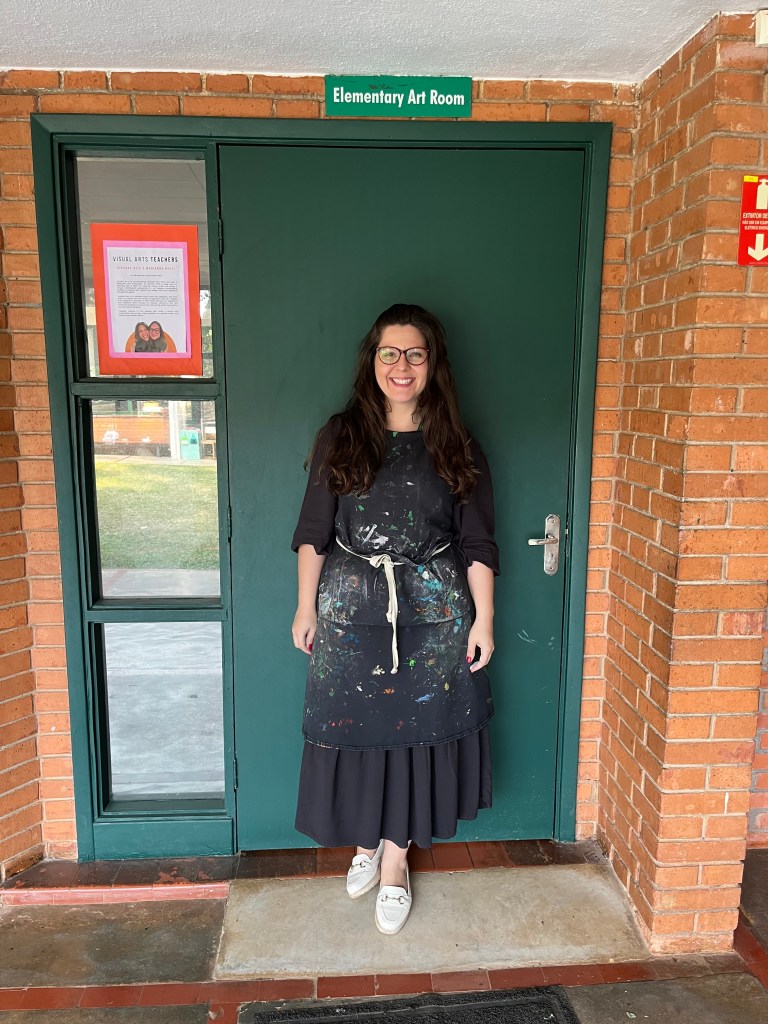
Another teacher, Giovana Reis, who teaches Arts, mentioned how students were prioritizing other subjects and not doing their arts projects. “I did notice, however, that some students chose to prioritize other subjects during remote learning and, as a result, didn’t engage as much in Visual Arts classes. I understand how challenging it was for families to manage the balance of remote learning, and I appreciate the effort each student put into their academic responsibilities.” She also said that she understood that students had difficulty organizing their schedules because when we are children, even at school, it is already difficult to organize our priorities, but on screens this became much more complicated, so she said she understands when this happens.

Our director and chemistry teacher, Maurício Gozzi, shared his experiences of planning the IB (international baccalaureate). “The pandemic posed a significant challenge for the IB courses, particularly because the exams are traditionally conducted in person and in writing. In response, the IB organization implemented a mathematical formula to calculate students’ scores. Although we had completed the curriculum, we kept students in school for an additional two months. During this time, all IB teachers had to create a curriculum for these extra classes. Simultaneously, students were uncertain about the fairness of this mathematical approach.” Mauricio also mentioned the difficulty of preparing teachers and students for the online learning and having the responsibility to finish this in a really short period of time.
In conclusion, the pandemic drastically altered education, forcing students and teachers to adapt to remote learning under unexpected circumstances. Education wasn’t the only area severely affected by the pandemic, so like Mauricio, Giovana and Andrea shared their experiences we would like to know something you passed in the pandemic that you are willing to share.
 EAC PRESS