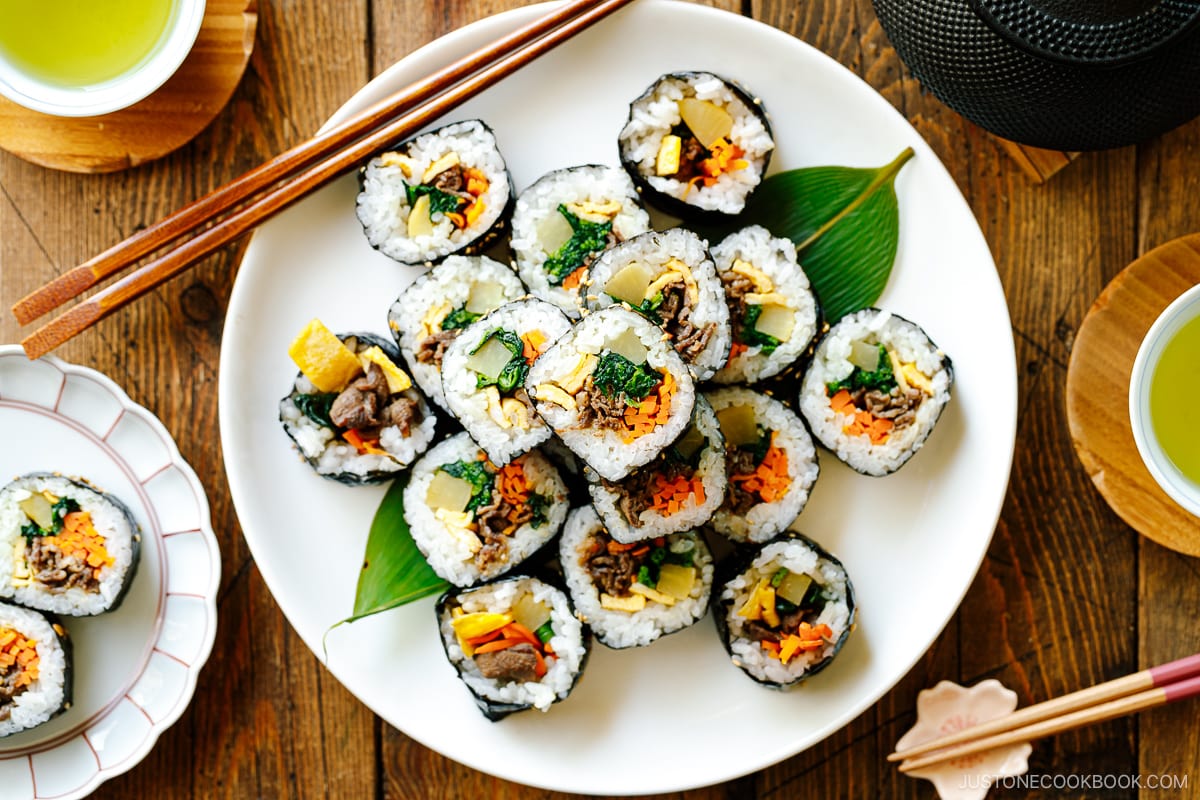
EAC is an international community where we have over 2 dozen nationalities represented, and today, Brazilians and Koreans make up the two largest groups. Our cafeteria usually serves Brazilian dishes, but sometimes, we can also see some dishes from different countries as well; however, this doesn’t happen very often. We believe that serving foods from other countries more frequently during the week could be important for people from different nationalities, making them feel more at home. Also, during lunchtime, many students bring food from home, which is a clear representation of our diverse community. We can see foods from both Korean and Brazilian cultures in the same place all at once! While one lunchbox may contain Brazilian specialties, the other might have some delicious Korean cuisine. But what exactly are the different foods our Korean students bring? One of the most commonly brought dishes by the Korean students at EAC is Kimbap.


Kimbap (김밥) also known as Gimbap is a traditional Korean dish that is common in most Korean households. The name Kimbap translates as “seaweed (kim) and rice (bap)”. It is a seaweed roll that contains cooked rice and a variety of other ingredients such as fish cakes, fried eggs, carrots, spinach, marinated beef, and danmuji, which is a “yellow pickled radish“. Below is the recipe and ingredients list for the dish that has been listed for you to try!
Ingredients / Kimbap recipe (Recipe from – Maangchi):
- 5 sheets of gim (seaweed paper), roasted slightly (sometimes called “nori” from Japanese)
- 4 cups of cooked rice (but make with 2 cups of short grain rice instead of 1 cup.)
- ½ pound beef skirt steak (or tenderloin, or ground beef)
- 1 large carrot, cut into large matchsticks (about ½ cup)
- 5 strips of yellow pickled radish (use pre-cut danmuji or cut into 8 inch long strips)
- 8 to 10 ounces of spinach (1 small bunch) blanched, rinsed in cold water and strained)
- 3 eggs
- 2 garlic cloves
- 2 teaspoons soy sauce
- 1 tablespoon + 1 teaspoon brown (or white) sugar
- 1½ teaspoon kosher salt
- 2½ tablespoons toasted sesame oil
- Vegetable oil
Recipe – Steps to follow
- Place freshly made rice in a large, shallow bowl. Gently mix in ½ teaspoon kosher salt and 2 teaspoons toasted sesame oil over top with a rice scoop or a wooden spoon.
- Let it cool down enough so it’s no longer steaming. Cover and set aside.
- Combine the blanched spinach, 2 minced garlic cloves, ½ teaspoon kosher salt, and 2 teaspoons toasted sesame oil in a bowl.
- Mix well by hand and put in on a large platter with the sliced yellow pickled radish.
Carrots
- Combine the carrot matchsticks with ¼ teaspoon kosher salt. Mix well and let it sweat for 5 to 10 minutes. Heat a pan and add a few drops of vegetable oil.
- Squeeze out excess water from the carrot, then saute for about 1 minute. Put it on the platter next to the spinach.
Steaks
- Trim the fat from the skirt steak and slice into ¼ inch wide, 3 to 5 inch strips. Put the strips into a bowl. Add 2 teaspoons soy sauce, 1 minced garlic clove, ¼ teaspoon ground black pepper, 1 tablespoon + 1 teaspoon brown (or white) sugar, and 2 teaspoons toasted sesame oil.
- Mix well by hand
- Set aside, and let them marinate while we do the egg strips.
Eggs
- Crack 3 eggs in a bowl and add ¼ teaspoon of kosher salt. Beat it with a fork and remove the stringy chalaza.
- Drizzle a few drops of oil on a heated 10 to 12 inch non-stick pan. Wipe off excess with a paper towel so only a thin sheen of oil remains. Turn down the heat to low and pour the egg mixture into the pan. Speak it into a large circle so it fills the pan.
- When the bottom of the egg is cooked, flip it over with a spatula. Remove from the heat and let it cook slowly in the hot pan for about 5 minutes, with the ultimate goal of keeping the egg as yellow as possible, and not brown.
- Cut it onto ½ inch wide strips. Put it next to the spinach on the platter.
Finish Steaks
- Heat up a pan over medium high heat and cook the marinated beef, stirring it with a wooden spoon until well cooked.
- Set aside
Let’s roll gimbap!
- Place a sheet of gim on a bamboo mat with the shiny side down. Evenly spread about ¾ cup of cooked rice over top of it, leaving about 2 inches uncovered on one side of the gim.
- Place beef, carrot, yellow pickled radish strip, a few egg strips, and spinach in the center of the rice.
- Use both hands to roll the mat (along with gim and rice) over the fillings, so one edge of the rice and gim reaches the opposite edge. This centers the fillings in the roll, so they’ll be nicely in the middle when you slide it.
- Grab the mat with both hands and press it tightly as you continue rolling the gimbap. Push out the mat as you roll, so it doesn’t get wrapped in the gimbap.
- Remove the roll form the mat at the end and set the finished roll aside with the seam down, to seal it nicely.
- Repeat 4 more times with the remaining ingredients.
- Put some toasted sesame oil on the finished rolls and sprinkle some sesame seeds over top. Cut each roll into ¼ inch bite size pieces with a sharp knife, occasionally wiping it with a wet paper towel or cloth to clean the starch off and to ease cutting.
- Put it on a plate and serve immediately or pack it in a lunchbox.
Even though there are steps to follow, all households can change the recipe so that it can fit their own taste. You can adjust the measurements in the recipe to fit your liking so you and your family can enjoy it just the way you like it!
Questions
We asked a few questions to two of our Korean students who bring foods from home, and these were their responses:
Jiyun (Lily) Kim / 9th Grade
What do you usually bring to school for lunch?
“I bring mostly Korean food that can be made easily. Like kimbap, tteokbbukggi, and bokkeumbap.”
What Brazilian foods do you enjoy eating?
“I really like parmegiana and I love pastel”
Are there any foods you miss from Korea that might not be found in Brazil?
“ I can eat almost every Korean food in Brazil but I miss the Korean barbecue. I think the sauce and meat is different from Brazil”
Donghoon (Michael) Kang / 9th Grade
What do you usually bring to school for lunch?
“ I usually bring Korean food for lunch. For example, I bring rice, meat side dish and some other side dishes.”
What Brazilian foods do you enjoy eating?
“I really like eating churrasco and moqueca”
Are there any foods you miss from Korea that might not be found in Brazil?
“I really miss various kinds of Korean chicken and tteokbokki”

In the photo above, we can see our interviewees, Lily and Michael, with some of the Korean foods they enjoy.
Where can I buy them?
Now, of course there is Brazilian food everywhere in Brazil, but where can we find foods from other countries? Where can they look for some traditional foods? There are some places close to Campinas that sell asian foods. These markets make it easier for our students to find foods from their culture in São Paulo. Some of these places are:
- K-mart (Av. Carlos Botelho, 176 – São Dimas, Piracicaba – SP, 13416-140 OR R. dos Estudantes, 41 – Liberdade, São Paulo – SP, 01505-000)
- Supermercado Otegui (Rua Três Rios, 251 – Bom Retiro, São Paulo – SP, 01123-001)
- Liberdade (Rua Galvão Bueno, São Paulo)
- Nashi (Av. Dr. Jesuíno Marcondes Machado, 47 – Nova Campinas, Campinas – SP, 13092-108)
- Mythos (Mercado Municipal de Campinas, Rua, Av. Benjamin Constant, s/n – Box 78 – Centro, Campinas – SP, 13010-142)
Most of these places sell asian foods in general, but foods from specific countries can also be found.
Conclusion
In conclusion, being part of such a diverse school is a great opportunity to get to know many cultures and different people. It gives us a chance to try new things that we probably never even heard of!
For example, I have many Korean friends at EAC and they always bring foods that I have never heard of before. Every time they offer me something, I have to try it because it is so different from what I am used to. Every time I try a new food, I tell my parents about it, and they always do their best to find it so we can all enjoy it together. Now, we have a large pot of Kimchi at home and a variety of Korean food recipes to try.
Because the foods are so different from what we are used to, it might be hard to try them; however, it is always a good chance to find a new favorite dish!
 EAC PRESS
I will definitely try it out!
LikeLiked by 1 person