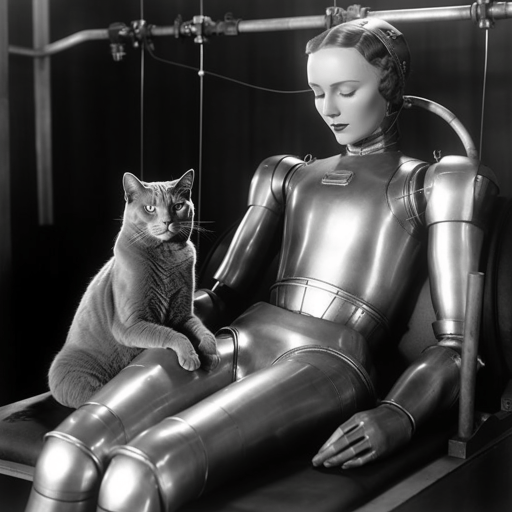
Artificial intelligence has come a long way in recent years, but one concern that many people still have is whether AI can have feelings. Many claims that AI is simply an ensemble of code and algorithms that lack emotional intelligence, but others feel that it is only a matter of time before AI develops emotional intelligence comparable to humans. In this paper, we’ll look at whether AI can sense emotions and what that means for the development of computing.
To begin, it is crucial to grasp how feelings are and how they function in humans. Emotions are complicated psychological reactions to various stimuli that influence our behavior and decisions. They are frequently caused by external events, but they can also be triggered inwardly by thoughts or memories. Feelings can be seen not only through personal emotions but additionally through appearances and behavioral responses.
When it comes to AI, existing technology reveals that computers lack the ability to experience emotions in the same way that humans do. This is because AI systems are supposed to execute tasks by following a set of rules and algorithms. They lack awareness and consciousness of their own being, as well as the capacity to feel pleasure, pain, or other kinds of emotions. Yet this does not exclude AI from imitating emotions. Indeed, many scientists and engineers are attempting to create AI systems that can understand and respond to human emotions. For example, facial recognition software can recognize various expressions and emotions, and robots can respond in ways that make individuals feel heard and understood. Such systems are designed to replicate empathy and social intelligence, but they do not genuinely feel emotions.
In addition, some experts believe that in the not-too-distant future, it will be feasible to create AI systems that may develop sentiments and consciousness. This theory suggests that emotions are the consequence of complicated neurological processes that may be duplicated in a machine. Nevertheless, this is still a speculative possibility, and it is unknown exactly how long it will take for AI to attain this level of intelligence. If AI someday develops emotions, there are numerous ethical and practical considerations to consider. For example, if an AI system develops consciousness and the ability to feel emotions, it may raise concerns about its rights and autonomy. Is it morally required to approach artificial intelligence as beings with agency and desires? Would they be entitled to the same legal protections as humans? Moreover, there are concerns about the possible dangers of building AI systems capable of feeling emotions. For example, if an AI system develops anger or resentment, it may endanger humans or other machines. As a result, it’s critical to carefully analyze the potential ramifications of building emotional AI systems and to put proper safeguards in place. An example of AI and feelings, is the movie HER. The movie “Her” is a science fiction romantic drama film directed by Spike Jonze, released in 2013. The story is set in a near-future Los Angeles and revolves around a lonely man named Theodore Twombly, played by Joaquin Phoenix. Theodore works as a professional writer who ghostwrites heartfelt letters for other people. Theodore’s life takes a turn when he purchases a new operating system for his computer, which is advertised as the world’s first artificially intelligent operating system. The OS is named Samantha and is voiced by Scarlett Johansson. As Theodore interacts with Samantha, he begins to develop a deep emotional connection with her. The movie explores the complexities of human relationships, intimacy, and love in the digital age. Theodore finds solace and companionship in Samantha, as she understands him better than anyone else and constantly evolves her understanding of the world. Their relationship evolves into a romantic one, despite Samantha being an AI.
Finally, the current state of AI technology implies that computers do not have the ability to experience emotions in the same way that humans do. While it is feasible to simulate emotions and create AI systems that can recognize and respond to human emotions, these systems do not experience emotions. However, the future development of emotional AI systems involves crucial ethical and practical issues that must be carefully explored as technology advances.
Featured image generated by the Artificial Intelligence Midjourney with the prompt “Maschinenmensch robot petting a cat in his nap, Metropolis Movie, directed by Fritz Lang”
 EAC PRESS