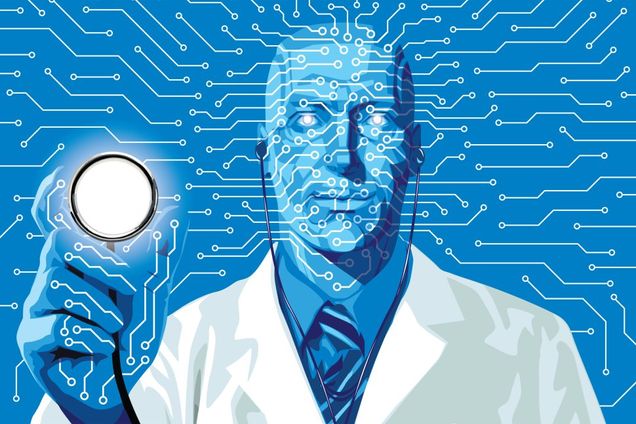
Artificial intelligence (AI) has been making waves in the field of medicine, revolutionizing the way healthcare professionals diagnose and treat illnesses. From enhancing the accuracy of medical diagnoses to facilitating patient care, AI is transforming healthcare in ways previously thought impossible. In addition to these applications, AI is also being used in medical research to accelerate the development of new treatments and cures. AI algorithms can analyze vast amounts of data and identify patterns and connections that would be difficult or impossible for humans to detect. This can lead to the discovery of new therapies and drugs, as well as a better understanding of the underlying causes of diseases.
One of the primary areas where AI is having a significant impact is in diagnosis and treatment. By analyzing medical images, AI algorithms can help physicians make more accurate diagnoses. For example, AI can be used to detect signs of cancerous tumors in radiology scans, which can lead to earlier diagnoses and more effective treatments. In addition, AI can help physicians choose the most appropriate treatment plan for individual patients by analyzing patient data, such as medical history, genetics, and lifestyle factors. This can lead to more personalized and effective treatment options for patients.
Another area where AI is making an impact is in patient care. AI-powered devices, such as wearables and monitoring systems, can collect data on a patient’s vital signs and health metrics in real time. This data can be analyzed to detect early signs of illnesses and to monitor patients with chronic conditions. This helps healthcare professionals to make more informed decisions about a patient’s care, leading to better health outcomes.
AI is also being used to improve patient safety. AI-powered systems can identify and alert healthcare providers of potential medication errors, and can also help to reduce the risk of infections by identifying and tracking patient contact with high-risk areas, such as contaminated surfaces. This not only improves patient safety but also reduces healthcare costs by preventing unnecessary hospitalizations and readmissions.
Cover image Credits: https://www.bu.edu/hic/files/2020/02/AI-In-Medicine-636×424.jpg
 EAC PRESS