What was once of the most famous lingerie brands, is now barely remembered. How did this decline happen, and why?
Throughout the years, commerce at Victoria’s Secret, once a retail behemoth in the lingerie and women’s wear industries, has drastically decreased. The company has had to adapt to shifting consumer expectations and escalating competition after formerly being recognized for its glitzy runway displays, attractive models, and expensive underwear. Therefore, an analysis of the factors that have contributed to Victoria’s Secret’s gradual fall in sales over time, will be made.
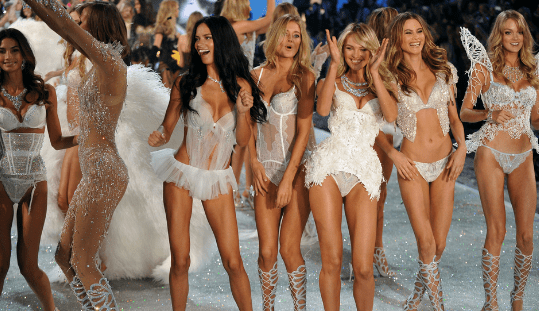
The failure of Victoria’s Secret to adapt to shifting consumer preferences is one of the main factors contributing to the company’s collapse. Consumers are now more interested in diversity, inclusivity, and body positivity. Today, many customers are searching for brands that offer a variety of sizes, styles, and colors that fit various body types. Yet, Victoria’s Secret has come under fire for the narrow variety of sizes and lack of diversity in its marketing strategies. The company has lost favor with many customers due to its reputation for promoting inflated aesthetic standards. Victoria’s Secret used to be recognized for its angel wings, slender models, and extravagant lingerie designs. Nevertheless, consumers who are looking for more authentic and realistic images of women in the media no longer connect with this image.
The marketing approach used by Victoria’s Secret has also significantly contributed to its downturn. The company was formerly well-known for its lavish fashion displays, which were televised to millions of people around the world. The brand’s marketing plan, however, has not changed to reflect shifting consumer preferences. The brand has recently been under fire for the lack of diversity in its runway presentations and marketing efforts, which has led to a decline in its appeal to younger consumers.
Increased competition is another element affecting Victoria’s Secret’s downturn. Conventional department stores like Macy’s and Nordstrom have increased their selection of intimate apparel, and internet sellers like Amazon and ASOS provide a greater variety of styles and sizes at more competitive pricing. While this is going on, younger lingerie companies like ThirdLove and Savage X Fenty are upending the market with their focus on comfort, inclusivity, and sustainability. Victoria’s Secret has struggled to compete with these new businesses since it hasn’t diversified its product line, embraced cutting-edge technology, or made investments in environmentally friendly procedures.
Last but not least, the COVID-19 pandemic has made Victoria’s Secret’s problems worse. The business suffered from its reliance on physical stores, which were compelled to close during lockdowns. Additionally, Victoria’s Secret was late to adopt the trend of online shopping, which has been accelerated by the pandemic.
Victoria’s Secret needs to embrace diversity and inclusivity and concentrate on giving its customers a more inclusive shopping experience if it wants to turn around its fortunes. The business ought to increase the variety of sizes and body types it offers, as well as the models it uses in its advertising campaigns. In order to attract customers who care about the environment, it should also invest in sustainable practices.
Moreover, the business needs to update its marketing plan to better connect with contemporary consumers. This might entail developing lingerie lines that are more practical and comfortable, using models of all shapes and sizes in its advertising campaigns, and using social media to engage with customers. Something that Victoria’s Secret has made to revive its business, was to create multiple partnerships with famous brands such as Balmain. However, the question still remains: Will Victoria’s Secret be able to shape its business model and return to the top lingerie brands?
 EAC PRESS