The famous festival Carnival is present around the world and times as a festival before the period of lent. The name Carnival comes from the term carnis levale in latin, which means to remove the flesh to the letter. Originally, the Carnival we know today has its origin in the middle ages, but there are records of celebrations before that. In Brazil, the festival arrived with the portugueses in the colonial period, later developing into what we know today. In this text, we will talk about the origins of Carnival and how it changed over time in Brazil.
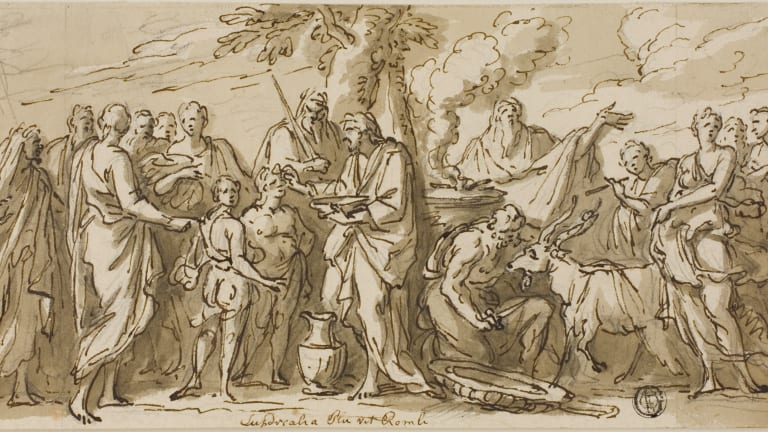
In the ancient ages, before the middle ages Carnival, some parties that resemble the Carnival we know today would occur. One of the parties was called Saceias. In the Saceias, a prisoner would replace the king for five days and appreciate all the privileges of a king, in the end being executed. This ritual connects to the idea of taking roles that are not yours. Another party was called Saturnais, which occurred in honor of the agriculture Gods. In the Ancient Roman Empire, there was a party called Lupercalia, which occurred in February to ward off evil spirits. As a consequence, the Carnival from the middle ages inherited some of those traditions, such as the mesopotamian parties with the order of things reversed.

In the middle ages, the Catholic Church established the period of lent, a time dedicated to reflection and sacrifice 40 days before Easter. As a consequence, before the lent, a party, similar to the nowadays known Carnival would occur. The Carnival was a typical celebration, in the mediterranean region (Spain, France, Italy). Those parties would begin at the end of December and January continue until the beginning of the lent. Even though it was not the same in different places, there were some common characteristics, for example, the parties occurred in the streets with food and drinks in abundance with people wearing costumes. Some costumes would be mens wearing women’s clothes and vice versa; masks with big noses; and priests, devil, wild animals costumes. In the celebration, the high class members would do parades with allegorical cars, competitions, and play presentations in clubs. Also, people dressed as characters, others throwing water, insults, and the famous charivari were common practices. The charivari was a popular justice ritual in which a person (the victim) would parade in the town mounted on a donkey. The victim would be a person involved in some atypical situation, such as someone who threatened the family norms of the time. In France the chiavari was called asouade and in England skimmington ride. In the XVI century, initiatives to control the Carnival celebrations by the Catholic Church and public power began to take place.

In Brazil, the Carnival arrived in the colonial period through the colonizers. In the beginning, the carnival was celebrated through the Entrudo. The entrudo was popular between the XVI/XVII centuries until the XIX century. In this type of celebration, also known as Jogo das Molhadelas, people would throw liquids at people, both in the streets and in private places. The Entrudo was seen as an opportunity of income for some families which produced the containers and filled them with liquids to sell. Even though the royal family also practiced the Entrudo, the elite did not like the celebration. In the XIX century campaigns against the Entrudo intensified. While the Entrudo was being repressed, the elite would celebrate Carnival in clubs and theaters, they created the Congresso das Sumidades Carnavalescas to parade in the streets. Besides, the elite also took the European mask balls to the streets together with the parades. As a consequence, the elite began to dominate the streets during Carnival. As a response to the limitations, the people created the cordões e rancos (mainly popular in rural areas), which included capoeira and zé-pereiras.
In the XIX century, the Carnival began to look like what it is today. The first marchinha “Ó Abre Alas” by Chiquinha Gonzaga was created. In 1916, the samba emerged with the music “Pelo Telefone” by Donga and Mauro Almeida. In the northeast, music styles such as the Afoxes in Bahia, Frevo in Recife, and Maracatu in Olinda were introduced to the Carnival between the XIX and XX centuries.
Also in the XX century, the rise of the Escolas de Samba (Samba schools) occurred in Brazil. Between 1910 and 1930, there were the corsos (convertible cars parading in the Rio de Janeiro’s avenues, more specifically Avenida Central current Avenida Rio Branco). In 1920, as a development of the cordoes e ranchos, the Escolas de Samba were created by the people. The first school was founded in 1928, called Deixa Falar, giving rise to the Escola Estacio de Sa. The first dispute between Escolas de Samba happened in 1932 in Rio de Janeiro. The schools became an important social activity in the 1960s. As a consequence, in 1984, there was the opening of the Sambodromo.
Sources:
https://mundoeducacao.uol.com.br/carnaval/a-pratica-carnavalesca-entrudo.htm
https://www.britishmuseum.org/collection/object/P_1847-0508-19
https://www.history.com/topics/ancient-rome/lupercalia
https://mundoeducacao.uol.com.br/carnaval/as-origens-carnaval.htm
https://brasilescola.uol.com.br/curiosidades/carnaval-na-idade-moderna.htm
https://brasilescola.uol.com.br/carnaval/historia-do-carnaval-no-brasil.htm
 EAC PRESS