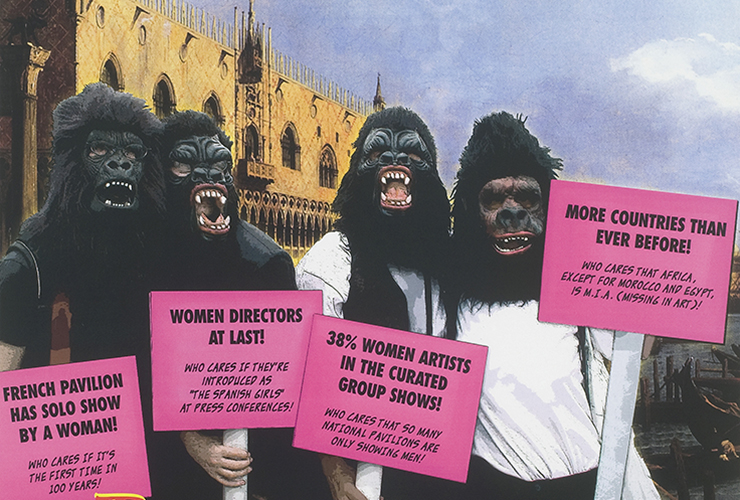
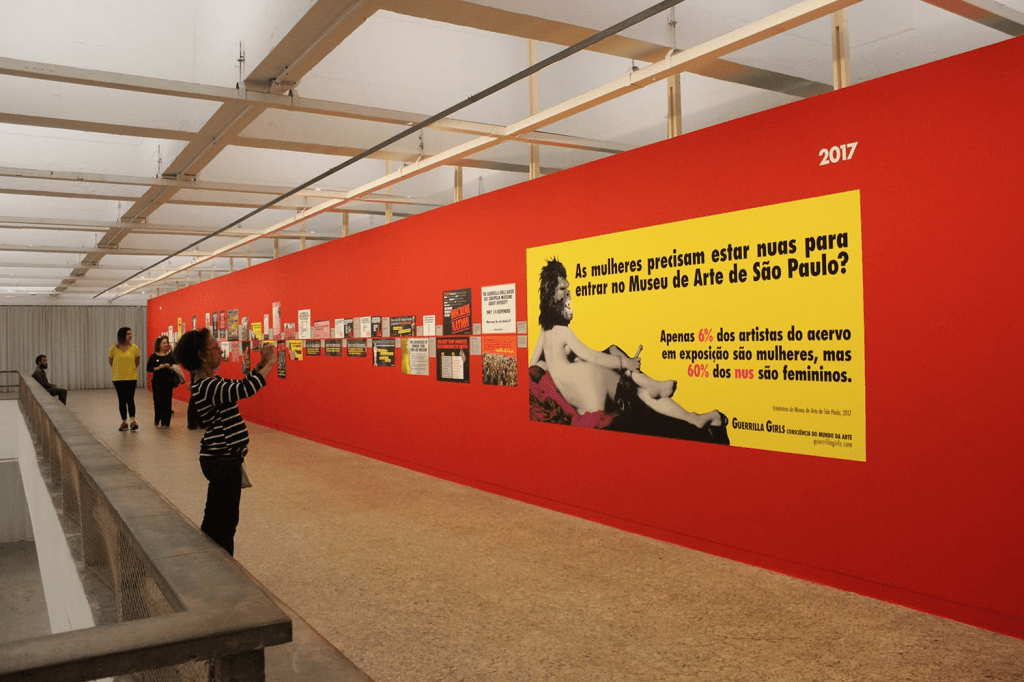
If you are familiar with feminist art groups, you are familiar with the Guerrilla Girls. The group consists of various anonymous female artists devoted to fighting sexism along with other social issues within the art world. Soon, it’ll be 40 years since the group has been around and making their impact in the art industry, having formed in 1985, New York. Although they have made their posters, books, billboards, and public appearances to expose discrimination and corruption worldwide, including their popular “The Advantages of Being a Woman Artist” poster in one of São Paulo’s museums, the MASP:

Their members focus on research of statistics on discrimination, making their findings public through posters that were strongly worded but displayed an ironic sense of humor. The portrayal of female nudity, unequal pay, a lack of representation in art history, and concerns relating to careers and families are just a few of the issues they have tackled. The group’s members frequently staged demonstrations at art openings and hung their posters in public places while dressed as gorillas; a symbol which was adopted from a spelling error, as one of the first Guerrilla Girls accidentally spelled the group’s name at a meeting as “gorilla”, although the group collectively enjoyed the idea, as wearing their gorilla masks has helped distance them from the male gaze and maintain their anonymous identity.
Just in their first year, the Guerrilla Girls snuck out in the middle of the night with their handmade posters, pasting them onto various locations around New York City, particularly the SoHo neighborhood, which is a famous spot for art in the city. Their posters targeted galleries and museums, forcing them to be confronted by their own acts of sexism; as seen in “How Many Women Had One-Person Exhibitions at NYC Museums Last Year?”,1985, which brings attention to the fact almost no women were offered solo exhibitions across all the city’s major museums throughout the course of an entire year.

In 1989, their most well-known piece was created; a poster titled “Do women have to be naked to get into the Met Museum?” It features a black and white image of Jean-Auguste Dominique Ingres’ “La Grande Odalisque” (1814) where the nude is given a gorilla head. The poster depicted the number of nude artworks with the number of women artists in the Met Museum, which showed that up to 85% of artworks are nude women while only 5% of the art at the Met is by women artists. This famous poster not only brings attention to the clear bias in the art community towards artists who are men, but it simultaneously tackles the objectification of women that exists within the industry. This poster was initially plastered all over New York, including NYC buses, but quickly became international, with the same poster being used to present statistics from big museums around the world with the individual statistics of each one. With loud colors and appalling statistics, this piece quickly became the definitive image for the Guerrilla Girls.

In the same year, another well-recognized work was published titled “When Racism and Sexism are no Longer Fashionable, What Will Your Art Collection be Worth?” (1989) Challenging art collectors to be more alert of their own prejudice, suggesting they should consider investing in a wider group of artists, as there are many who have produced astonishing works but go unrecognized, rather than spending large amounts on pieces by white men.

Even though they began as an activist group, their posters and interventions have become increasingly recognized by the art world as important works of art, being held in museum collections all around the world. Now, looking back, the Guerrilla Girls transformed the relationship between art and politics, allowing the two to coexist like never before. Though the battle for equality has not yet been won, their campaigns have played a vital role in getting women and ethnically diverse groups a place of acceptance in the art industry.
 EAC PRESS