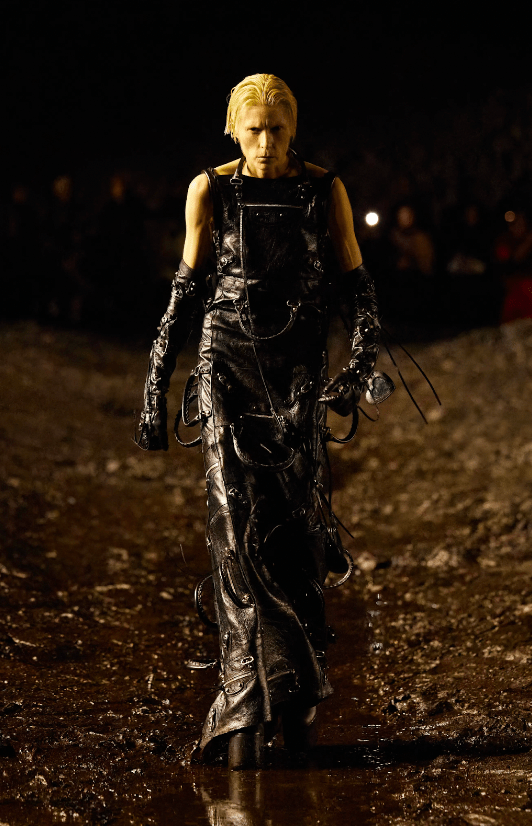
In October of last year, Balenciaga produced one of the most iconic and remembered fashion shows of 2023’s fashion week. Although the brand has been through several problems and polemics, the show was an illustration of a contemporary issue in the world. The show was set in a muddy environment which, according to Vogue, metaphorically represented the new set of realities we’re seeing eight months into the war: Russian reserves being compelled to fight, thousands of military casualties, and civilians residing in conflict areas.

The ongoing conflict between Russia and Ukraine has had a significant impact on the fashion industry in Eastern Europe. The conflict, which began in 2014, has led to political tensions, economic sanctions, and social divisions, all of which have had repercussions for the fashion industry in the region.
One of the most notable effects of the conflict has been on the fashion preferences of consumers in the region. In Ukraine, for example, there has been a growing trend towards Western fashion styles, as many young people seek to distance themselves from Russian influence. This has led to a rise in demand for international fashion brands, such as Zara and H&M, and a decline in the popularity of traditional Russian fashion brands.
Similarly, in Russia, there has been a shift away from Ukrainian fashion brands and towards more nationalistic and patriotic fashion styles. This trend is driven in part by the government’s efforts to promote a sense of national identity and pride and has resulted in an increase in the popularity of Russian fashion brands that emphasize traditional Russian aesthetics and symbols.
The conflict has also had economic impacts on the fashion industry in Eastern Europe. Economic sanctions imposed by the West against Russia have had a negative effect on the country’s economy, including the fashion industry. Many international fashion brands have withdrawn from the Russian market, while Russian fashion brands have struggled to compete with international brands in the face of declining consumer demand.
At the same time, the conflict has created new opportunities for local designers and manufacturers in Ukraine, who are seeking to promote their brands and products in the international market. These designers are often inspired by traditional Ukrainian aesthetics, such as embroidery and folk motifs, and are using these elements to create modern and innovative fashion designs. In addition, the conflict has led to a renewed interest in the history and cultural heritage of the region, including its fashion traditions. Many designers and consumers are exploring the rich cultural history of Eastern Europe and incorporating traditional motifs and techniques into their modern designs.

Image Credits – Jean Gritzfeldt’s, a Ukrainian designer, collection.
In conclusion, the conflict between Russia and Ukraine has had a significant impact on the fashion industry in Eastern Europe. It has led to changes in consumer preferences, economic challenges, and new opportunities for local designers and manufacturers. As the region continues to navigate the ongoing conflict, it is likely that the fashion industry will continue to evolve and adapt to the changing political and social landscape.
By: Julia Osorio and Catarina Araujo
 EAC PRESS