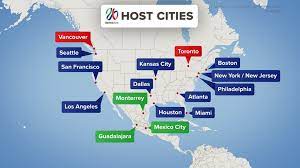
The world cup has long been a tradition in the world, with hundreds of millions of football fans worldwide, it thrives every four years on televisions, radios, and in live stadiums. This tradition was initiated in Uruguai in 1930, where only thirteen countries competed, and it took seventeen days to complete. Crowning Uruguai at the end as the champion of the world. The world cup has changed a lot since then, it has recently happened in Qatar, being the first middle-eastern country to host the cup. The world continues to change, and so is the world cup, it has been recently announced that the 2026 edition will now be hosted in three different countries, and now including 48 countries.
The way the stadiums are built also influences the people around them, according to the Washington Post, people had to be also displaced in order to build the seven new stadiums for the 2014 world cup. By using stadiums that have been already built, fewer people would have to relocate. Meaning the Championship wouldn’t be as invasive and make such a negative impact on the country. Therefore, solving this displacement issue.
Also, the construction of stadiums can get quite expensive, with the 2022 stadiums costing around 200 billion to the Qatari government. This way, countries with less wealth are able to host this billion-dollar event with less of a dent in the economic welfare. Allowing the event to reach less wealthy areas, like Africa for example, who could host this event within its countries. Although this could make the event more spaced out, it would also allow the events to be more organized instead of being concentrated in a small country, like Qatar.
The human toll is also a great factor concerning FIFA. The workforce used to build the stadiums was mostly made up of migrant workers, but the unhealthy working conditions make up for a total of 6000 casualties including outside of work. Also considering the hundreds of thousands of workers that have moved to the country to build the stadiums. Considering that so many workers came from other countries to participate in the building of stadiums, it is hard to keep the safety of all. Meaning this could be solved by using stadiums that have already been built; therefore, there wouldn’t be so much workforce involved, making it easier to ensure the safety of the masses.
The integrity of the stadiums is also a recurring topic, with fans questioning if eight stadiums are enough to host the championship. As teams use the stadiums it is inevitable that the integrity of the grass will degrade over time. But this degrading has been accelerated by the concentration of games being held per stadium. Juninho Paulista, the technical coordinator for the Brazilian national team, criticized the grass and integrity of the stadium saying that it is in bad shape. He stated that, This translates to, I don’t know what should be done, but something must be done so that it is in the condition that demands to host a world cup game. It is believed the early deterioration has been caused by the excessive use of the stadium, with only eight stadiums being used, instead of twelve from the previous world cup. This problem would also be solved by expanding the number of countries hosting the world cup because there would be a plethora of stadiums to choose from.
To solve this problem FIFA has decided to now host the world cup in three different countries, and now 48 countries will be participating. This decision was made when a bid won in 2018 by Canada, Mexico, and the United States. This decision was made to eliminate the need to build so many different stadiums to host a single world-cup tournament for a few weeks; then, the country is left with a surplus of expensive stadiums.
In conclusion, the decision to expand the countries hosting the championship has been a decisive moment for the future of this event. And is something to be expected for future championships.
Original statement from Juninho:
“Não sei o que poderá ser feito, mas algo tem que ser feito para que esteja no nível que exige uma Copa do Mundo”.
 EAC PRESS