By: Gabrielle Hadad and Lina Busato
Curupira, the mystic protector of the forests, is one of the oldest legends in Brazilian history. Although researchers are yet to pin down when the folklore was created and exactly by whom, the oldest registers are from the 16th century from a priest. The famous Portuguese priest, José de Anchieta, reported in his letters the famous story amongst the indigenous in 1560. The priest’s letters are the first registers of the Brazilian legends known nowadays, making the story one of the oldest in Brazilian history.
In one of priest Anchieta’s letters, he states: “Everyone knows and talks about certain demons which the brasis (indigenous people from Brazil) call corupira and attack the indigenous people in the forest by whipping, hurting, and murdering them. Our brothers, who sometimes saw the ones killed by them, are witnesses.” (passage from a letter written by José de Anchieta and reproduced by the historian Luís Camara Cascudo, translation by Lina Busato – brasilescola).* As the priest describes, the creature punishes hunters and people responsible for deforestation, except when for survival purposes. Apart from this passage, many accounts from the Portuguese also showed how he terrified the indigenous population, and any corpses found in the forest were presumed to be the Cururpira’s victims.
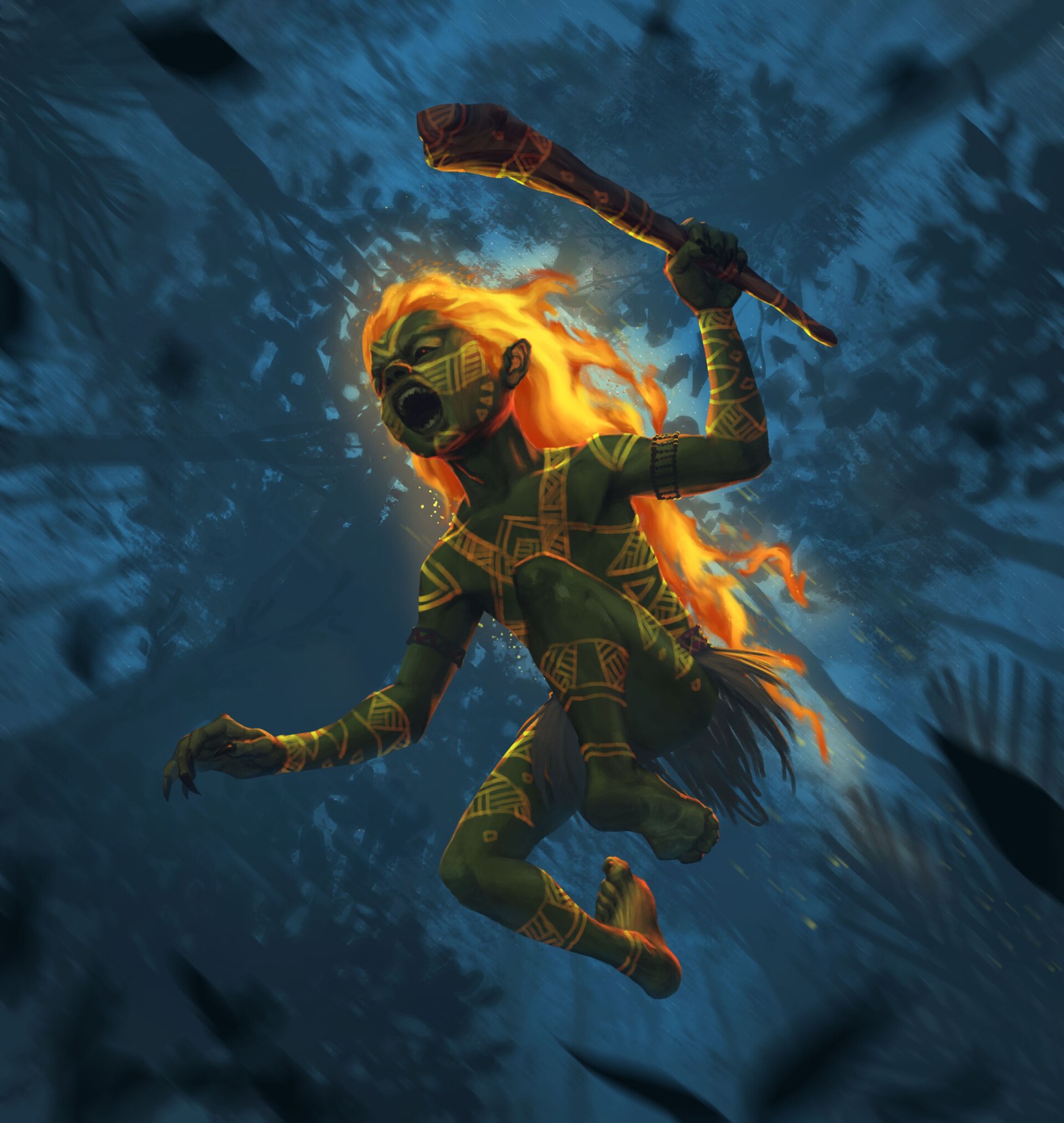
Some of Curupira’s most common characteristics consist of his red hair, small stature, superhuman strength, and feet facing backward; although, some characteristics may vary depending on the area. Some variations include Curupira being bald, others of him having a lot of hair, and even that he has a green body, eyes, and teeth.
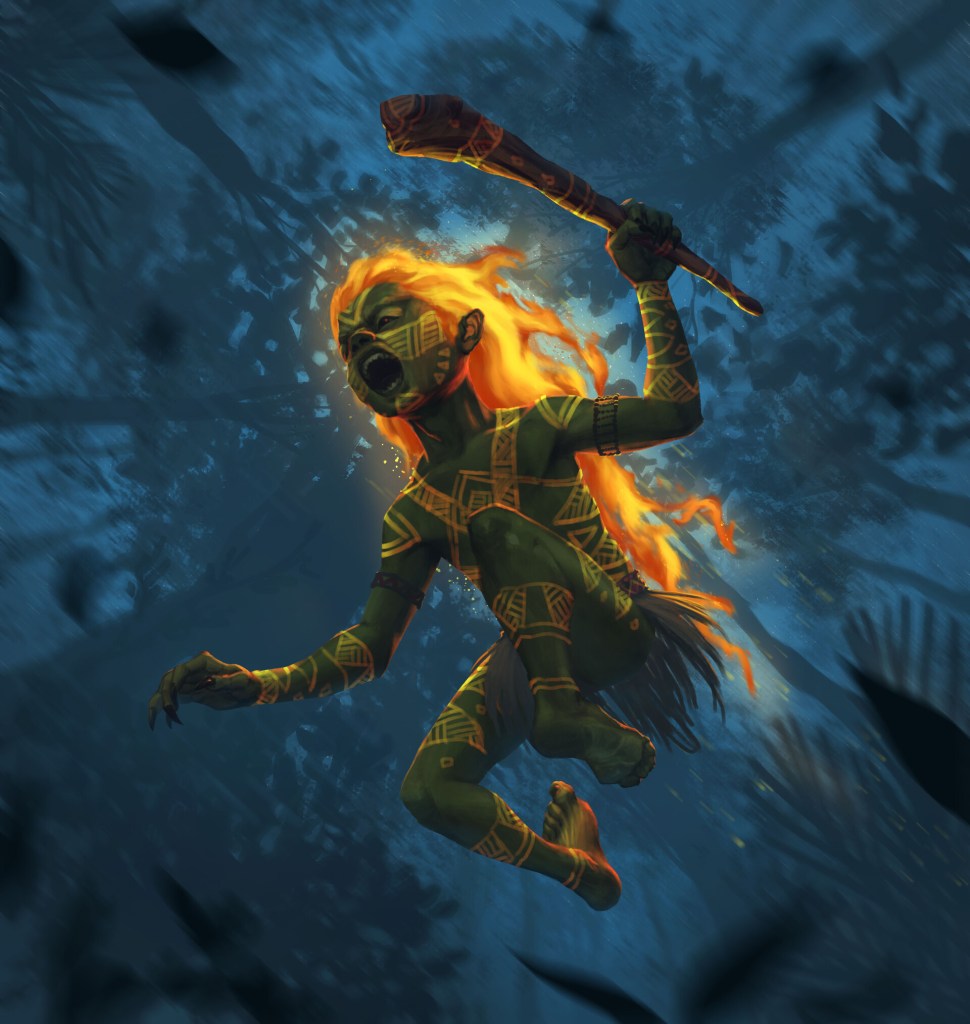
The indigenous population believed that if gifts, such as arrows, feathers, liquor, and fume were offered to Curupira, he would be pleased and the hunters would avoid his wrath. Yet, the red-haired creature is known for playing pranks with the hunters, sometimes disguising himself as prey and getting the hunter to follow them into unknown grounds, where they were bound to stay lost. One of his abilities was also the deafening whistle, which left his victims stunned and confused as to where or who was emitting the sound.
Allegedly, in case you ever meet the protector, the way to escape is by tying a knot on a vine. Curupira himself could also offer you a deal that if not fulfilled would lead to even further consequences. Still, it is unlikely to see the Curupira, since he is a creature of the forest who lives deep into it and does not enjoy being in the presence of humans, avoiding it at all costs, unless it comes to playing his role as the forest’s defender. Part of why he is so threatening is that his backward feet make his location unknown.
The term “Curupira” comes from the Tupi language, which happens to have a controversial translation, as different scholars tend to reach different conclusions on what it stands for. The most accepted meaning is “boy’s body,” which correlates to the creature seemingly looking like a boy due to his small size.
As for the origin of the legend, Portuguese accounts have been registered since the 16th century, up to the 18th. This reinforces the fact that the legend was widespread from the north to the south of Brazil. It gained different names in different regions of the country, such as Caapora and Caipora.
Some folklorists affirm that the legend emerged from the indigenous population called Náuas from north Brazil; as time passed the myth of the Curupira spread to other indigenous nations as the Tupis–Guaranis.
It is even known in other South American countries by other names. In Inca culture, for instance, the creature was known as “Chudiachaque.” In Venezuela, he was named “Máguare.” He was also a part of Paraguayan folklore, given the title of Curupi and where he mostly has the same characteristics as in Brazilian culture, but for his additional sexual appeal.
* “É coisa sabida e pela boca de todos corre que há certos demônios e que os brasis [indígenas que habitavam o Brasil] chamam corupira, que acometem aos índios muitas vezes no mato, dão-lhe açoites, machucam-nos e matam-nos. São testemunhas disto os nossos irmãos, que viram algumas vezes os mortos por eles.” By Padre José de Anchieta and reproduced by the historian Luís Câmara Cascudo.
References:
https://brasilescola.uol.com.br/historiab/curupira.htm
https://mundoeducacao.uol.com.br/folclore/curupira.htm
 EAC PRESS