Where folklore meets reality
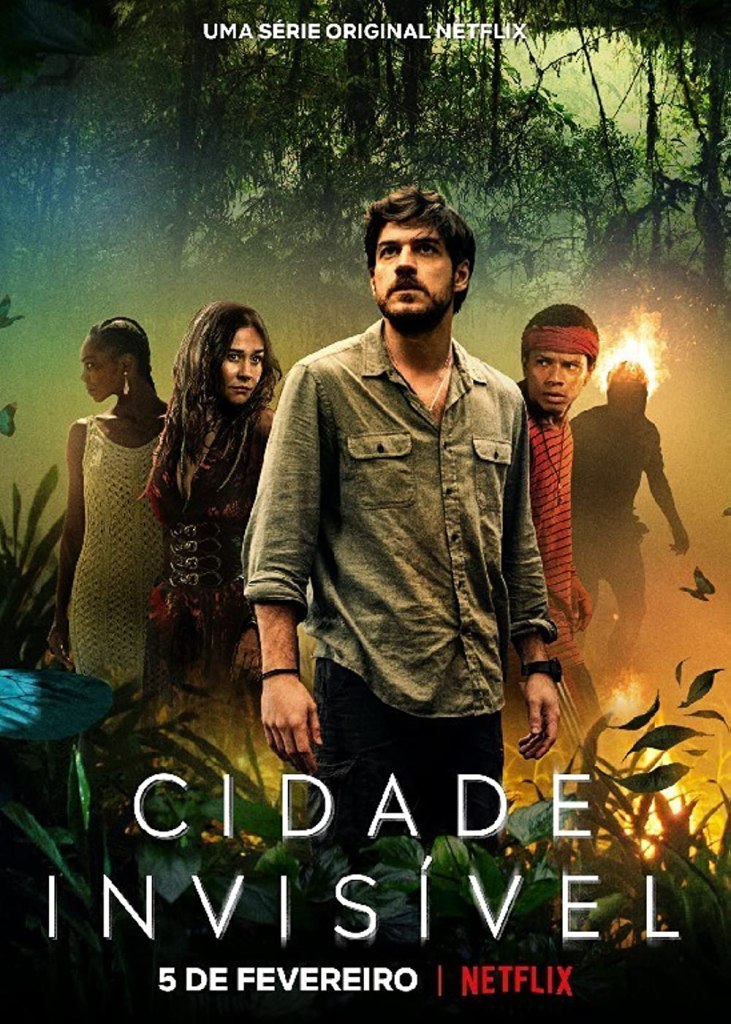
A sprinkle of fantasy among our reality: that’s what the show “Invisible City” puts forward. Created by Oscar Nominee Carlos Saldanha, and with script by Mirna Nogueira, the seven-episode show joined the international Netflix catalog in February 2021. The production is centered upon traditional Brazilian myths and folkloric figures, as they merge into 21st-century Rio de Janeiro.
After the sudden death of his wife Gabriela, in a forest fire during the traditional Festa Junina, the environmental investigation officer Eric starts to inquire into other mysterious deaths with white-eyed corpses. While focusing on his struggle to manage fatherhood, grief, and work, as well as the mystical element, the show brings an interpretation quite realistic of current problems such as environmental contamination, rainforest arson, and the fight between corporations and traditional/original citizens (caiçaras). As the drama develops, the public is introduced to well-known Brazilian figures such as Saci, Iara, Boto Cor-de-Rosa, and Cuca, who are often presented with “cover” names such as Isac, Camila, Manaus, and Inês, respectively. Despite being created mainly for the Brazilian public, the production ended up among the top ten in more than 40 countries within the first month after its release.
Despite starting slow, the story revolves around a good central plot. Another flaw is that in multiple moments, temporary characters for specific purposes only appear when it serves the plot, but lack a deeper back story, most likely assuming that the public already has some background in Brazilian culture. An example, regardless of the richness of the characters, and their background stories, it stays slightly unclear whether Camila is, in fact, an image of Iara (in Brazilian folklore a mermaid that enchanted men and killed them), or a representation of Iemanja, a deity of African religions. Another aspect that was somewhat unexpected by the public and critics is that the story takes place in Rio, as opposed to the Amazonian region, where most of these myths are originally from and also linked to their own environments. It’s also important to point out that this show is classified as PG-14, and might not be appropriate for all members of our community
Netflix has confirmed that a second season is coming, and fans speculate it will arrive at the end of 2022, but most likely in 2023. Overall, the show is quite pleasant, but nothing extraordinary. Growing up, our cultural roots tend to get lost among so many responsibilities and fast-paced life. “Invisible City” poses the question: Just because we stopped believing, did these folkloric figures stop existing?
 EAC PRESS