
The fight for their culture expands from large auditoriums to millions of TikTok pages all over the world.
In the month of February, EAC celebrated Brazilian Culture Week (Semana da Cultura Brasileira) and had the honor of welcoming Daniel Munduruku to our campus as a guest speaker. For those who missed his lectures, Daniel Munduruku is a Brazilian writer and educador who is part of the Munduruku people (an indigenous group found in the western part of Pará) and uses his tool of literature to share and educate others about his culture. Daniel has written over 50 books, ranging from children’s books to in-depth novels, and has received prizes, such as the Prêmio Fundação Bunge, regarding his work in aiding the cultural growth of the country.
While Daniel Munduruku was a great example of a Brazilian indigenous public speaker sharing more about his culture, he is far from being the only one to do so. Hundreds of people from indigenous groups work hard everyday to reach out to others and hopefully educate others about their way of life. And as the percentage of indigenous people in Brazil is less than 1% of the entire Brazilian population, they have begun to use all kinds of platforms in order to better inform others about their obscure day-to-day routines. And as social media takes the world by storm, a logical path would be using platforms like Instagram and Tiktok, which have over 3 billion downloads together, to spread this message worldwide. Fortunately, many young indigenous folk saw this opportunity and took it, like one Alice Pataxó.
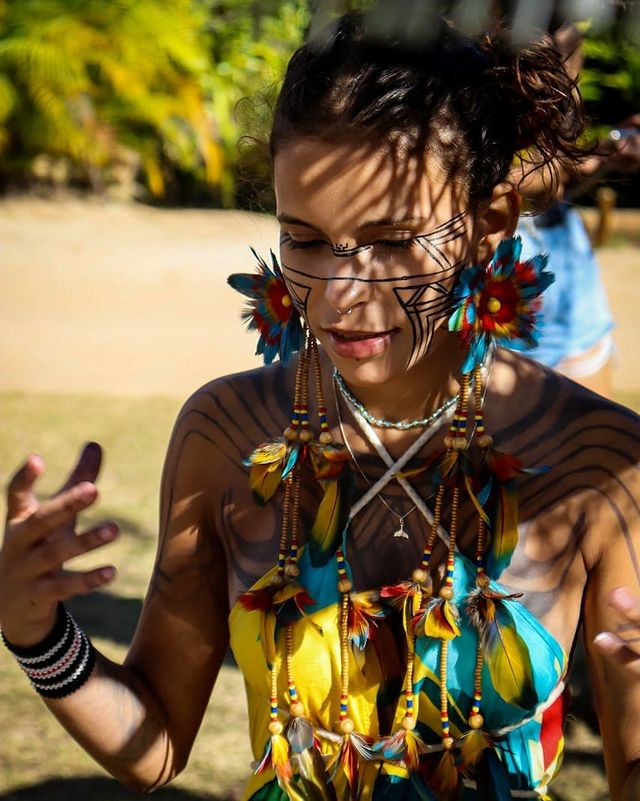
Alice Pataxó is a 20-year-old indigenous woman and journalist from the Pataxó people situated in Prado. Her TikTok account currently has more than 80 thousand followers with over 1.1 million likes and she posted her first video on August 12th of 2020. Her first video on the platform laid the groundwork of the types of videos she planned on doing and how she wanted to send these messages. The video itself is a short 14 second clip where she shows how the indigenous identity does not disappear with the ownership of a phone or by using what many would consider “normal clothes” among other examples. Many of her other videos use the same format to send similar messages: a popular audio matching a video of her (with the occasional person) to erase some misconceptions that people have about native peoples.
Her content also expands to other platforms such as her Instagram account and her Twitter where she is able to share more of her thoughts and share more information in mediums that aren’t quick and fun videos. With over 100 thousand followers on each of the platforms, she is able to share semi-regular updates about her way of life and future or current events she is attending in order to fight for the rights of her people and other indigenous groups in Brazil. And although her total following reaches over 300 thousand people, her social media presence isn’t what she is best well-known for.

One of her more infamous moments was her speech at the COY16 meeting held in the latter half of last year. The COY16 is the 16th United Nations Climate Change Conference of Youth and is very similar to the 2021 United Nations Climate Change Conference, also known as the COP26, but is geared towards youth groups with their very own youth speakers to join the conference. In one of their most recent meetings, Alice had the honor of representing some of the many Indigenous peoples of Brazil and spoke about the world’s actions towards Global Warming as well as the role many people like her played in trying to protect the Earth’s remaining forests. Though this was Alice’s first time traveling far out of her home in the Indigenous territories, her speech in front of hundreds bravely depicted the fight for a greener future and this fight should also include the youth of the world.

However, the activists and influencers don’t stop at a single university student from Bahia. Many others like Takumã Patoxó, Noah Alef, and Cunhaporanga Tatuyo have thousands and even millions of followers online and use their long-reaching platform to share many aspects of their daily lives and share bits and pieces of their culture. With people like them, learning more about minorities is as easy as scrolling on TikTok.
 EAC PRESS