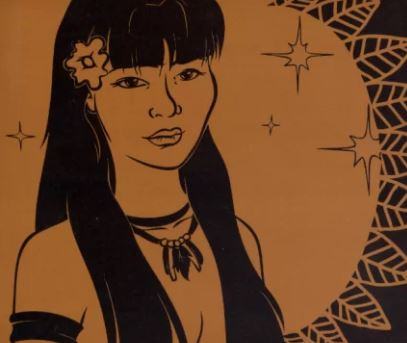
Image credits: https://www.coladaweb.com/resumos/iracema-jose-alencar
During the nineteenth century, various authors in Brazilian literature contributed to famous works that marked the elementary period of romance.
Indianism, “Indianismo ” in Portuguese, is a term that references this period when authors romanticized indigenous characters according to European values and virtues. Influenced by the illuminant ideas of Rousseau, Indianist authors characterized indigenous figures as the primitive origin of the pure man, who is corrupted by the world throughout his character development.
Similar to medieval literature in Europe, where the strong man rescues the feminine, loving woman, the male figure, usually an european or white man, is portrayed as patriotic and fierce while the woman, usually indigenous, is idealized as loyal and pure.
Jose de Alencar was one of the most important authors during the Romantic Indianistic period. He contributed to indianistic literature with three major works; “O Guarani” in 1857, “Iracema” in 1865 and “Ubirajara” in 1874.

Image credits: https://beduka.com/blog/materias/literatura/jose-de-alencar/
This year at EAC, the 10th graders are reading “Iracema” for Portuguese class. The book is well known as a great mark of indigenous literature and the idealization of the indigenous figure. Iracema, whose name is simply the word “America ” shuffled, is a stunning indegenous woman born in the tribe of the Tabajaras, enemies of the Pitiguaras. In the beginning of the story, Iracema falls in love with a Portuguese man, Martim, who is a friend of the Pitiguaras. Nonetheless, Iracema must remain completely pure as only the most beautiful virgin could make the “segredo de Jurema ”, a sacred drink. Throughout the story, Iracema is idealized as a loving, beautiful woman who becomes fully devoted to her love interest.
Nowadays, the image we hold of native groups in Brazil are extremely influenced by this period in literature. Nevertheless, with integration projects and the study of these communities’ history and culture, we know that the images portrayed by writers like Alencar are not historically accurate to the reality that these groups faced and their cultures.
In fact, the indianisyic authors were inspired by european literature, which held values such as patriotism and purity, specifically virginity when portrayed in female characters.
Throughout Brazilian history, and in many other nations as well, European colonizers had tried to “civilize” the Indian communities in order to expand their territories. However, the “civilization” process was, ironically, extremely uncivilized and violent.
Although the indianistic literature portrays indian communities according to european values it did give, during the 18th and 19th centuries, representation to these forgotten groups in Brazilian culture. To this day several Indian names, such as Iracema, Potira and Poti, are remembered and mentioned in our daily lives.
 EAC PRESS