
Migrants at the Belarus-Poland Border, photo by Oksana Manchuk/AFP
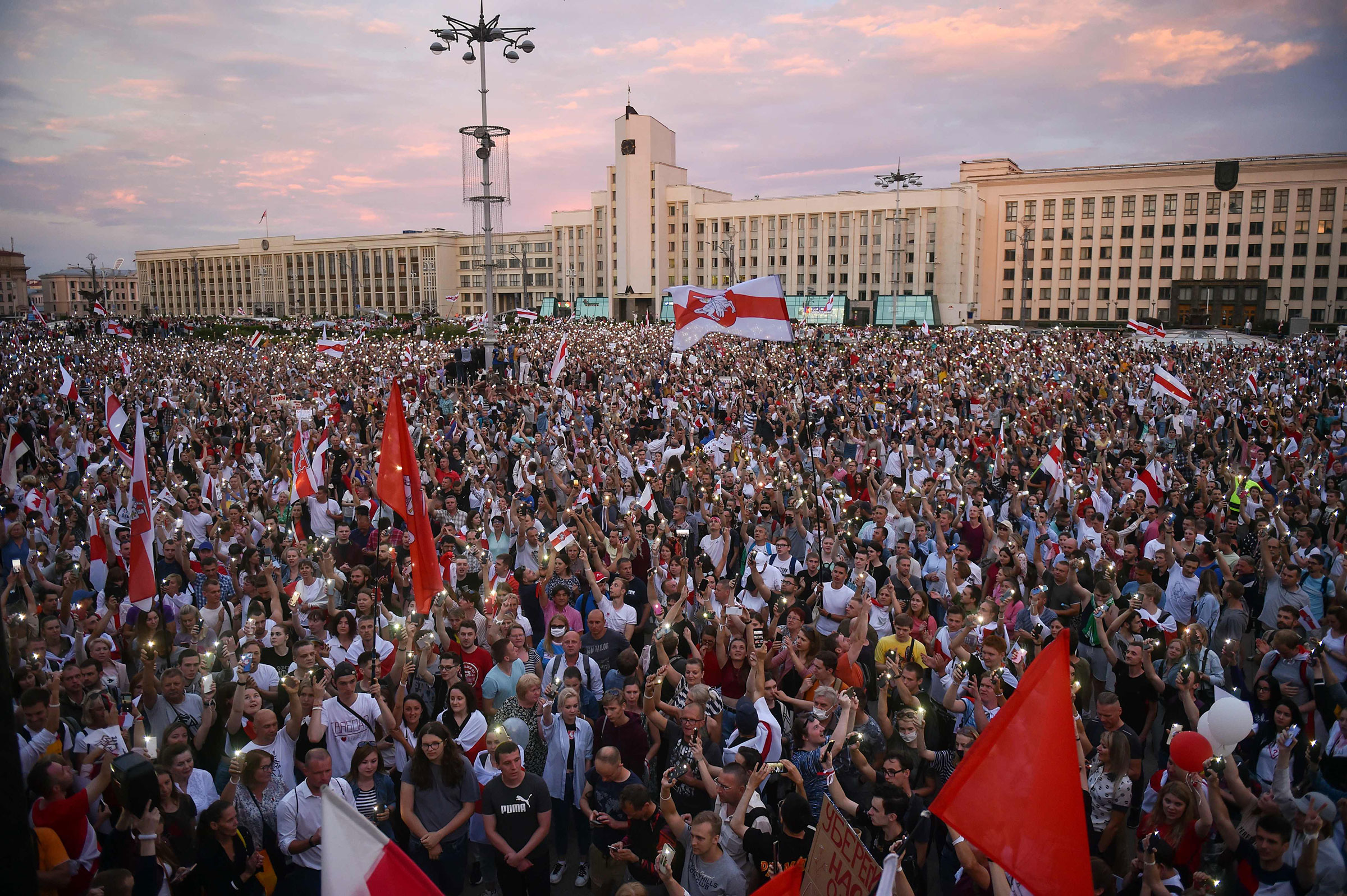
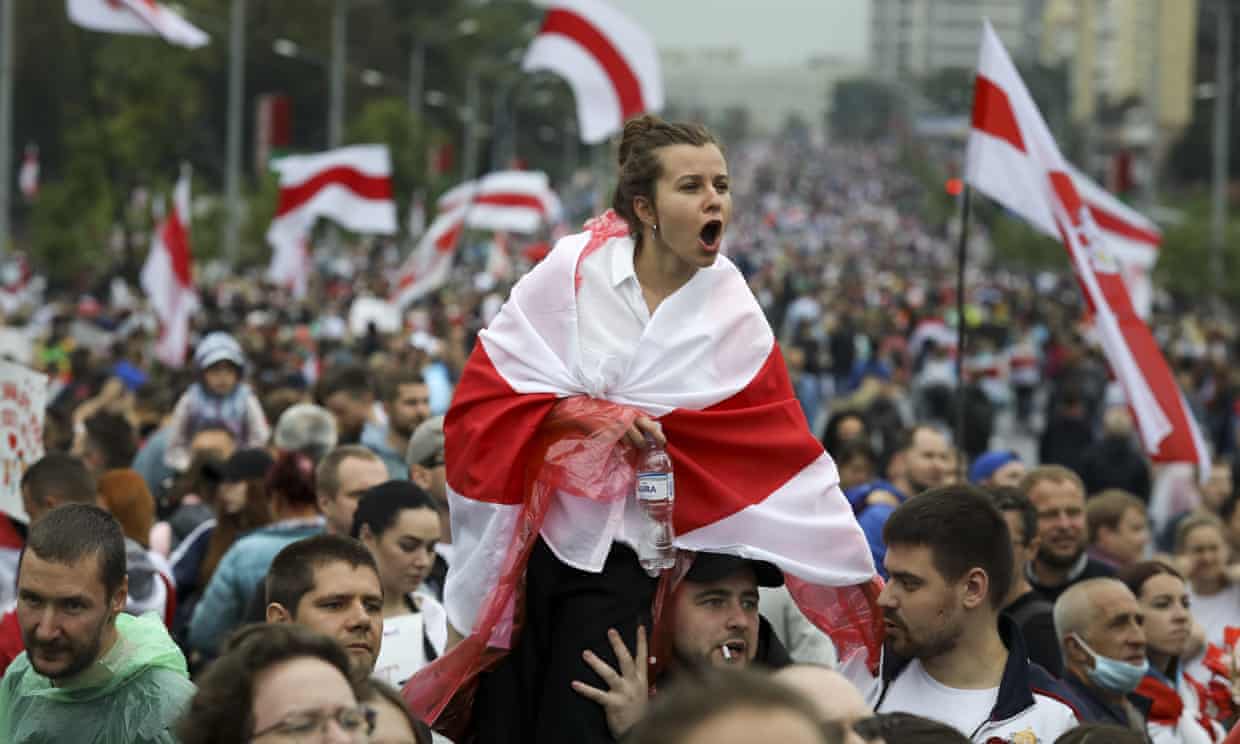
The 2021 Belarus-EU border crisis (also known as the Belarus refugee crisis) was a political-humanitarian crisis between the Republic of Belarus and EU member states such as Poland, Lithuania, and Latvia. The causes of the crisis are suspected to be the deterioration of diplomatic relationships between the European Union and Belarus, following the events of the 2020 Belarusian elections/coup d’etat, in which Aleksandr Lukashenko (ru: Aleksandr Lukashenka) claimed to have won the presidential election; said victory was contested by the opposition leader Svitlana Tsikhanouskaya who was detained by Belarusian security forces before being released and fleeing to Lithuania. Svitlana urges the international community after her arrival in Warsaw to recognize her as the legit winner of the presidential race. What further deteriorated the relationships between the two entities were the sanctions placed over Belarus over the last years, which was made worse after Lukashenko’s alleged re-election, which sparked 10 months of riots across the country; thousands of arrest were made and 4 people reportedly died on clashes with the police; the total amount of deaths is yet unknown, but 8 to 9 people died in result of the protests (either at the protests or in police custody), many of those arrested were reported to be tortured during their prison sentence by local civil right groups, one of those groups, the Viasna Human Right Center (be: Pravaabaronchy centr Vyasna) reported to the German media outlet Deutsche Welle that there were 942 political prisoners in Belarus by late 2021.
During the protests, another incident that helped to further increase the tensions between Aleksandr’s government and the European Union was the RyanAir Flight 4978 incident. The flight departed from Athens International Airport in Greece, headed towards Vilnius International Airport, on Lithuania’s capital; about three hours after departure, the Belarusian Air Traffic control notified the aircraft of a possible bomb threat, stating that Hamas soldiers had implanted an explosive device on the craft that would detonate over Vilnius, and forced the aircraft to diverge toward Minsk (Belarus’s capital). The email supposedly sent by Hamas was also received by airports authorities in Athens, Vilnius, and Kyiv. According to the CEO of RyanAir, Michael O’Leary, the pilots tried to contact RyanAir Operational Control Center, but “Minsk gave excuses that Ryanair in Poland were not answering the phone” – as said by O’Leary at the UK’s Transport Committee hearing in July 2021. Lukashenko’s Press Service released on an official statement released on the agency Telegram group stating that Lukashenko ordered that MiG-29 fighter jets escort the plane all the way to Minsk National Airport, raising the question if the plane was hijacked by Belarusian security forces, an hypothesis which is not so far-fetch from reality: the email provider for those airports, ProtonMail, which is headquartered in Switzerland, stated that the emails regarding a bomb threat, supposedly sent by Hamas to the four airports, was sent 24 minutes after the aircraft changed course toward Minsk; a ProtonMail spokesperson stated: “We haven’t seen credible evidence that the Belarusian claims are true.” A Hamas spokesperson, Fawzi Barhoum, stated: “(Hamas) have nothing to do with that completely.” Why would the Belarusian government ground a civil airliner? Following the 2020-2021 protests in Belarus, the Belarusian owned independent media outlet Nexta; was crucial for covering and organizing the protests and reporting the human right abuses committed by Lukashenko’s security forces. A former Nexta’s journalist, Roman Protasevich, who is notorious for his strong anti-Lukashenko sentiment and for participating in opposition rallies and protests since 2010, was in that flight. Protasevich left Belarus in 2019 and applied for asylum in Poland, where he alongside Nexta continued to report on the situation regarding the Belarusian government, and organize strikes and rallies against Lukashenko’s alleged presidential re-election; due to his involvement with Nexta, Protasevich was placed on the Belarusian KGB “list for organization and individuals involved in terrorist activities.” RyanAir and Belarusian security forces stated that no explosive devices were found onboard, and the plane was allowed to resume flight after 7 hours of being grounded in Minsk, arriving in Vilnius 8.5 hours late. The arrest of an opposition journalist sparked outrage in the international community, especially in the EU, which seized the opportunity to further increase sanctions over Belarus, putting the government on edge.


After multiple sanctions additional sanctions were placed over the country following Lukashenko’s “reelection,” the Belarusian government orchestrated a refugee crisis on the eastern border of the EU, where member states like Lithuania, Latvia, and Poland border the Belarusian republic. The Belarusian government utilized a kind of attack known as “hybrid warfare,” by manufacturing another refugee crisis on the continent and putting the leaderships of the European Union to test, while using the crisis as a warning against the Schengen countries. The first stage of the crisis was to gather enough refugees in order to create a crisis, and in order to do so, the Belarusian government broadcasted messages to Middle Eastern countries (through social medias primarily) saying that Belarusian security forces would not stop migrants from crossing the border into the EU, and other forms of fake news spread through the region portraying Belarus as a convenient and safe route into the EU, as stated by the Lithuanian Vice-Minister of Internal Affairs, Arnoldas Abramavičius. After the campaign to bring migrants into Belarus, the country state owned airline, Belavia, expanded their operations to the Middle East, alongside Iraq’s major airline Iraqi Airways that increased the frequency of flights between Baghdad and Minsk to four times a week, shortly prior the influx of migrants arrived, at the same time tourism agencies in Iraq decreased the price of tours to Belarus and promoted tourism to the country.
The combined effort of Iraq tourism agencies with the Belarusian government brought thousands to fly to Belarus, the majority of which landed in Minsk, Belarusian capital city. Migrants were welcomed by Belarusian authorities and taken to hotel facilities, before being directed to the border on the following days, being told by Belarusian authorities that there would be people waiting for them in Lithuania, and that entering the EU by the Belarus border would be completely legal; according to the Belarusian news outlet reform.by, migrants were also told to destroy their passports prior to entering the EU to avoid deportation; Telegram groups were created to aid the migrants by sharing tips and advices in crossing the border, such as pretending to be Belarusian university students, as was reported by another Belarusian news outlet, Belsat TV; The British newspaper The Times, conducted an investigation and found that Belarusian security forces held migrants at gunpoint and forced some to cross the border; hundred of migrants were stranded between the Belarusian border with the EU countries when border security was reinforced, most of them were sleeping in warehouses in Belarus before either returning to their respective countries, or finding other ways to remain in Europe, as reported by Reuters.
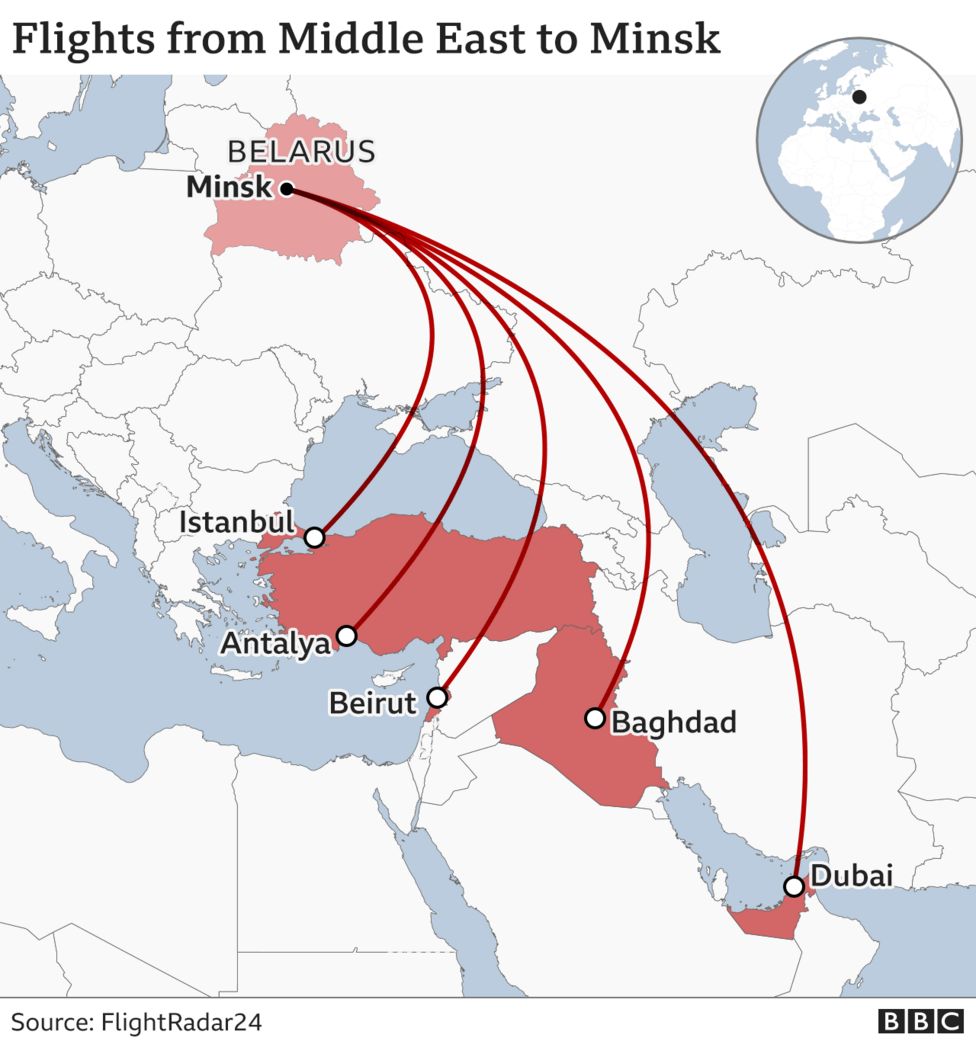
Countries in the EU and Eurasia started to impose restrictions, send support for the affected nations and fortify their borders; Turkey restricted certain nationalities from buying tickets to Belarus; Iraq suspended all direct flights to Belarus, and the Iraqi government closed two Belarusian consulates in Baghdad and Erbil (northern Iraq) to stop the flow of Iraqis leaving the country and suppress the illegal migration schemes; Ukraine fortified it’s border while the UK and Germany manifested about the matter in opposition Belarus’s action (the UK sent military engineers to aid the Polish border forces, Germany prepared for the arrival of immigrants). The influx of migrants reduced over time, and the border crisis was “resolved,” while the relationship between EU nations and Belarus further deteriorated, and according to Hamza Jilani from Foreign Policy Magazine, there is an internal debate within the European Union about funding a border wall between EU nations and Belarus: “EU’s top brass have sent mixed messages about their willingness to financially support physical barriers on the EU’s external borders. European Commission President Ursula von der Leyen has flatly rejected requests for border wall funding. European Council President Charles Michel, on the other hand, indicated the EU could legally fund border walls.”
 EAC PRESS