In mid 2019, Australian citizens received a warning from the Queensland Fire and Emergency Services of the possibility of enormous and devastating fires in the future of their country. Since the first semester of that year, the Northern Australia bushfire season was heading down a very dangerous path where the low levels of humidity in the air and soil moisture were exceptionally alarming. Queensland was already having wildfires ahead of the seasonal expectancy, and as the year went on, more and more fires broke off. Soon, Australia had an enormous area of their territory under flames. These major fires caused significant damages to the local fauna and flora, Australian citizens’ daily lives, and global environment.
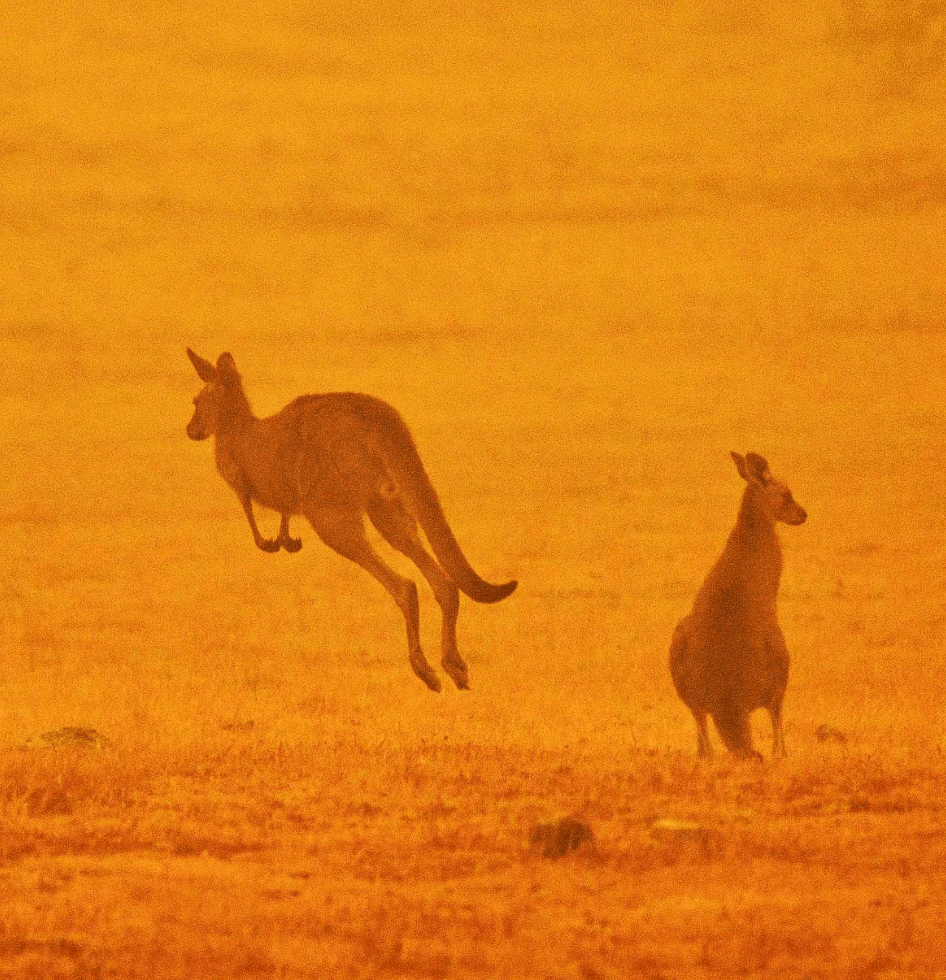
The impact of the Australian fires of 2020 in the local fauna were astonishing. The February 2020 study published in Nature Climate Change, concludes that the wildfires consumed more than 20% of Australia’s forests. In other words, the burnt area in Australia was twice the size of Portugal. Alongside the billions of animals killed directly by the fires, a great amount of species were left with no habitat due to the extensive area the destruction engulfed. Therefore, even if they were able to survive the fires, they would no longer have a place to live and would eventually die out of starvation. The local flora was also affected by the wildfires as well as the fauna. The Australian flora has a vast variety containing thousands of different species of plants, fungi, and lichens. Most of the plants found in Australian territory are already adapted to resist fire due to the frequency of these events in Australia, however due to a wave of more aggressive and resistant fires, more than 200 different species are either threatened or facing extinction. However, animals aren’t the only living creatures inhabiting areas near the fires.
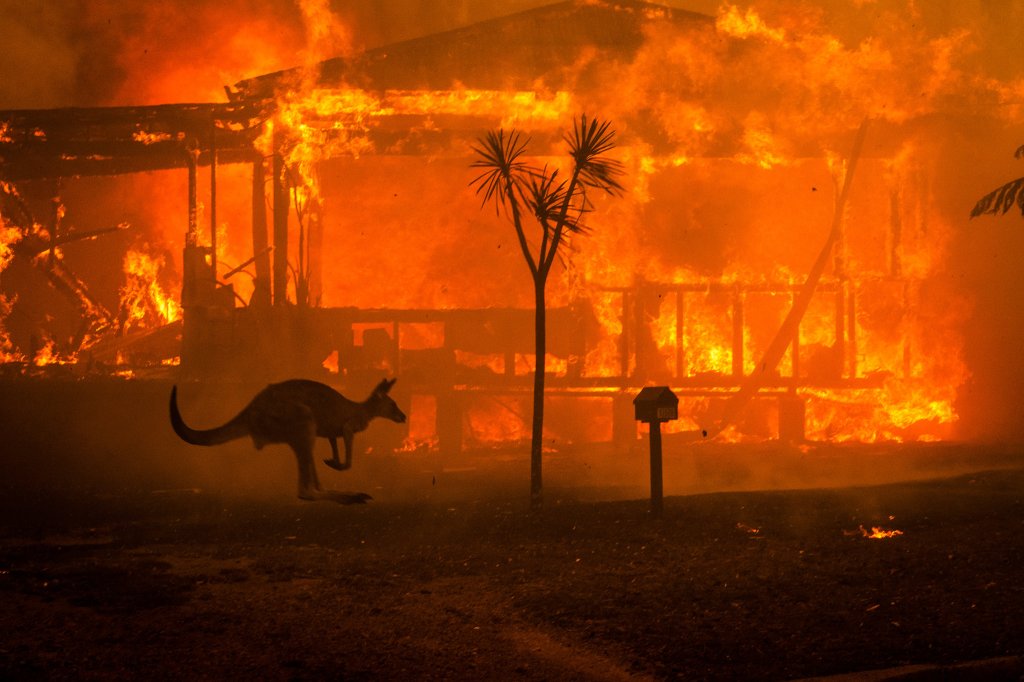
The urban areas of Australia were also affected by the fires causing many citizens to lose their homes, jobs and even loved ones. It was estimated that 5900 building were burned to the ground. These damages caused in all areas of Australian society were estimated to cost $110 billion for the government to repair all the damages. With these monstrous destructions physically and economically, many companies suffered due to loss of materials and work days, causing 9% of all Australian companies a lot of damage to repair. Besides the financial costs for companies and the government, families also lost homes, creating an unpayable financial and emotional debt. From all the 5900 burnt buildings, around 45% of them were family homes, which haven’t, and probably never will, receive compensation for all they lost (there isn’t enough money in the government to help). Alongside with the financial damage these families are going through, some families also face the grief of losing a loved one since 34 Australian citizens were found dead due to the fires. However, Australians aren’t the only ones who have been affected by the flames.
Although the fires were all located in South Australia, the rest of the world received significant damage to their own environments as well. The results were clearly perceptible in countries all around the globe. In New Zealand, a blanket of smoke from the Australian fires covered the sky giving it an orange-yellow haze color, while in Southern New Zealand (Dunedin), citizens reported smelling smoke in the air. Furthermore, when the wind blew the smoke in the direction of the Glaciers of South Island, the ice and snow had a brown tint for a few days. The Australian smoke even traveled around the globe, reaching countries in South America such as Chile, Argentina, Brazil, and Uruguay, where the skies had a sudden change in its color for a couple hours because it had a layer of smoke. This is a chain reaction where environmental damages cause a massive event (like the Australia fires) which causes more destruction to the environment around the world.
The wildfires in the beginning of 2020 in Australia impacted the rest of the year, and some damages are still to be fixed. From local to bioregional scale, the Australian Wildfires of 2020 obviously impacted the variety of the local fauna and flora which comprised the floristic richness, animal variety and habitat variability of the Australian country. There should be greater efforts to prevent such destructive events. Besides taking better care of our environment there are other ways to help the Australian citizens and animals to survive these fires; donate time, money, and resources to one of the 5 trustworthy voluntary organizations linked below. If donating is inaccessible for you, please spread the word about these organizations so others, who are able to help, have the opportunity to provide this necessary support.
Voluntary Organisations
Support local Australian firefighting – Country Fire Authority (CFA)
Help the koalas – Port Macquarie Koala Hospital
Support the Australian Doctors – Australian Red Cross
Household items to Australian charities – Australian nonprofit GIVIT
Source:
– https://www.sciencenews.org/article/australia-wildfires-extinction-threat-species-one-year-later
– https://www.nature.com/articles/d41586-021-02509-3
– https://en.wikipedia.org/wiki/Flora_of_Australia
– https://wildfiretoday.com/2021/02/21/more-than-110-plant-species-in-australia-had-their-entire-ranges-burned-in-the-2019-2020-megafires/
– http://www.roymorgan.com/findings/8258-impact-of-bushires-january-2020-202001240501
Collaborator/editor – Julia Osório
 EAC PRESS