By Tiago Carvalho
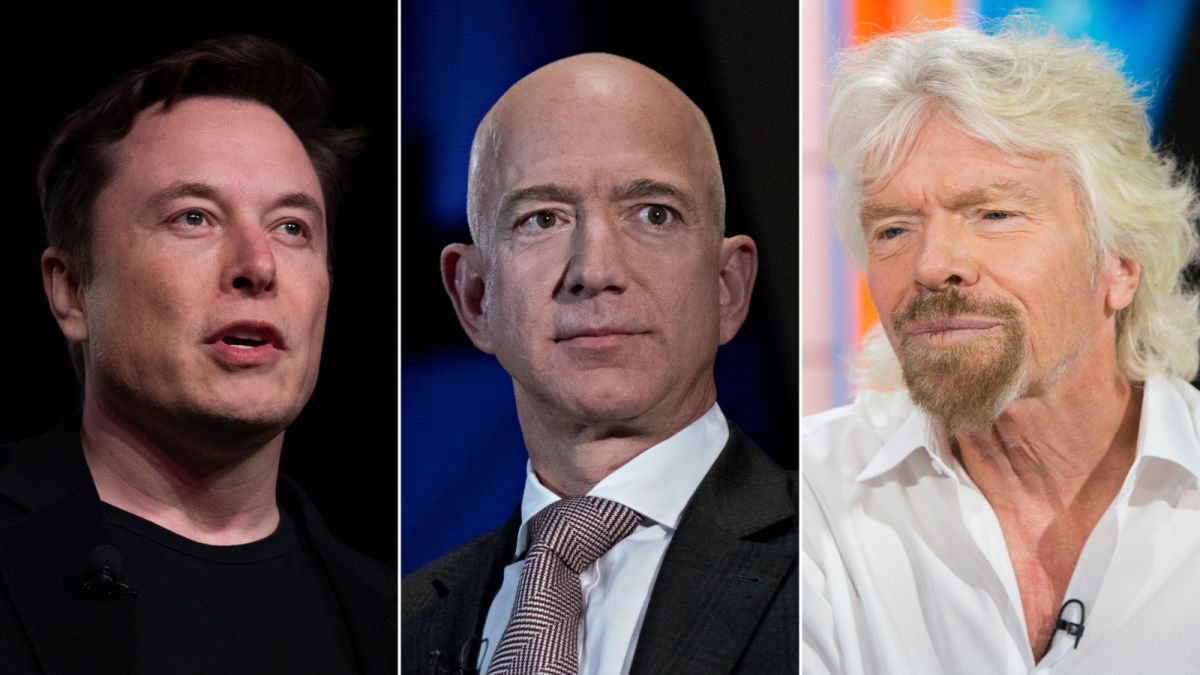
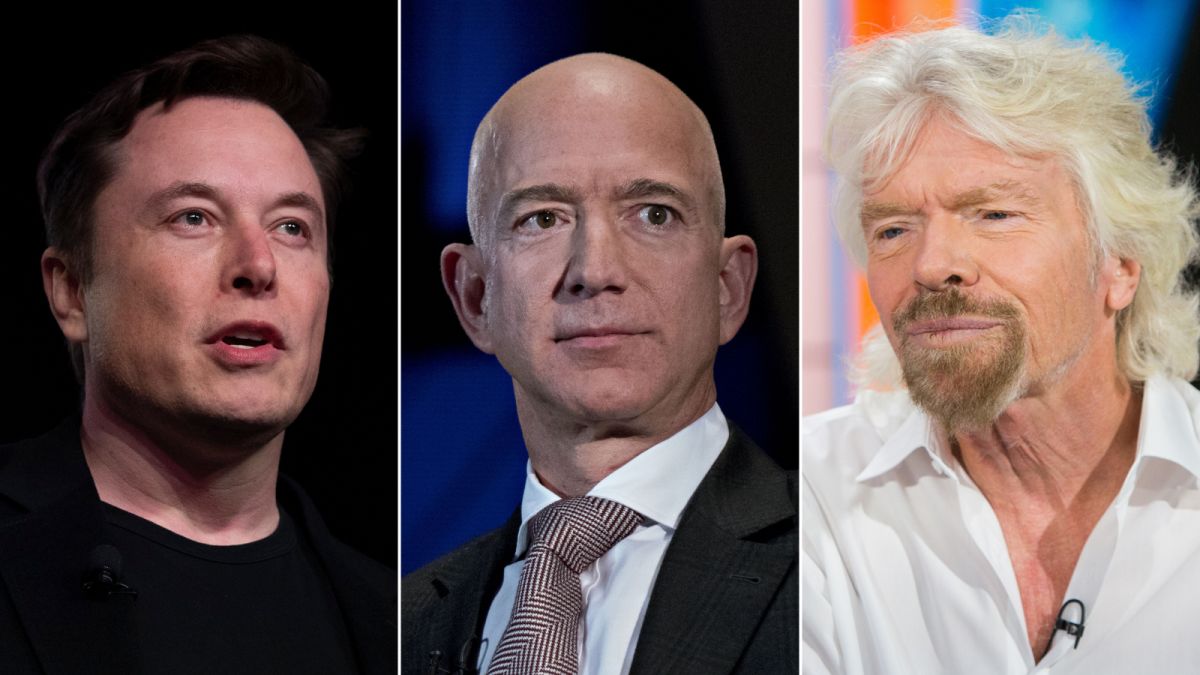
52 years ago, the US landed on the moon, winning the space race against the USSR and achieving a once impossible feat for humanity. But as history always repeats itself, it seems as though another space race may have just begun. With a combined net worth of $400 billion (the size of the GDP of Ireland), these three billionaires began their space race, with the ultimate goal of “expanding humanity’s capabilities and making earth multi-planetary.” But who are these three men rapidly climbing to become the winners of this modern space race?
The first and arguably one of the most prominent figures in this race is Elon Musk. With a net worth of $151 B, Musk has multiple companies under his name, such as Tesla and The Boring Company. But the company we will be focusing on is his aerospace company, SpaceX. He founded SpaceX in 2002 with the goal of “reducing space transportation costs to enable the colonization of Mars.” Since then, the company has experienced over 127 successful launches and is getting closer and closer to the goal of colonizing Mars, with a reusable rocket being in current development.
The second figure involved in this race is Jeff Bezos. The controversial owner of amazon and the current richest man in the world founded his company, Blue Origin, in 2000 with the goal of “making access to space cheaper and more reliable through reusable launch vehicles,” which could translate as making space tourism possible. After 15 successful launches, Bezos has now opened it up to outsiders. Even this year, Star Trek actor William Shatner was invited to fly with the company. You can also book a flight yourself by visiting their website here.
The third figure would be Richard Branson. The founder of Virgin Group, a multinational conglomerate company. In 2004, he announced his plans to enter the space tourism market and founded his own space travel company, Virgin galactic. After completing a successful flight with a complete crew in the VSS Unity this year, the company started selling tickets, with a whopping price of $450,000 a seat.
But what are the opinions of those outside the inner circle? Those who live ordinary lives and are just watching this event unfold on TV? Asking around the EAC faculty, I was able to find two different opinions on the topic from both Mr. Daniel Pires and Mr. Francis Smith. Daniel, one of our social sciences teachers, believes that the money and time spent on these discoveries could be better invested in saving our current world, as we do not have a second Earth. Not to mention that the effects these spaceships have on our environment are also concerning and are another possible danger to our environment’s future.
But Francis, one of our history teachers, believes that the money spent on space exploration could help humanity as more people invest in these corporations and the overall cost decreases, becoming more accessible to people. The technology then developed will be able to help the Earth while also benefiting space tourism. He also stated that this isn’t so much a space race, as it “seems to be conducted in the spirit of shared commitment to scientific progress”, with collaboration between companies being key and science being put first before any other ideology.
Finally, I have a conflicting view on this new “space race.” I believe that our current Earth should be the focus. However, I do want to see technological developments being made, as they can have a positive effect on the mission to save the Earth. But the questions should still remain: Will common people be able to travel to space in the next decade? Will we be sending people in mars colony expeditions by the hundreds? Will the planet even be alive by then? Is the manufacture of these ships damaging the planet so much that space exploration is necessary? who knows. Only the future will give us these answers.
 EAC PRESS