

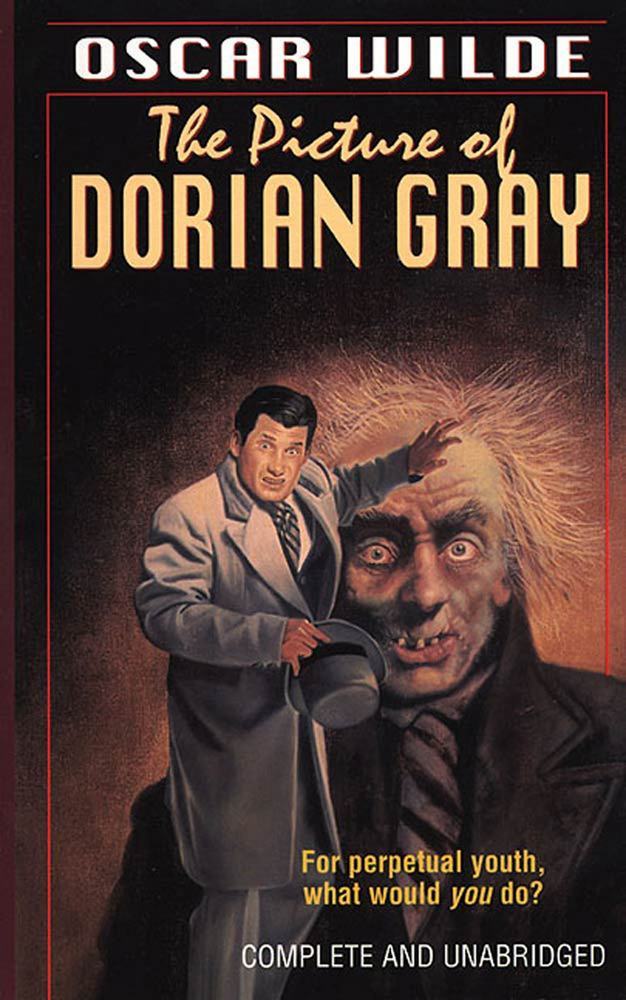
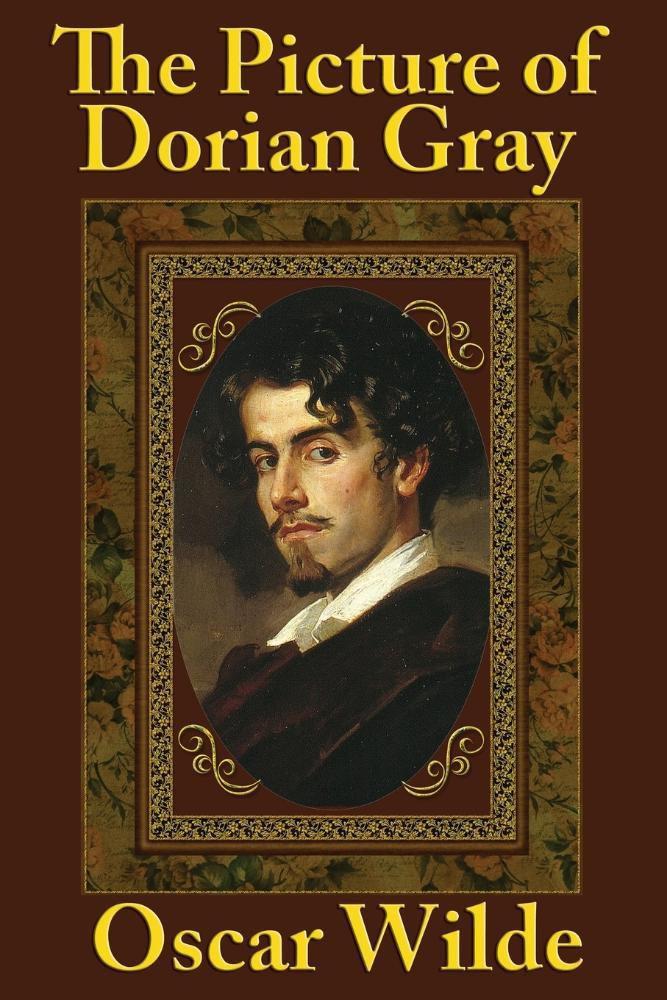
Cover editions of The Picture of Dorian Gray
Written all the way back in 1890, Oscar Wilde’s “The Picture of Dorian Gray” still includes an incredibly reflective narrative, barely aged and with its ideas still intact, mirroring life lessons about vanity, greed, and excess.
In the story, we begin by being introduced to Basil Hallward, a painter consumed with the beauty of his art and the subjects of his paintings, one of which is his friend, Dorian Gray. The painter invokes in his friend an immense obsession with his looks by creating a painting of the man, kickstarting the plot of the story and its characters. Dorian is young, incredibly beautiful, and because of this, holds inside of him an incredibly conceited soul.
In this novel, beauty is everything. The main character is loved by all and adored by everyone he’s met in his life because of his good looks; however, his soul is corrupted by the environments and the people surrounding him. Lord Harry, another of Basil’s friends, is a particularly bad influence on Dorian because of his views of the world, which seem cynical to both us and Dorian as he says them, but the book shows us their true meaning.
Dorian Gray’s soul is put on display, while his physical looks remain unchanged and unaffected by the passage of time. Although his physical appearance never changes, his character is emptied out and horribly disfigured, both physically on the painting Basil made of him, and inside his soul.
This is one of those books you read and feel as if you’ve aged 90 years and become 110 years wiser. I’ve read it twice before, and it’s rare for me to read a book more than once. It really moves you and makes you think a lot.
One of the best books ever written, and definitely a classic.
If you like The Picture of Dorian Gray, I recommend:
Wuthering Heights by Emily Brontë
The Great Gatsby by F. Scott Fitzgerald
Of Mice and Men by John Steinbeck
 EAC PRESS